
 Household, Living & Cooking
 Outdoor, Travel & Sports
 DIY, Garden & Animals
 Fashion accessories & Shoes
 Car & Motor
 Computer & Electronics
 Office & School
 Beautiful & Healthy
 Toys
Toys Eat Drink
 Baby
Baby Christmas
 King's Day


 8
8Colanders and sieves for pasta, vegetables, fruit and baking
Colanders and Sieves
A colander or kitchen sieve is an essential tool for draining, rinsing, sifting and straining ingredients. Use a large colander for pasta, potatoes, rice, vegetables and fruit, or choose a fine-mesh sieve for flour, icing sugar, cocoa, sauces and stock. Within Colanders & Sieves, you can compare stainless-steel sieves, metal colanders, round strainers and designs with a long handle or sturdy side handles.
Compare the size, capacity, mesh and material to find the right kitchen tool for cooking, baking and food preparation. This category sits within Cooking Essentials, where practical tools for preparing, draining, sieving and pressing ingredients come together.
Colanders and Sieves: Which One Do You Need?
Colanders and sieves are both used to separate food from water, liquid or fine particles. However, they are designed for different kitchen tasks. The main difference is the size and structure of their openings.
A colander usually has relatively large holes or perforations. These allow water to drain quickly, making a colander ideal for draining pasta, potatoes and cooked vegetables. A large round colander is also useful for rinsing salad leaves, fresh vegetables and fruit.
A kitchen sieve has smaller holes or a fine mesh. This finer construction prevents small ingredients from passing through. A sieve is therefore suitable for rinsing rice, sifting flour, dusting icing sugar, removing lumps from cocoa and straining sauces, soups and stock.
The best option depends on the food you prepare most often. Many kitchens benefit from having a large pasta colander, a medium-sized fine-mesh strainer and a small kitchen sieve for baking and garnishing. For other preparation and cooking tasks, Kitchen Utensils covers a wider range of tools.
What Is the Difference Between a Colander and a Sieve?
A colander is mainly designed for draining or washing larger quantities of food. Its bowl-shaped design provides enough space for pasta, potatoes, vegetables and fruit. The larger drainage holes allow cooking water or rinse water to escape quickly.
A sieve, sometimes called a strainer, has smaller openings or a woven mesh. A fine-mesh sieve can retain rice grains, herbs and small food particles while allowing liquid to pass through. It can also be used to sift dry ingredients such as flour, icing sugar and cocoa powder.
Some products combine features of both tools. A finely perforated colander may be suitable for pasta as well as rice, while a large mesh strainer may work for vegetables and sauces. Check the opening size, capacity and construction rather than relying only on the product name.
Which Colander Should You Choose?
A Pasta Colander
A large pasta colander should have enough capacity to hold the complete contents of your saucepan. The bowl needs to be deep enough to prevent spaghetti, macaroni or other pasta from spilling over the edge while the cooking water drains away.
A colander with two sturdy side handles is easy to hold with both hands. This can provide more control when the colander contains hot and relatively heavy food. A stable base or raised foot also allows the colander to stand securely in the sink.
Consider the size of the drainage holes. They should allow water to escape quickly without letting smaller pieces of pasta fall through.
If the drained potatoes are going to be turned into mash, a Potato Masher has a separate function: drain first, then mash once the excess water has been removed.
A Colander for Vegetables and Fruit
A wide, round colander is a practical choice for washing vegetables, salad leaves and fruit. The open shape gives you room to move the ingredients under running water so that they can be rinsed from different sides.
For berries, beans, peas or finely chopped vegetables, choose a food strainer or colander with smaller perforations. This reduces the chance of small ingredients falling through the openings and into the sink.
After washing, the ingredients can remain in the colander for a short time so that excess water drains away before they are used in a salad, soup, side dish or dessert.
For further preparation, a stable Cutting Board can be combined with suitable Graters, Peelers & Slicers.
A Colander or Strainer for Rice
Not every colander is suitable for rice. If the holes are too large, rice grains can escape during rinsing or draining. Choose a finely perforated colander or a fine-mesh kitchen sieve with openings smaller than the rice grains.
The best mesh can depend on the type of rice. Small or thin grains require a finer sieve than larger grains. A wide rice strainer gives the grains enough space to move under running water, helping you rinse them more evenly.
A sieve with a long handle can be convenient for smaller amounts of rice, while a larger model with side handles may be more practical for family-sized portions.
If you regularly cook rice, pasta or vegetables for a set amount of time, a Kitchen Timer can help you drain them at a consistent point rather than relying only on the clock.
A Colander with a Handle or Side Handles
A large colander often has two side handles. This design allows you to lift and carry it with both hands, which is useful when draining a large pan of pasta, potatoes or vegetables.
A colander or kitchen strainer with one long handle is generally better suited to smaller portions. It can be held above a saucepan, bowl or sink without placing your hands close to the hot ingredients.
Some sieves have a small support hook opposite the handle. This allows the sieve to rest on the edge of a bowl or pan. Check the product dimensions to make sure it fits the cookware you regularly use.
Which Kitchen Sieve Should You Choose?
A Fine-Mesh Kitchen Sieve
A fine-mesh sieve is made from woven material with many small openings. It catches small food particles while allowing water or another liquid to pass through. This makes it one of the most versatile kitchen accessories for cooking and baking.
A fine strainer can be used for rinsing rice, straining stock, smoothing sauces and sifting dry ingredients. The finer the mesh, the smaller the particles it can retain.
Very fine mesh may cause thick liquids to pass through more slowly. For this reason, the finest sieve is not automatically the best option for every task. Choose a mesh size that matches the ingredients you plan to prepare.
A Flour Sieve for Baking
Flour can become compacted during storage and may contain small lumps. Passing it through a flour sieve helps break up these lumps and distributes the flour more evenly before it is added to a mixing bowl.
A fine-mesh sieve with a long handle is easy to hold over a bowl. For cakes, bread and larger baking recipes, a sieve with a wider diameter may save time. A small sieve is usually sufficient for individual desserts or small quantities of flour.
The same baking sieve can often be used for cocoa powder, icing sugar and other dry ingredients. Clean and dry it thoroughly after each use, particularly when switching between sweet and savoury ingredients.
For recipes where exact quantities matter, Weighing & Measuring can be used before the ingredients reach the sieve. A Kitchen Scale is particularly useful when flour, sugar or other ingredients are specified in grams.
A Sieve for Icing Sugar and Cocoa
A small fine-mesh sieve is ideal for dusting icing sugar or cocoa over a cake, tart, pancake or dessert. Place a small amount in the sieve and move it gently above the food while tapping the edge.
The fine mesh catches lumps and creates a lighter, more even layer. This gives you more control than shaking the ingredient directly from its packaging.
A compact sieve with a handle is particularly convenient because it can be moved easily over individual plates, drinks and desserts.
Once baked goods are ready to cut, a serrated Bread Knife has a completely different role from the sieve used during preparation.
A Sieve for Sauces and Stock
A kitchen sieve can remove herbs, seeds, skins and other solid ingredients from a sauce, soup or stock. A fine-mesh strainer is also helpful when you want a smoother sauce or clearer broth.
Choose a size that can be held securely above a saucepan, mixing bowl or Measuring Jug. A support hook or resting loop can make the process easier by allowing the sieve to sit on the rim of the container.
The mesh size affects the final result. A medium mesh removes larger solids and works relatively quickly. A finer mesh catches smaller particles but may require more time, particularly when the liquid is thick.
If you want to lift ingredients out of liquid while allowing the water or oil to fall back into the pan, Skimmers & Whisks may be more appropriate than transferring the complete contents through a sieve.
After straining, a Funnel can help transfer the liquid into a bottle, jar or container with a narrower opening.
A Small Kitchen Sieve
A small kitchen sieve is useful for icing sugar, cocoa, loose tea, herbs and small quantities of sauce. Its compact size is easy to move above a cup, plate or small bowl and requires little storage space.
A small sieve is not suitable for a full pan of pasta or a large quantity of vegetables. For these tasks, use a large colander or a wider kitchen strainer.
Keeping a small fine sieve in addition to a large colander gives you more flexibility when preparing different foods.
A Large Kitchen Sieve
A large sieve is suitable for larger quantities of flour, rice, vegetables or fruit. Its wider surface gives ingredients more room and makes rinsing, sifting and straining more efficient.
Check both the diameter and the depth. A deep sieve offers more capacity, while a broad and shallow sieve may be easier to use when dusting flour or icing sugar evenly.
Also check whether the sieve can rest securely on your bowls and pans. A sieve that is too small may fall into the container, while one that is too large may be difficult to balance.
Stainless Steel, Metal or Plastic?
A Stainless-Steel Colander or Sieve
Stainless steel is widely used for kitchen utensils because it is strong and suitable for many everyday food-preparation tasks. A stainless-steel colander can be used for draining pasta and vegetables, while a stainless-steel fine-mesh sieve is suitable for cooking and baking.
When choosing a stainless-steel kitchen sieve, look at the connection between the mesh, rim and handle. A strong construction helps prevent the mesh from loosening or changing shape during regular use.
Check the complete product description carefully. A sieve may have stainless-steel mesh while the handle, rim or support components are made from another metal or plastic.
A Metal Colander or Sieve
The word “metal” does not always mean that the product is made entirely from stainless steel. Review the material specifications when you are specifically looking for a stainless-steel kitchen strainer.
For a metal colander, consider the thickness, stability and finish. It should remain steady when filled with food, and the edges should feel smooth and comfortable to handle.
For a metal sieve, check whether the mesh feels firmly attached to the outer rim. A stable mesh is important when pressing ingredients gently or working with heavier food.
For additional everyday preparation tools, browse Other Kitchen Utensils. If you prefer several tools supplied together, Kitchen Utensil Sets can help you compare combinations without treating every kitchen task as a separate purchase.
A Plastic Colander
A plastic colander is usually lightweight and easy to lift. Plastic designs are available in many sizes, shapes and colours and can be convenient for washing fruit, vegetables and salad.
Check the individual product information for temperature limitations and cleaning instructions. Not every plastic colander is suitable for the same level of heat or for direct contact with a very hot saucepan.
A lightweight plastic colander may be convenient for everyday rinsing, while a sturdy metal or stainless-steel model may be preferable for heavier ingredients.
What Should You Consider When Buying a Colander or Sieve?
Size and Capacity
Think about how many people you normally cook for and which ingredients you prepare. A small sieve is suitable for garnishing, tea and individual portions. A large colander is more practical for a full saucepan of pasta, potatoes or vegetables.
Consider both the width and depth. Two colanders with the same diameter can have very different capacities if one is significantly deeper than the other.
The product should be large enough to hold the food without being difficult to store or handle.
Hole Size and Mesh
Large drainage holes allow water to escape quickly and work well for pasta, potatoes and larger vegetables. Small perforations are better for rice, beans, berries and finely chopped ingredients.
Fine mesh is suitable for flour, icing sugar, cocoa, sauces and stock. Very fine mesh catches more particles but can slow down the straining process.
Choose the opening size according to the smallest ingredient you intend to place in the sieve or colander.
Handles and Grip
A large colander with two side handles is practical for draining heavy quantities. Two handles allow the weight to be shared between both hands and can give you more stability above the sink.
A sieve with one long handle provides control when working over a bowl, saucepan or plate. Check that the handle is securely attached and comfortable to hold.
A hanging loop is useful if you prefer to store your kitchen tools on a rail or hook.
Stability
A colander with a broad foot or stable base can stand independently in the sink. This allows food to continue draining without requiring you to hold it throughout the process.
A kitchen sieve may have a support hook opposite the handle. This feature allows the sieve to rest over a bowl or pan while you pour liquid through it.
Measure your most frequently used bowls and pans when the ability to rest the sieve securely is important.
Cleaning and Maintenance
Rinse a colander or sieve shortly after use. Flour, rice, sauce and other small particles can dry inside the mesh or around the rim, making them more difficult to remove later.
Clean both sides using warm water, washing-up liquid and a soft brush. Pay particular attention to the area where the mesh joins the rim and handle.
Always check the product instructions before placing a sieve or colander in a dishwasher. Allow metal products to dry fully before storing them.
The same principle applies to other tools with small openings. Garlic Presses are easier to clean when garlic fibres are removed before they have dried inside the perforations.
A Multifunctional Kitchen Tool
A colander or sieve can be used for much more than draining pasta. Depending on its size and mesh, it can help you wash fruit, rinse vegetables, clean rice, sift flour, dust desserts and strain stock or sauces.
For this reason, it can be useful to own several sizes. A large colander can handle main meals, a medium fine-mesh sieve can be used for rice and sauces, and a small sieve is ideal for baking and garnishing.
A colander and sieve set may be a practical option when you want matching tools in different sizes. Before selecting a set, check that each piece has a distinct and useful size rather than choosing only by appearance.
A Cheese Slicer has a much more specific purpose, while Salt & Pepper Sets belong primarily to seasoning and serving. Keeping these tasks separate makes it easier to organise kitchen tools by function.
Combining Colanders and Sieves with Kitchen Knives
Before vegetables, fruit or other ingredients are washed and drained, they may also need trimming, peeling or cutting. Within Kitchen Knives, you can match the blade to the preparation task.
A Chef's Knife is useful for general chopping and slicing, while a Santoku Knife offers a different blade profile for many everyday food-preparation tasks.
For small peeling and precision work, a Paring Knife can be easier to control. A Cleaver has a heavier design intended for different chopping jobs.
When preparing meat, Meat Knives have a different role, while Steak Knives are primarily used when eating at the table rather than during ingredient preparation.
If you need several blade types, Knife Sets can be compared according to the knives you actually use. For maintenance and safer storage, browse Kitchen Knife Accessories.
Watch Discountershop on YouTube
Visit the Discountershop YouTube channel for product videos and practical examples covering kitchen tools, cooking utensils and other products used for preparing, cooking and serving food.
Frequently Asked Questions About Colanders and Sieves
What is the main difference between a colander and a sieve?
A colander normally has larger holes and is designed for quickly draining or washing pasta, potatoes, vegetables and fruit. A sieve has smaller openings or fine mesh and is better suited to rice, flour, icing sugar, cocoa, sauces and stock.
Which sieve is best for rice?
Choose a fine-mesh kitchen sieve or a finely perforated rice strainer. The openings need to be smaller than the rice grains. A wide sieve gives the rice enough room to move under running water so it can be rinsed thoroughly.
Can I drain pasta with a fine-mesh sieve?
You can use a fine-mesh sieve for a small portion of pasta, provided it is large, strong and suitable for hot food. A large pasta colander is usually more practical for a full saucepan because its larger holes allow the cooking water to drain more quickly.
Which sieve should I use for flour?
Use a fine flour sieve or fine-mesh kitchen strainer. It will help remove lumps and distribute flour more evenly. A long-handled sieve is easy to hold over a mixing bowl, while a wider model is useful for larger baking recipes.
Can I use the same sieve for flour and sauces?
Yes, provided that the sieve is suitable for both purposes and is cleaned thoroughly after each use. Grease and strong flavours can remain in the mesh, so frequent bakers may prefer to keep one sieve for dry ingredients and another for savoury cooking.
What does fine mesh mean?
Fine mesh means that the woven surface contains many small openings. These openings retain small particles while allowing liquid or very fine powder to pass through. Fine-mesh sieves are useful for rice, flour, cocoa, icing sugar, sauces and stock.
Is a stainless-steel sieve better than a plastic sieve?
It depends on the intended use. Stainless-steel models are generally strong and suitable for many kitchen tasks, while plastic models are often lightweight. Consider the construction, mesh size, dimensions, handle and temperature suitability as well as the material.
What size colander is suitable for a family?
Choose a colander that can hold the contents of your largest regularly used saucepan without food spilling over the edge. Look at the depth and total capacity as well as the diameter. A large colander with two handles is often practical for family meals.
Why does a colander have a raised base?
A raised base helps the colander stand securely in the sink and keeps its lower surface away from the bottom of the sink. This allows water to continue draining freely and reduces the need to hold the colander while food is draining.
How do I clean a fine-mesh sieve?
Rinse it immediately after use, then clean both sides carefully with warm water, washing-up liquid and a soft brush. Pay attention to the rim and handle connection, where food can collect. Check the product instructions before putting it in the dishwasher.
Can I wash vegetables and fruit in a sieve?
Yes. A medium or large kitchen sieve is suitable for smaller quantities of fruit and vegetables. For a large quantity of salad leaves, potatoes or vegetables, a spacious colander is generally easier to use.
Which sieve should I use for icing sugar and cocoa?
Use a small fine-mesh sieve with a handle. Add a small amount of icing sugar or cocoa and tap the edge gently while moving it above the cake, dessert or drink. This produces a finer and more even layer.
What is a flour sifter?
A flour sifter is a tool used to break up lumps and aerate flour and other dry baking ingredients. Some flour sifters are simple fine-mesh sieves, while others have a handle or mechanical system that pushes the flour through the mesh.
Can a sieve rest on a saucepan or bowl?
Some sieves have a support hook or loop opposite the handle. This allows the sieve to rest on the rim of a saucepan or bowl. Check the diameter and overall length to make sure it fits securely without slipping or tipping.
When is a colander and sieve set useful?
A set is helpful when you regularly prepare different quantities and types of food. A small sieve can be used for icing sugar and cocoa, a medium sieve for rice and sauces, and a large colander for pasta, vegetables and fruit.
Is a colander suitable for draining rice?
Only when the holes are smaller than the rice grains. Standard pasta colanders often have openings that are too large. For rice, a finely perforated colander or fine-mesh strainer is usually the safer choice.
What is the best colander for washing fruit?
Choose a wide colander with enough space to move the fruit under running water. For berries and other small fruit, select a model with small holes to prevent the fruit from falling through.
Can I use a kitchen sieve to strain soup?
Yes. A kitchen sieve can remove herbs, vegetable pieces and other solids from soup or stock. Use a fine-mesh sieve for a smoother result and a medium-mesh strainer when you only need to remove larger pieces.
Should I choose a sieve with one handle or two handles?
A long single handle provides control when holding a sieve over a saucepan or bowl. Two side handles are more suitable for large colanders carrying heavier quantities of food. The best choice depends on the size of the product and how you plan to use it.
How many colanders and sieves do I need?
For most kitchens, a large colander, a medium fine-mesh sieve and a small baking sieve cover the majority of tasks. This combination can be used for pasta, vegetables, rice, sauces, flour, cocoa and icing sugar.
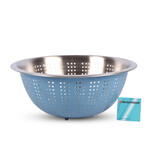
Blue aluminium kitchen colander measuring 28 x 28 x 11 cm for pasta, rice, fruit and vegetables. Round, lightweight, dis...
Blue aluminium kitchen colander measuring 28 x 28 x 11 cm for pasta, rice, fruit and vegetables. Round, lightweight, dishwasher-safe and available in blue, black and white.
Blue aluminium kitchen co...
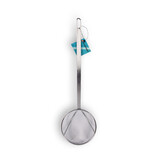
Discover our foam ladles and cooking utensils. Convenient foam skimmers and fryer scoops for every cook. Quality kitchen...
Discover our foam ladles and cooking utensils. Convenient foam skimmers and fryer scoops for every cook. Quality kitchenware for your kitchen.
Discover our foam ladles ...
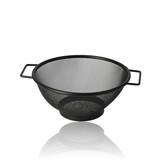
Fine-mesh black stainless steel kitchen strainer, 20 cm wide, with two handles and a fixed base. Suitable for washing, d...
Fine-mesh black stainless steel kitchen strainer, 20 cm wide, with two handles and a fixed base. Suitable for washing, draining and rinsing pasta, rice, vegetables, fruit, beans and herbs.
Fine-mesh black stainless...
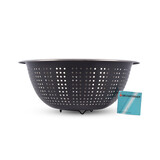
Enjoy the benefits of our black stainless steel strainer: Practical, durable, and a valuable addition to your kitchen.
Enjoy the benefits of our...
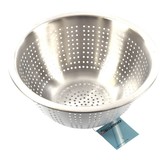
Draining your pans becomes a lot easier with the use of this stainless steel colander. The colander has a diameter of 24...
Draining your pans becomes a lot easier with the use of this stainless steel colander. The colander has a diameter of 24 cm.
Draining your pans become...
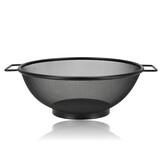
Large fine-mesh black stainless steel kitchen strainer with a diameter of 31 cm, a height of 10 cm and two handles. Suit...
Large fine-mesh black stainless steel kitchen strainer with a diameter of 31 cm, a height of 10 cm and two handles. Suitable for washing, rinsing and draining pasta, rice, vegetables, fruit and potatoes.
Large fine-mesh black sta...
- Ordered on working days before 12:00, delivered the next day!
- Buy now, pay later
- Fast delivery in the Netherlands & Belgium
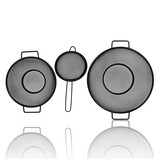
Three-piece black stainless steel kitchen strainer set with 31 x 10 cm and 20 x 9.3 cm colanders plus a 13 x 4 cm fine-m...
Three-piece black stainless steel kitchen strainer set with 31 x 10 cm and 20 x 9.3 cm colanders plus a 13 x 4 cm fine-mesh sieve. Suitable for pasta, rice, vegetables, fruit, flour, sauces and stock.
Three-piece black stainle...
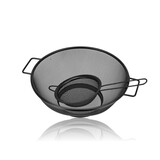
Stainless steel colander and strainer set Ø31 cm + Ø13 cm. Ideal for pasta, rice, vegetables, tea, and flour. Durable,...
Stainless steel colander and strainer set Ø31 cm + Ø13 cm. Ideal for pasta, rice, vegetables, tea, and flour. Durable, rust-resistant, dishwasher safe kitchen tools for everyday use and precise straining.
Stainless steel colander ...
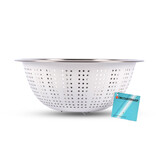
This multifunctional kitchen tool is a large colander ideal as a vegetable colander, fruit colander, and washable coland...
This multifunctional kitchen tool is a large colander ideal as a vegetable colander, fruit colander, and washable colander. Perfect for every kitchen, it offers versatility and convenience. Spectacularly special for you. Coarse sieve, small drip pan.
This multifunctional kitc...
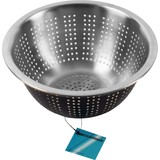
Draining your pans becomes a lot easier with the use of this stainless steel colander. The colander has a diameter of 24...
Draining your pans becomes a lot easier with the use of this stainless steel colander. The colander has a diameter of 24 cm.
Draining your pans become...
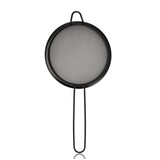
Small fine-mesh black stainless steel kitchen sieve with a 13 cm diameter, approximately 4 cm depth and a long handle. S...
Small fine-mesh black stainless steel kitchen sieve with a 13 cm diameter, approximately 4 cm depth and a long handle. Suitable for flour, cocoa, icing sugar, tea, sauces, stock, herbs and small portions of rice.
Small fine-mesh black sta...
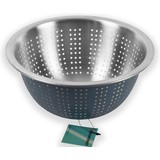
Draining your pans becomes a lot easier with the use of this stainless steel colander. The colander has a diameter of 24...
Draining your pans becomes a lot easier with the use of this stainless steel colander. The colander has a diameter of 24 cm.
Draining your pans become...
Overige categorieën in Household, Living & Cooking
Colanders and sieves for pasta, vegetables, fruit and baking
Colanders and Sieves
A colander or kitchen sieve is an essential tool for draining, rinsing, sifting and straining ingredients. Use a large colander for pasta, potatoes, rice, vegetables and fruit, or choose a fine-mesh sieve for flour, icing sugar, cocoa, sauces and stock. Within Colanders & Sieves, you can compare stainless-steel sieves, metal colanders, round strainers and designs with a long handle or sturdy side handles.
Compare the size, capacity, mesh and material to find the right kitchen tool for cooking, baking and food preparation. This category sits within Cooking Essentials, where practical tools for preparing, draining, sieving and pressing ingredients come together.
Colanders and Sieves: Which One Do You Need?
Colanders and sieves are both used to separate food from water, liquid or fine particles. However, they are designed for different kitchen tasks. The main difference is the size and structure of their openings.
A colander usually has relatively large holes or perforations. These allow water to drain quickly, making a colander ideal for draining pasta, potatoes and cooked vegetables. A large round colander is also useful for rinsing salad leaves, fresh vegetables and fruit.
A kitchen sieve has smaller holes or a fine mesh. This finer construction prevents small ingredients from passing through. A sieve is therefore suitable for rinsing rice, sifting flour, dusting icing sugar, removing lumps from cocoa and straining sauces, soups and stock.
The best option depends on the food you prepare most often. Many kitchens benefit from having a large pasta colander, a medium-sized fine-mesh strainer and a small kitchen sieve for baking and garnishing. For other preparation and cooking tasks, Kitchen Utensils covers a wider range of tools.
What Is the Difference Between a Colander and a Sieve?
A colander is mainly designed for draining or washing larger quantities of food. Its bowl-shaped design provides enough space for pasta, potatoes, vegetables and fruit. The larger drainage holes allow cooking water or rinse water to escape quickly.
A sieve, sometimes called a strainer, has smaller openings or a woven mesh. A fine-mesh sieve can retain rice grains, herbs and small food particles while allowing liquid to pass through. It can also be used to sift dry ingredients such as flour, icing sugar and cocoa powder.
Some products combine features of both tools. A finely perforated colander may be suitable for pasta as well as rice, while a large mesh strainer may work for vegetables and sauces. Check the opening size, capacity and construction rather than relying only on the product name.
Which Colander Should You Choose?
A Pasta Colander
A large pasta colander should have enough capacity to hold the complete contents of your saucepan. The bowl needs to be deep enough to prevent spaghetti, macaroni or other pasta from spilling over the edge while the cooking water drains away.
A colander with two sturdy side handles is easy to hold with both hands. This can provide more control when the colander contains hot and relatively heavy food. A stable base or raised foot also allows the colander to stand securely in the sink.
Consider the size of the drainage holes. They should allow water to escape quickly without letting smaller pieces of pasta fall through.
If the drained potatoes are going to be turned into mash, a Potato Masher has a separate function: drain first, then mash once the excess water has been removed.
A Colander for Vegetables and Fruit
A wide, round colander is a practical choice for washing vegetables, salad leaves and fruit. The open shape gives you room to move the ingredients under running water so that they can be rinsed from different sides.
For berries, beans, peas or finely chopped vegetables, choose a food strainer or colander with smaller perforations. This reduces the chance of small ingredients falling through the openings and into the sink.
After washing, the ingredients can remain in the colander for a short time so that excess water drains away before they are used in a salad, soup, side dish or dessert.
For further preparation, a stable Cutting Board can be combined with suitable Graters, Peelers & Slicers.
A Colander or Strainer for Rice
Not every colander is suitable for rice. If the holes are too large, rice grains can escape during rinsing or draining. Choose a finely perforated colander or a fine-mesh kitchen sieve with openings smaller than the rice grains.
The best mesh can depend on the type of rice. Small or thin grains require a finer sieve than larger grains. A wide rice strainer gives the grains enough space to move under running water, helping you rinse them more evenly.
A sieve with a long handle can be convenient for smaller amounts of rice, while a larger model with side handles may be more practical for family-sized portions.
If you regularly cook rice, pasta or vegetables for a set amount of time, a Kitchen Timer can help you drain them at a consistent point rather than relying only on the clock.
A Colander with a Handle or Side Handles
A large colander often has two side handles. This design allows you to lift and carry it with both hands, which is useful when draining a large pan of pasta, potatoes or vegetables.
A colander or kitchen strainer with one long handle is generally better suited to smaller portions. It can be held above a saucepan, bowl or sink without placing your hands close to the hot ingredients.
Some sieves have a small support hook opposite the handle. This allows the sieve to rest on the edge of a bowl or pan. Check the product dimensions to make sure it fits the cookware you regularly use.
Which Kitchen Sieve Should You Choose?
A Fine-Mesh Kitchen Sieve
A fine-mesh sieve is made from woven material with many small openings. It catches small food particles while allowing water or another liquid to pass through. This makes it one of the most versatile kitchen accessories for cooking and baking.
A fine strainer can be used for rinsing rice, straining stock, smoothing sauces and sifting dry ingredients. The finer the mesh, the smaller the particles it can retain.
Very fine mesh may cause thick liquids to pass through more slowly. For this reason, the finest sieve is not automatically the best option for every task. Choose a mesh size that matches the ingredients you plan to prepare.
A Flour Sieve for Baking
Flour can become compacted during storage and may contain small lumps. Passing it through a flour sieve helps break up these lumps and distributes the flour more evenly before it is added to a mixing bowl.
A fine-mesh sieve with a long handle is easy to hold over a bowl. For cakes, bread and larger baking recipes, a sieve with a wider diameter may save time. A small sieve is usually sufficient for individual desserts or small quantities of flour.
The same baking sieve can often be used for cocoa powder, icing sugar and other dry ingredients. Clean and dry it thoroughly after each use, particularly when switching between sweet and savoury ingredients.
For recipes where exact quantities matter, Weighing & Measuring can be used before the ingredients reach the sieve. A Kitchen Scale is particularly useful when flour, sugar or other ingredients are specified in grams.
A Sieve for Icing Sugar and Cocoa
A small fine-mesh sieve is ideal for dusting icing sugar or cocoa over a cake, tart, pancake or dessert. Place a small amount in the sieve and move it gently above the food while tapping the edge.
The fine mesh catches lumps and creates a lighter, more even layer. This gives you more control than shaking the ingredient directly from its packaging.
A compact sieve with a handle is particularly convenient because it can be moved easily over individual plates, drinks and desserts.
Once baked goods are ready to cut, a serrated Bread Knife has a completely different role from the sieve used during preparation.
A Sieve for Sauces and Stock
A kitchen sieve can remove herbs, seeds, skins and other solid ingredients from a sauce, soup or stock. A fine-mesh strainer is also helpful when you want a smoother sauce or clearer broth.
Choose a size that can be held securely above a saucepan, mixing bowl or Measuring Jug. A support hook or resting loop can make the process easier by allowing the sieve to sit on the rim of the container.
The mesh size affects the final result. A medium mesh removes larger solids and works relatively quickly. A finer mesh catches smaller particles but may require more time, particularly when the liquid is thick.
If you want to lift ingredients out of liquid while allowing the water or oil to fall back into the pan, Skimmers & Whisks may be more appropriate than transferring the complete contents through a sieve.
After straining, a Funnel can help transfer the liquid into a bottle, jar or container with a narrower opening.
A Small Kitchen Sieve
A small kitchen sieve is useful for icing sugar, cocoa, loose tea, herbs and small quantities of sauce. Its compact size is easy to move above a cup, plate or small bowl and requires little storage space.
A small sieve is not suitable for a full pan of pasta or a large quantity of vegetables. For these tasks, use a large colander or a wider kitchen strainer.
Keeping a small fine sieve in addition to a large colander gives you more flexibility when preparing different foods.
A Large Kitchen Sieve
A large sieve is suitable for larger quantities of flour, rice, vegetables or fruit. Its wider surface gives ingredients more room and makes rinsing, sifting and straining more efficient.
Check both the diameter and the depth. A deep sieve offers more capacity, while a broad and shallow sieve may be easier to use when dusting flour or icing sugar evenly.
Also check whether the sieve can rest securely on your bowls and pans. A sieve that is too small may fall into the container, while one that is too large may be difficult to balance.
Stainless Steel, Metal or Plastic?
A Stainless-Steel Colander or Sieve
Stainless steel is widely used for kitchen utensils because it is strong and suitable for many everyday food-preparation tasks. A stainless-steel colander can be used for draining pasta and vegetables, while a stainless-steel fine-mesh sieve is suitable for cooking and baking.
When choosing a stainless-steel kitchen sieve, look at the connection between the mesh, rim and handle. A strong construction helps prevent the mesh from loosening or changing shape during regular use.
Check the complete product description carefully. A sieve may have stainless-steel mesh while the handle, rim or support components are made from another metal or plastic.
A Metal Colander or Sieve
The word “metal” does not always mean that the product is made entirely from stainless steel. Review the material specifications when you are specifically looking for a stainless-steel kitchen strainer.
For a metal colander, consider the thickness, stability and finish. It should remain steady when filled with food, and the edges should feel smooth and comfortable to handle.
For a metal sieve, check whether the mesh feels firmly attached to the outer rim. A stable mesh is important when pressing ingredients gently or working with heavier food.
For additional everyday preparation tools, browse Other Kitchen Utensils. If you prefer several tools supplied together, Kitchen Utensil Sets can help you compare combinations without treating every kitchen task as a separate purchase.
A Plastic Colander
A plastic colander is usually lightweight and easy to lift. Plastic designs are available in many sizes, shapes and colours and can be convenient for washing fruit, vegetables and salad.
Check the individual product information for temperature limitations and cleaning instructions. Not every plastic colander is suitable for the same level of heat or for direct contact with a very hot saucepan.
A lightweight plastic colander may be convenient for everyday rinsing, while a sturdy metal or stainless-steel model may be preferable for heavier ingredients.
What Should You Consider When Buying a Colander or Sieve?
Size and Capacity
Think about how many people you normally cook for and which ingredients you prepare. A small sieve is suitable for garnishing, tea and individual portions. A large colander is more practical for a full saucepan of pasta, potatoes or vegetables.
Consider both the width and depth. Two colanders with the same diameter can have very different capacities if one is significantly deeper than the other.
The product should be large enough to hold the food without being difficult to store or handle.
Hole Size and Mesh
Large drainage holes allow water to escape quickly and work well for pasta, potatoes and larger vegetables. Small perforations are better for rice, beans, berries and finely chopped ingredients.
Fine mesh is suitable for flour, icing sugar, cocoa, sauces and stock. Very fine mesh catches more particles but can slow down the straining process.
Choose the opening size according to the smallest ingredient you intend to place in the sieve or colander.
Handles and Grip
A large colander with two side handles is practical for draining heavy quantities. Two handles allow the weight to be shared between both hands and can give you more stability above the sink.
A sieve with one long handle provides control when working over a bowl, saucepan or plate. Check that the handle is securely attached and comfortable to hold.
A hanging loop is useful if you prefer to store your kitchen tools on a rail or hook.
Stability
A colander with a broad foot or stable base can stand independently in the sink. This allows food to continue draining without requiring you to hold it throughout the process.
A kitchen sieve may have a support hook opposite the handle. This feature allows the sieve to rest over a bowl or pan while you pour liquid through it.
Measure your most frequently used bowls and pans when the ability to rest the sieve securely is important.
Cleaning and Maintenance
Rinse a colander or sieve shortly after use. Flour, rice, sauce and other small particles can dry inside the mesh or around the rim, making them more difficult to remove later.
Clean both sides using warm water, washing-up liquid and a soft brush. Pay particular attention to the area where the mesh joins the rim and handle.
Always check the product instructions before placing a sieve or colander in a dishwasher. Allow metal products to dry fully before storing them.
The same principle applies to other tools with small openings. Garlic Presses are easier to clean when garlic fibres are removed before they have dried inside the perforations.
A Multifunctional Kitchen Tool
A colander or sieve can be used for much more than draining pasta. Depending on its size and mesh, it can help you wash fruit, rinse vegetables, clean rice, sift flour, dust desserts and strain stock or sauces.
For this reason, it can be useful to own several sizes. A large colander can handle main meals, a medium fine-mesh sieve can be used for rice and sauces, and a small sieve is ideal for baking and garnishing.
A colander and sieve set may be a practical option when you want matching tools in different sizes. Before selecting a set, check that each piece has a distinct and useful size rather than choosing only by appearance.
A Cheese Slicer has a much more specific purpose, while Salt & Pepper Sets belong primarily to seasoning and serving. Keeping these tasks separate makes it easier to organise kitchen tools by function.
Combining Colanders and Sieves with Kitchen Knives
Before vegetables, fruit or other ingredients are washed and drained, they may also need trimming, peeling or cutting. Within Kitchen Knives, you can match the blade to the preparation task.
A Chef's Knife is useful for general chopping and slicing, while a Santoku Knife offers a different blade profile for many everyday food-preparation tasks.
For small peeling and precision work, a Paring Knife can be easier to control. A Cleaver has a heavier design intended for different chopping jobs.
When preparing meat, Meat Knives have a different role, while Steak Knives are primarily used when eating at the table rather than during ingredient preparation.
If you need several blade types, Knife Sets can be compared according to the knives you actually use. For maintenance and safer storage, browse Kitchen Knife Accessories.
Watch Discountershop on YouTube
Visit the Discountershop YouTube channel for product videos and practical examples covering kitchen tools, cooking utensils and other products used for preparing, cooking and serving food.
Frequently Asked Questions About Colanders and Sieves
What is the main difference between a colander and a sieve?
A colander normally has larger holes and is designed for quickly draining or washing pasta, potatoes, vegetables and fruit. A sieve has smaller openings or fine mesh and is better suited to rice, flour, icing sugar, cocoa, sauces and stock.
Which sieve is best for rice?
Choose a fine-mesh kitchen sieve or a finely perforated rice strainer. The openings need to be smaller than the rice grains. A wide sieve gives the rice enough room to move under running water so it can be rinsed thoroughly.
Can I drain pasta with a fine-mesh sieve?
You can use a fine-mesh sieve for a small portion of pasta, provided it is large, strong and suitable for hot food. A large pasta colander is usually more practical for a full saucepan because its larger holes allow the cooking water to drain more quickly.
Which sieve should I use for flour?
Use a fine flour sieve or fine-mesh kitchen strainer. It will help remove lumps and distribute flour more evenly. A long-handled sieve is easy to hold over a mixing bowl, while a wider model is useful for larger baking recipes.
Can I use the same sieve for flour and sauces?
Yes, provided that the sieve is suitable for both purposes and is cleaned thoroughly after each use. Grease and strong flavours can remain in the mesh, so frequent bakers may prefer to keep one sieve for dry ingredients and another for savoury cooking.
What does fine mesh mean?
Fine mesh means that the woven surface contains many small openings. These openings retain small particles while allowing liquid or very fine powder to pass through. Fine-mesh sieves are useful for rice, flour, cocoa, icing sugar, sauces and stock.
Is a stainless-steel sieve better than a plastic sieve?
It depends on the intended use. Stainless-steel models are generally strong and suitable for many kitchen tasks, while plastic models are often lightweight. Consider the construction, mesh size, dimensions, handle and temperature suitability as well as the material.
What size colander is suitable for a family?
Choose a colander that can hold the contents of your largest regularly used saucepan without food spilling over the edge. Look at the depth and total capacity as well as the diameter. A large colander with two handles is often practical for family meals.
Why does a colander have a raised base?
A raised base helps the colander stand securely in the sink and keeps its lower surface away from the bottom of the sink. This allows water to continue draining freely and reduces the need to hold the colander while food is draining.
How do I clean a fine-mesh sieve?
Rinse it immediately after use, then clean both sides carefully with warm water, washing-up liquid and a soft brush. Pay attention to the rim and handle connection, where food can collect. Check the product instructions before putting it in the dishwasher.
Can I wash vegetables and fruit in a sieve?
Yes. A medium or large kitchen sieve is suitable for smaller quantities of fruit and vegetables. For a large quantity of salad leaves, potatoes or vegetables, a spacious colander is generally easier to use.
Which sieve should I use for icing sugar and cocoa?
Use a small fine-mesh sieve with a handle. Add a small amount of icing sugar or cocoa and tap the edge gently while moving it above the cake, dessert or drink. This produces a finer and more even layer.
What is a flour sifter?
A flour sifter is a tool used to break up lumps and aerate flour and other dry baking ingredients. Some flour sifters are simple fine-mesh sieves, while others have a handle or mechanical system that pushes the flour through the mesh.
Can a sieve rest on a saucepan or bowl?
Some sieves have a support hook or loop opposite the handle. This allows the sieve to rest on the rim of a saucepan or bowl. Check the diameter and overall length to make sure it fits securely without slipping or tipping.
When is a colander and sieve set useful?
A set is helpful when you regularly prepare different quantities and types of food. A small sieve can be used for icing sugar and cocoa, a medium sieve for rice and sauces, and a large colander for pasta, vegetables and fruit.
Is a colander suitable for draining rice?
Only when the holes are smaller than the rice grains. Standard pasta colanders often have openings that are too large. For rice, a finely perforated colander or fine-mesh strainer is usually the safer choice.
What is the best colander for washing fruit?
Choose a wide colander with enough space to move the fruit under running water. For berries and other small fruit, select a model with small holes to prevent the fruit from falling through.
Can I use a kitchen sieve to strain soup?
Yes. A kitchen sieve can remove herbs, vegetable pieces and other solids from soup or stock. Use a fine-mesh sieve for a smoother result and a medium-mesh strainer when you only need to remove larger pieces.
Should I choose a sieve with one handle or two handles?
A long single handle provides control when holding a sieve over a saucepan or bowl. Two side handles are more suitable for large colanders carrying heavier quantities of food. The best choice depends on the size of the product and how you plan to use it.
How many colanders and sieves do I need?
For most kitchens, a large colander, a medium fine-mesh sieve and a small baking sieve cover the majority of tasks. This combination can be used for pasta, vegetables, rice, sauces, flour, cocoa and icing sugar.
