Cutlery for Everyday Meals, Dining and Guests
Cutlery is one of those everyday products you tend to notice only when it does not quite suit the meal. A fork that feels too heavy, a knife that requires unnecessary pressure or a spoon that barely fits inside a coffee cup can make an otherwise well-set table less practical.
That is why choosing Cutlery is about more than matching a finish to your plates. At Discountershop, you can compare table cutlery according to how you actually eat at home, from breakfast and quick lunches to family dinners and meals with guests. Combine it with suitable Tableware and then compare material, place settings, dimensions, balance and maintenance.
Which types of cutlery do you actually need?
Not every household needs a drawer filled with specialist utensils. A useful cutlery collection starts with the pieces you reach for repeatedly, then adds more specific items only when your eating habits justify them.
The core types include:
- Dinner knife: suitable for most everyday main courses. A steak knife is useful when a sharper cutting edge is needed.
- Dinner fork: the standard fork for lunch and main meals.
- Tablespoon: practical for soup, bowl meals and dishes that are difficult to eat with a fork.
- Teaspoon: useful for tea, yoghurt, desserts and smaller portions.
- Coffee spoon: usually shorter than a teaspoon, making it easier to use with espresso cups and small mugs.
- Dessert fork and dessert spoon: smaller than dinner cutlery and intended for desserts, cakes and lighter dishes.
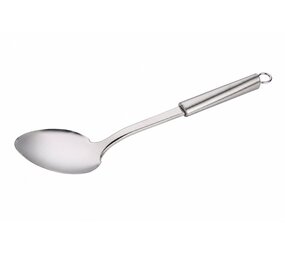
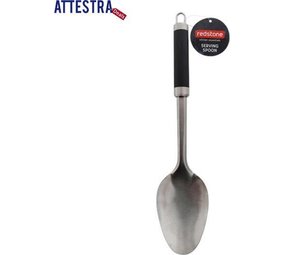
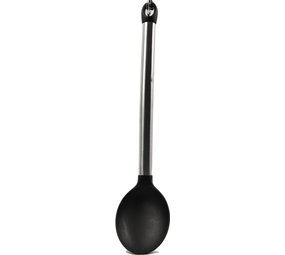
- Serving cutlery: such as serving spoons and serving forks, used to move food from a shared dish rather than as part of an individual place setting.
Browse Spoons when you need to compare spoon sizes and uses in more detail. The dimensions of your Plates also matter because oversized cutlery can feel awkward next to compact breakfast or side plates.
How many pieces of cutlery do you need?
A label such as 24-piece, 30-piece or 72-piece does not tell you enough on its own. What matters is how those pieces are divided.
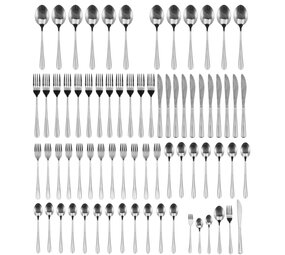
A 24-piece cutlery set often contains six dinner knives, six dinner forks, six tablespoons and six smaller spoons, creating six four-piece place settings. Another 24-piece set may have a different combination, so always check the actual contents.
For a household of four, six place settings can be more practical than exactly four. It leaves spare cutlery when some pieces are in the dishwasher or when guests join unexpectedly. If you regularly host larger meals, eight or twelve place settings may make more sense.
Breakfast habits also affect what you need. Cups & Mugs usually pair better with smaller spoons than dinner cutlery. The same applies to Coffee & Tea Accessories, while Egg Cups are generally easier to use with a small spoon than a standard tablespoon.
18/10, 18/0 and knife steel: what do the numbers mean?
Many cutlery sets are made from stainless steel, but not all stainless steel has the same composition.
18/10 stainless steel contains approximately 18% chromium and 10% nickel. Chromium contributes to the protective surface layer, while nickel helps with corrosion resistance and surface appearance.
18/0 stainless steel also contains around 18% chromium but no nickel. This can affect corrosion resistance, shine and magnetic properties.
These numbers do not automatically tell you whether every item is dishwasher-safe. Surface coating, polishing, construction and manufacturer care instructions still matter.
Table knives may also use a different steel composition from forks and spoons. A knife blade needs sufficient hardness to maintain its cutting performance, so the knife within the same cutlery set may behave differently when exposed to moisture or dishwasher detergent.
Size, weight and balance affect how cutlery feels
Centimetres matter more than many shoppers expect. Dinner forks in many collections are around 20–22 cm long, while table knives can measure around 22–24 cm. Dessert cutlery is generally shorter, and teaspoons or coffee spoons often fall somewhere around 11–16 cm.
Measure your cutlery drawer before buying longer knives. A 24 cm table knife may not fit comfortably inside a compact organiser.
Weight alone does not determine comfort either. Pay attention to balance. A piece of cutlery that is excessively heavy at one end may slide from a plate more easily. Rounded handles can be comfortable during longer meals, while flatter handles take up less vertical space in a crowded drawer.
Cleaning stainless steel cutlery and reducing stains
“Stainless” does not mean completely unaffected by every condition. Salt, vinegar, citrus, mustard, ketchup and other acidic or salty food residues can affect stainless steel surfaces when left in contact for long periods.
Remove food residue reasonably soon after eating. If the cutlery is dishwasher-safe, arrange pieces loosely enough for water to circulate between them. Avoid leaving knives tightly pressed against forks or spoons, and do not leave damp cutlery sitting inside a closed dishwasher for unnecessarily long periods.
Small brown marks can sometimes be flash rust rather than corrosion originating from the cutlery itself. Rust particles from another metal object in the dishwasher can transfer onto stainless steel. Check damaged dishwasher baskets, kitchen tools and other metal items if marks keep returning.
When setting the table, Table Accessories help organise each place setting. Placemats define individual dining spaces, while Tablecloths cover the full surface.
Add Napkins beside or on the plate depending on the setting, and use Coasters beneath glasses, bottles or serving vessels.
How to store cutlery properly
A cutlery tray does more than keep the drawer tidy. Separating knives, forks, large spoons and smaller utensils reduces repeated contact between sharp edges and polished surfaces.
Store cutlery only once it is completely dry. Moisture can remain trapped longer inside a closed drawer than on an open drying rack.
For safer and more practical storage:
- separate knives from forks and spoons where possible;
- position sharp steak knives so you do not reach across the cutting edge;
- avoid overfilling individual compartments;
- remove pieces you rarely use if the drawer becomes crowded;
- check coated or coloured cutlery for manufacturer-specific storage advice.
If space is limited, count how many pieces you actually use during a normal week. Twenty rarely used dessert spoons may occupy more valuable drawer space than a smaller, better-balanced set.
From serving dish to plate: where cutlery ends and kitchen utensils begin
During a meal, the line between dining cutlery and serving tools becomes important. Food may move from Serving Bowls to individual plates, while snacks can be arranged on Tiered Serving Stands or Serving Boards. Water can be placed on the table in Carafes.
This is also where table cutlery gives way to Kitchen Utensils. A dinner fork belongs at the place setting; a whisk, skimmer or potato masher belongs to food preparation or serving.
For preparation, Graters, Peelers & Slicers work alongside Cutting Boards. Kitchen Utensil Sets can cover several cooking tasks, while Skimmers & Whisks are intended for more specific preparation methods.
Other tasks have their own tools. Use Cheese Slicers for slicing cheese, Potato Mashers for mash and Salt & Pepper Sets for seasoning at the table.
Funnels help transfer liquids or dry ingredients with less mess, while Kitchen Timers help control cooking time. Browse Other Kitchen Utensils for tools that do not fall directly under dining cutlery.
How to place cutlery for a multi-course dinner
For an everyday meal, one fork on the left and one knife on the right is usually enough. With several courses, the arrangement becomes functional: use the cutlery furthest from the plate first, then work inwards.
Knives sit to the right of the plate with the cutting edge facing inward. Forks sit on the left. A soup spoon is placed to the right of the knives when soup is served as a separate course.
Dessert cutlery can sit horizontally above the plate or be brought to the table with dessert. This keeps a formal setting organised without covering the table in utensils that may never be used.
If you maintain a separate outdoor smoking area, keep it away from the dining and serving area. Cigarette Accessories can be viewed separately for that space.
Watch Discountershop on YouTube
Visit the Discountershop YouTube channel for product videos and practical examples covering kitchen, dining and household products.
Frequently Asked Questions About Cutlery
How many people can a 24-piece cutlery set serve?
A 24-piece set often contains six knives, six forks, six tablespoons and six teaspoons, making six four-piece place settings. Always check the contents, because manufacturers can divide the same number of pieces differently.
What is the difference between 18/10 and 18/0 stainless steel cutlery?
18/10 stainless steel contains approximately 18% chromium and 10% nickel. 18/0 contains chromium but no nickel. The difference can affect corrosion resistance, surface shine and magnetic behaviour, although product construction also matters.
Why can knives in a cutlery set use different steel?
Table knives may require harder steel so the blade can retain its cutting performance. As a result, the knife may have a different alloy from the forks and spoons included in the same set.
Why does stainless steel cutlery sometimes develop brown spots?
Salt, acids, moisture and rusting metal objects can contribute to brown marks. Remove food residue promptly and check the dishwasher for damaged baskets or other rusting components if spots repeatedly appear after washing.
What is the best way to store cutlery in a kitchen drawer?
Use separate compartments for knives, forks, spoons and smaller pieces. Store everything completely dry and position sharp knives safely so you do not have to reach across a cutting edge to retrieve another item.
What is the difference between dinner cutlery and dessert cutlery?
Dinner forks and knives are sized for main courses, while dessert cutlery is normally shorter and lighter. Teaspoons and coffee spoons are smaller still and are intended for drinks, yoghurt and small portions.
How many place settings are practical for everyday use?
At least one complete setting per person is necessary, but additional sets are useful when cutlery is in the dishwasher or guests visit. A six-person household may therefore benefit from eight to twelve settings.
How should cutlery be arranged for several courses?
Place forks to the left and knives to the right with cutting edges facing the plate. Use the outermost cutlery first and move inward with each course, adding a soup spoon when required.
When should you use a steak knife instead of a table knife?
A steak knife has a sharper, often serrated edge and requires less pressure when cutting meat with a firm exterior. A standard table knife is usually sufficient for softer foods and everyday meals.
How can you prevent stored cutlery from becoming dull or scratched?
Store cutlery completely dry, separate sharp pieces where possible and avoid abrasive cleaners on polished or coated surfaces. For coloured or decorative flatware, follow the manufacturer's specific washing and storage instructions.
This set of 4 small wooden spoons ...
This set of 4 small woo...
The serving spoon is a practical a...
The serving spoon is a ...
Looking for a soup spoon / pile? Y...
Looking for a soup spoo...
Dish drying rack with cutlery hold...
Dish drying rack with c...
This set of 10 small wooden spoons...
This set of 10 small wo...
Discover our foam ladles and cooki...
Discover our foam ladle...
- Ordered on working days before 12:00, delivered the next day!
- Buy now, pay later
- Fast delivery in the Netherlands & Belgium
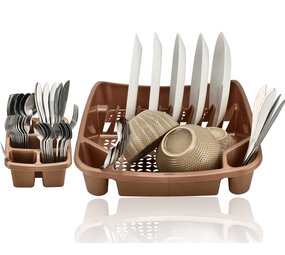
72-piece stainless steel cutlery s...
72-piece stainless stee...
Discover our range of soup spoons ...
Discover our range of s...
Durable brown/black skimmer, 34 cm...
Durable brown/black ski...
Explore our durable serving spoon ...
Explore our durable ser...
4-Piece Bamboo Spatula Set - Bambo...
4-Piece Bamboo Spatula ...
This foam spoon is made of stainle...
This foam spoon is made...
Stainless steel serving spoon 34 c...
Stainless steel serving...
Indispensable for your kitchen, th...
Indispensable for your ...
Kitchenware serving spoon 35 stain...
Kitchenware serving spo...
Overige categorieën in Household, Living & Cooking
Cutlery for Everyday Meals, Dining and Guests
Cutlery is one of those everyday products you tend to notice only when it does not quite suit the meal. A fork that feels too heavy, a knife that requires unnecessary pressure or a spoon that barely fits inside a coffee cup can make an otherwise well-set table less practical.
That is why choosing Cutlery is about more than matching a finish to your plates. At Discountershop, you can compare table cutlery according to how you actually eat at home, from breakfast and quick lunches to family dinners and meals with guests. Combine it with suitable Tableware and then compare material, place settings, dimensions, balance and maintenance.
Which types of cutlery do you actually need?
Not every household needs a drawer filled with specialist utensils. A useful cutlery collection starts with the pieces you reach for repeatedly, then adds more specific items only when your eating habits justify them.
The core types include:
- Dinner knife: suitable for most everyday main courses. A steak knife is useful when a sharper cutting edge is needed.
- Dinner fork: the standard fork for lunch and main meals.
- Tablespoon: practical for soup, bowl meals and dishes that are difficult to eat with a fork.
- Teaspoon: useful for tea, yoghurt, desserts and smaller portions.
- Coffee spoon: usually shorter than a teaspoon, making it easier to use with espresso cups and small mugs.
- Dessert fork and dessert spoon: smaller than dinner cutlery and intended for desserts, cakes and lighter dishes.
- Serving cutlery: such as serving spoons and serving forks, used to move food from a shared dish rather than as part of an individual place setting.
Browse Spoons when you need to compare spoon sizes and uses in more detail. The dimensions of your Plates also matter because oversized cutlery can feel awkward next to compact breakfast or side plates.
How many pieces of cutlery do you need?
A label such as 24-piece, 30-piece or 72-piece does not tell you enough on its own. What matters is how those pieces are divided.
A 24-piece cutlery set often contains six dinner knives, six dinner forks, six tablespoons and six smaller spoons, creating six four-piece place settings. Another 24-piece set may have a different combination, so always check the actual contents.
For a household of four, six place settings can be more practical than exactly four. It leaves spare cutlery when some pieces are in the dishwasher or when guests join unexpectedly. If you regularly host larger meals, eight or twelve place settings may make more sense.
Breakfast habits also affect what you need. Cups & Mugs usually pair better with smaller spoons than dinner cutlery. The same applies to Coffee & Tea Accessories, while Egg Cups are generally easier to use with a small spoon than a standard tablespoon.
18/10, 18/0 and knife steel: what do the numbers mean?
Many cutlery sets are made from stainless steel, but not all stainless steel has the same composition.
18/10 stainless steel contains approximately 18% chromium and 10% nickel. Chromium contributes to the protective surface layer, while nickel helps with corrosion resistance and surface appearance.
18/0 stainless steel also contains around 18% chromium but no nickel. This can affect corrosion resistance, shine and magnetic properties.
These numbers do not automatically tell you whether every item is dishwasher-safe. Surface coating, polishing, construction and manufacturer care instructions still matter.
Table knives may also use a different steel composition from forks and spoons. A knife blade needs sufficient hardness to maintain its cutting performance, so the knife within the same cutlery set may behave differently when exposed to moisture or dishwasher detergent.
Size, weight and balance affect how cutlery feels
Centimetres matter more than many shoppers expect. Dinner forks in many collections are around 20–22 cm long, while table knives can measure around 22–24 cm. Dessert cutlery is generally shorter, and teaspoons or coffee spoons often fall somewhere around 11–16 cm.
Measure your cutlery drawer before buying longer knives. A 24 cm table knife may not fit comfortably inside a compact organiser.
Weight alone does not determine comfort either. Pay attention to balance. A piece of cutlery that is excessively heavy at one end may slide from a plate more easily. Rounded handles can be comfortable during longer meals, while flatter handles take up less vertical space in a crowded drawer.
Cleaning stainless steel cutlery and reducing stains
“Stainless” does not mean completely unaffected by every condition. Salt, vinegar, citrus, mustard, ketchup and other acidic or salty food residues can affect stainless steel surfaces when left in contact for long periods.
Remove food residue reasonably soon after eating. If the cutlery is dishwasher-safe, arrange pieces loosely enough for water to circulate between them. Avoid leaving knives tightly pressed against forks or spoons, and do not leave damp cutlery sitting inside a closed dishwasher for unnecessarily long periods.
Small brown marks can sometimes be flash rust rather than corrosion originating from the cutlery itself. Rust particles from another metal object in the dishwasher can transfer onto stainless steel. Check damaged dishwasher baskets, kitchen tools and other metal items if marks keep returning.
When setting the table, Table Accessories help organise each place setting. Placemats define individual dining spaces, while Tablecloths cover the full surface.
Add Napkins beside or on the plate depending on the setting, and use Coasters beneath glasses, bottles or serving vessels.
How to store cutlery properly
A cutlery tray does more than keep the drawer tidy. Separating knives, forks, large spoons and smaller utensils reduces repeated contact between sharp edges and polished surfaces.
Store cutlery only once it is completely dry. Moisture can remain trapped longer inside a closed drawer than on an open drying rack.
For safer and more practical storage:
- separate knives from forks and spoons where possible;
- position sharp steak knives so you do not reach across the cutting edge;
- avoid overfilling individual compartments;
- remove pieces you rarely use if the drawer becomes crowded;
- check coated or coloured cutlery for manufacturer-specific storage advice.
If space is limited, count how many pieces you actually use during a normal week. Twenty rarely used dessert spoons may occupy more valuable drawer space than a smaller, better-balanced set.
From serving dish to plate: where cutlery ends and kitchen utensils begin
During a meal, the line between dining cutlery and serving tools becomes important. Food may move from Serving Bowls to individual plates, while snacks can be arranged on Tiered Serving Stands or Serving Boards. Water can be placed on the table in Carafes.
This is also where table cutlery gives way to Kitchen Utensils. A dinner fork belongs at the place setting; a whisk, skimmer or potato masher belongs to food preparation or serving.
For preparation, Graters, Peelers & Slicers work alongside Cutting Boards. Kitchen Utensil Sets can cover several cooking tasks, while Skimmers & Whisks are intended for more specific preparation methods.
Other tasks have their own tools. Use Cheese Slicers for slicing cheese, Potato Mashers for mash and Salt & Pepper Sets for seasoning at the table.
Funnels help transfer liquids or dry ingredients with less mess, while Kitchen Timers help control cooking time. Browse Other Kitchen Utensils for tools that do not fall directly under dining cutlery.
How to place cutlery for a multi-course dinner
For an everyday meal, one fork on the left and one knife on the right is usually enough. With several courses, the arrangement becomes functional: use the cutlery furthest from the plate first, then work inwards.
Knives sit to the right of the plate with the cutting edge facing inward. Forks sit on the left. A soup spoon is placed to the right of the knives when soup is served as a separate course.
Dessert cutlery can sit horizontally above the plate or be brought to the table with dessert. This keeps a formal setting organised without covering the table in utensils that may never be used.
If you maintain a separate outdoor smoking area, keep it away from the dining and serving area. Cigarette Accessories can be viewed separately for that space.
Watch Discountershop on YouTube
Visit the Discountershop YouTube channel for product videos and practical examples covering kitchen, dining and household products.
Frequently Asked Questions About Cutlery
How many people can a 24-piece cutlery set serve?
A 24-piece set often contains six knives, six forks, six tablespoons and six teaspoons, making six four-piece place settings. Always check the contents, because manufacturers can divide the same number of pieces differently.
What is the difference between 18/10 and 18/0 stainless steel cutlery?
18/10 stainless steel contains approximately 18% chromium and 10% nickel. 18/0 contains chromium but no nickel. The difference can affect corrosion resistance, surface shine and magnetic behaviour, although product construction also matters.
Why can knives in a cutlery set use different steel?
Table knives may require harder steel so the blade can retain its cutting performance. As a result, the knife may have a different alloy from the forks and spoons included in the same set.
Why does stainless steel cutlery sometimes develop brown spots?
Salt, acids, moisture and rusting metal objects can contribute to brown marks. Remove food residue promptly and check the dishwasher for damaged baskets or other rusting components if spots repeatedly appear after washing.
What is the best way to store cutlery in a kitchen drawer?
Use separate compartments for knives, forks, spoons and smaller pieces. Store everything completely dry and position sharp knives safely so you do not have to reach across a cutting edge to retrieve another item.
What is the difference between dinner cutlery and dessert cutlery?
Dinner forks and knives are sized for main courses, while dessert cutlery is normally shorter and lighter. Teaspoons and coffee spoons are smaller still and are intended for drinks, yoghurt and small portions.
How many place settings are practical for everyday use?
At least one complete setting per person is necessary, but additional sets are useful when cutlery is in the dishwasher or guests visit. A six-person household may therefore benefit from eight to twelve settings.
How should cutlery be arranged for several courses?
Place forks to the left and knives to the right with cutting edges facing the plate. Use the outermost cutlery first and move inward with each course, adding a soup spoon when required.
When should you use a steak knife instead of a table knife?
A steak knife has a sharper, often serrated edge and requires less pressure when cutting meat with a firm exterior. A standard table knife is usually sufficient for softer foods and everyday meals.
How can you prevent stored cutlery from becoming dull or scratched?
Store cutlery completely dry, separate sharp pieces where possible and avoid abrasive cleaners on polished or coated surfaces. For coloured or decorative flatware, follow the manufacturer's specific washing and storage instructions.

Household, Living & Cooking
Outdoor, Travel & Sports
DIY, Garden & Animals
Fashion accessories & Shoes
Car & Motor
Computer & Electronics
Office & School
Beautiful & Healthy
Toys
Eat Drink
Baby
Christmas
King's Day