 Household, Living & Cooking
 Outdoor, Travel & Sports
 DIY, Garden & Animals
 Fashion accessories & Shoes
 Car & Motor
 Computer & Electronics
 Office & School
 Beautiful & Healthy
 Toys
Toys Eat Drink
 Baby
Baby Christmas
 King's Day


 8
8Chimney Starters for Fast and Even BBQ Lighting
Chimney Starters
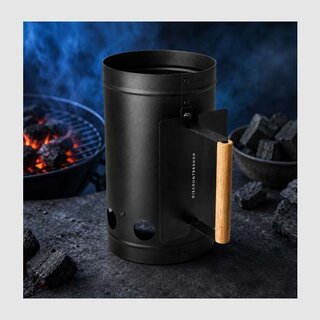
A chimney starter is a metal cylinder used to light barbecue briquettes or charcoal before cooking. Ventilation openings near the bottom draw in air while heated air rises through the cylinder. This chimney effect helps the fire spread upwards through the fuel. At Discountershop, you can compare BBQ starters by capacity, material, handle, heat shield and construction.
View all chimney starters
How does a chimney starter work?
The charcoal or briquettes rest on a grate or perforated base inside the cylinder. Suitable fire-starting material burns beneath it. Rising heat ignites the lower coals before the fire gradually moves towards the top.
This product may also be called a:
BBQ starter;
charcoal starter;
coal starter;
barbecue chimney;
briquette starter;
charcoal chimney.
Use suitable Briquettes when planning a longer barbecue session or low-and-slow preparation. For shorter cooking sessions or a quickly responding fire, compare Charcoal. Always confirm that the chosen fuel is suitable for both your barbecue and chimney starter.
What should you check when buying a chimney starter?
Match the capacity to the size of your barbecue and the amount of fuel you normally use. A larger starter is not automatically the best choice. A compact model may be easier to handle for a small barbecue or limited quantity of charcoal.
Compare the following features:
diameter and height of the cylinder;
capacity for charcoal or briquettes;
material and wall construction;
size and position of ventilation openings;
distance between the cylinder and handle;
presence of a heat shield;
additional support handle, if fitted;
shape of the pouring edge;
total weight without fuel.
A heat shield reduces direct radiant heat towards your hand, but it does not keep the starter cold. The cylinder, handle and other metal components may become extremely hot during use.
How to use a chimney starter
Position the barbecue outdoors on a level and stable surface, away from combustible objects.
Remove the cooking grate to access the charcoal grate.
Place suitable Firelighters on the charcoal grate according to their instructions.
Fill the starter with the recommended quantity of charcoal or briquettes. Do not overfill it or obstruct the airflow.
Ignite the firelighters with a suitable Lighter, then position the starter above them.
Leave the starter upright and keep children, animals and other people away.
Wait until the upper coals are glowing and beginning to develop a grey ash coating. Timing varies by fuel, quantity and weather.
Put on heat-resistant barbecue gloves.
Hold the main handle securely and only use a support handle as instructed.
Pour the glowing coals slowly onto the charcoal grate and arrange them for direct or indirect cooking.
Place the empty hot starter in the safe location specified by its manufacturer.
Allow it to cool completely before touching, cleaning or storing it.
Essential safety information
Only use a chimney starter outdoors. Burning charcoal or briquettes produces carbon monoxide. Never use the starter inside a home, garage, shed, tent or other enclosed space.
Light the starter on the charcoal grate of a suitable barbecue. Do not place it on concrete because trapped moisture can expand under intense heat and cause the surface to crack. Never place a hot starter on wood, plastic, grass, a garden table or another combustible surface.
Do not use petrol, methylated spirits or other highly flammable liquids. Never pour liquid fuel over glowing coals. Keep your face, arms and loose clothing away from the top of the starter because flames, sparks and hot air may rise from it.
Before each use, confirm that:
the handle is firmly attached;
the heat shield is secure and not deformed;
the cylinder has no holes, cracks or severely weakened areas;
the internal grate and base are intact;
the ventilation holes are not obstructed;
no dangerous sharp edges have developed.
Do not use a damaged starter. Never leave it unattended while burning, and do not move the barbecue while either the starter or coals remain hot.
Pouring out coals safely
Clear the route between the starter and charcoal grate before lifting. Never hold the starter above bare feet, animals or combustible objects. Pour slowly and close to the charcoal grate. Pouring from excessive height can scatter sparks and pieces of glowing fuel.
Strong wind may spread ash and sparks. Delay lighting when the conditions prevent you from controlling the fire safely. Maintain a secure grip until the starter is empty, then place it down carefully. Do not touch the cylinder to test whether it has cooled.
Cleaning and storing a BBQ starter
Let the starter cool completely. Remove loose ash with a dry brush and keep its ventilation holes clear. Do not pour water over a glowing-hot starter. Sudden cooling and steam may create a hazard and can affect the metal.
Store the starter in a dry place to limit corrosion. Surface discoloration can occur due to heat, but rusted areas should be checked for structural weakening. Replace the starter if its base, handle or cylinder is no longer reliable.
View the chimney starters available from Discountershop and choose a capacity suited to your barbecue and normal amount of fuel.
Choose your BBQ starter
Watch our chimney-starter videos on YouTube
Visit our YouTube channel for product videos showing chimney starters and other barbecue accessories. See the capacity, ventilation openings, handle and heat shield. The videos help explain how to fill the starter, position it on the barbecue and pour out the glowing fuel in a controlled manner.
Frequently asked questions about chimney starters
1. Why does a chimney starter have holes near the bottom?
The holes allow oxygen to enter. Heated air rises through the cylinder, helping the fire spread through the charcoal or briquettes.
2. Does a chimney starter need to be completely full?
No. Use only the amount required for your barbecue and cooking method. Overfilling can restrict airflow and make the hot starter heavier to lift and pour.
3. Can you use a half-full charcoal chimney?
Yes, provided the instructions permit it and the fuel rests securely on the internal grate. A smaller quantity may be appropriate for a compact barbecue or short cooking session.
4. Why does a chimney starter smoke at first?
Smoke can come from the firelighter or fuel during ignition. Excessive or unusual smoke may indicate moisture, contamination or unsuitable materials.
5. Can you add more fuel while the starter is burning?
Avoid adding fuel over an open flame unless the manufacturer describes a safe method. Falling coals may produce sparks and make the starter unstable.
6. What should you do if the firelighter goes out?
Leave the starter in a safe position and check whether any flame or glowing fuel remains. Do not relight it without looking, and never add lighting fluid. Follow the firelighter instructions.
7. Does the handle of a chimney starter become hot?
It can. Distance from the cylinder and a heat shield reduce heat transfer but do not eliminate it. Always wear suitable heat-resistant barbecue gloves.
8. Can you use a chimney starter in strong wind?
Strong wind can spread flames, ash and sparks while accelerating combustion. Do not use the starter if you cannot control the fire and surrounding area safely.
9. Is discoloration of a metal BBQ starter normal?
Metal may change colour after exposure to high temperatures. Also inspect it for deformation, loose connections, sharp edges and deep corrosion. Stop using it if the structure is weakened.
10. When should a chimney starter be replaced?
Replace it if the handle becomes loose, the heat shield is damaged, the base has rusted through, or the cylinder is severely deformed or cracked. Repairs must not compromise its construction or safety.
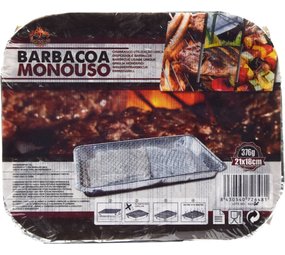
The one-time picnic disposable bar...
The one-time picnic dis...
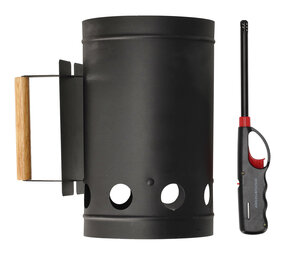
Metal charcoal chimney starter mea...
Metal charcoal chimney ...
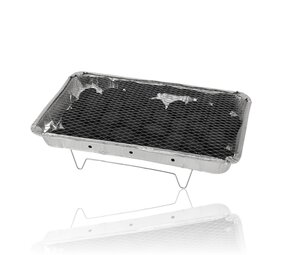
Disposable Charcoal Barbecue measu...
Disposable Charcoal Bar...
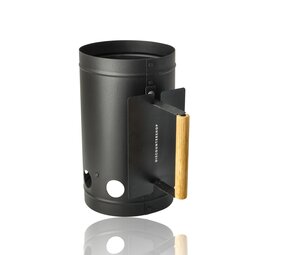
Black metal charcoal chimney start...
Black metal charcoal ch...
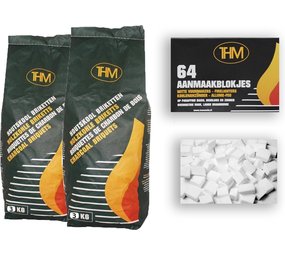
2X charcoal briquettes of 3 KG inc...
2X charcoal briquettes ...
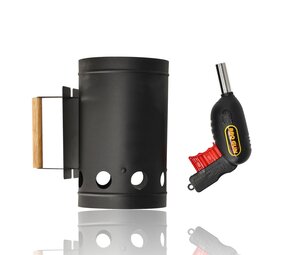
Two-piece charcoal starter set wit...
Two-piece charcoal star...
- Ordered on working days before 12:00, delivered the next day!
- Buy now, pay later
- Fast delivery in the Netherlands & Belgium
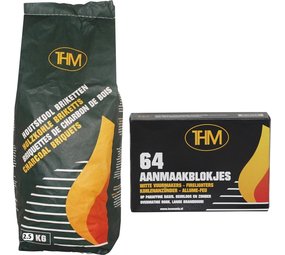
Charcoal Briquettes with FREE Fire...
Charcoal Briquettes wit...
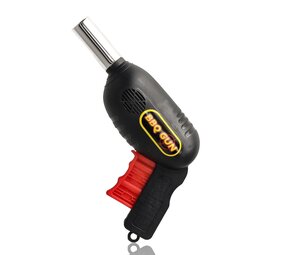
Manual charcoal air blower measuri...
Manual charcoal air blo...
Overige categorieën in Household, Living & Cooking
Chimney Starters for Fast and Even BBQ Lighting
Chimney Starters
A chimney starter is a metal cylinder used to light barbecue briquettes or charcoal before cooking. Ventilation openings near the bottom draw in air while heated air rises through the cylinder. This chimney effect helps the fire spread upwards through the fuel. At Discountershop, you can compare BBQ starters by capacity, material, handle, heat shield and construction.
View all chimney starters
How does a chimney starter work?
The charcoal or briquettes rest on a grate or perforated base inside the cylinder. Suitable fire-starting material burns beneath it. Rising heat ignites the lower coals before the fire gradually moves towards the top.
This product may also be called a:
BBQ starter;
charcoal starter;
coal starter;
barbecue chimney;
briquette starter;
charcoal chimney.
Use suitable Briquettes when planning a longer barbecue session or low-and-slow preparation. For shorter cooking sessions or a quickly responding fire, compare Charcoal. Always confirm that the chosen fuel is suitable for both your barbecue and chimney starter.
What should you check when buying a chimney starter?
Match the capacity to the size of your barbecue and the amount of fuel you normally use. A larger starter is not automatically the best choice. A compact model may be easier to handle for a small barbecue or limited quantity of charcoal.
Compare the following features:
diameter and height of the cylinder;
capacity for charcoal or briquettes;
material and wall construction;
size and position of ventilation openings;
distance between the cylinder and handle;
presence of a heat shield;
additional support handle, if fitted;
shape of the pouring edge;
total weight without fuel.
A heat shield reduces direct radiant heat towards your hand, but it does not keep the starter cold. The cylinder, handle and other metal components may become extremely hot during use.
How to use a chimney starter
Position the barbecue outdoors on a level and stable surface, away from combustible objects.
Remove the cooking grate to access the charcoal grate.
Place suitable Firelighters on the charcoal grate according to their instructions.
Fill the starter with the recommended quantity of charcoal or briquettes. Do not overfill it or obstruct the airflow.
Ignite the firelighters with a suitable Lighter, then position the starter above them.
Leave the starter upright and keep children, animals and other people away.
Wait until the upper coals are glowing and beginning to develop a grey ash coating. Timing varies by fuel, quantity and weather.
Put on heat-resistant barbecue gloves.
Hold the main handle securely and only use a support handle as instructed.
Pour the glowing coals slowly onto the charcoal grate and arrange them for direct or indirect cooking.
Place the empty hot starter in the safe location specified by its manufacturer.
Allow it to cool completely before touching, cleaning or storing it.
Essential safety information
Only use a chimney starter outdoors. Burning charcoal or briquettes produces carbon monoxide. Never use the starter inside a home, garage, shed, tent or other enclosed space.
Light the starter on the charcoal grate of a suitable barbecue. Do not place it on concrete because trapped moisture can expand under intense heat and cause the surface to crack. Never place a hot starter on wood, plastic, grass, a garden table or another combustible surface.
Do not use petrol, methylated spirits or other highly flammable liquids. Never pour liquid fuel over glowing coals. Keep your face, arms and loose clothing away from the top of the starter because flames, sparks and hot air may rise from it.
Before each use, confirm that:
the handle is firmly attached;
the heat shield is secure and not deformed;
the cylinder has no holes, cracks or severely weakened areas;
the internal grate and base are intact;
the ventilation holes are not obstructed;
no dangerous sharp edges have developed.
Do not use a damaged starter. Never leave it unattended while burning, and do not move the barbecue while either the starter or coals remain hot.
Pouring out coals safely
Clear the route between the starter and charcoal grate before lifting. Never hold the starter above bare feet, animals or combustible objects. Pour slowly and close to the charcoal grate. Pouring from excessive height can scatter sparks and pieces of glowing fuel.
Strong wind may spread ash and sparks. Delay lighting when the conditions prevent you from controlling the fire safely. Maintain a secure grip until the starter is empty, then place it down carefully. Do not touch the cylinder to test whether it has cooled.
Cleaning and storing a BBQ starter
Let the starter cool completely. Remove loose ash with a dry brush and keep its ventilation holes clear. Do not pour water over a glowing-hot starter. Sudden cooling and steam may create a hazard and can affect the metal.
Store the starter in a dry place to limit corrosion. Surface discoloration can occur due to heat, but rusted areas should be checked for structural weakening. Replace the starter if its base, handle or cylinder is no longer reliable.
View the chimney starters available from Discountershop and choose a capacity suited to your barbecue and normal amount of fuel.
Choose your BBQ starter
Watch our chimney-starter videos on YouTube
Visit our YouTube channel for product videos showing chimney starters and other barbecue accessories. See the capacity, ventilation openings, handle and heat shield. The videos help explain how to fill the starter, position it on the barbecue and pour out the glowing fuel in a controlled manner.
Frequently asked questions about chimney starters
1. Why does a chimney starter have holes near the bottom?
The holes allow oxygen to enter. Heated air rises through the cylinder, helping the fire spread through the charcoal or briquettes.
2. Does a chimney starter need to be completely full?
No. Use only the amount required for your barbecue and cooking method. Overfilling can restrict airflow and make the hot starter heavier to lift and pour.
3. Can you use a half-full charcoal chimney?
Yes, provided the instructions permit it and the fuel rests securely on the internal grate. A smaller quantity may be appropriate for a compact barbecue or short cooking session.
4. Why does a chimney starter smoke at first?
Smoke can come from the firelighter or fuel during ignition. Excessive or unusual smoke may indicate moisture, contamination or unsuitable materials.
5. Can you add more fuel while the starter is burning?
Avoid adding fuel over an open flame unless the manufacturer describes a safe method. Falling coals may produce sparks and make the starter unstable.
6. What should you do if the firelighter goes out?
Leave the starter in a safe position and check whether any flame or glowing fuel remains. Do not relight it without looking, and never add lighting fluid. Follow the firelighter instructions.
7. Does the handle of a chimney starter become hot?
It can. Distance from the cylinder and a heat shield reduce heat transfer but do not eliminate it. Always wear suitable heat-resistant barbecue gloves.
8. Can you use a chimney starter in strong wind?
Strong wind can spread flames, ash and sparks while accelerating combustion. Do not use the starter if you cannot control the fire and surrounding area safely.
9. Is discoloration of a metal BBQ starter normal?
Metal may change colour after exposure to high temperatures. Also inspect it for deformation, loose connections, sharp edges and deep corrosion. Stop using it if the structure is weakened.
10. When should a chimney starter be replaced?
Replace it if the handle becomes loose, the heat shield is damaged, the base has rusted through, or the cylinder is severely deformed or cracked. Repairs must not compromise its construction or safety.