
 Household, Living & Cooking
 Outdoor, Travel & Sports
 DIY, Garden & Animals
 Fashion accessories & Shoes
 Car & Motor
 Computer & Electronics
 Office & School
 Beautiful & Healthy
 Toys
Toys Eat Drink
 Baby
Baby Christmas
 King's Day


 8
8Measuring Jugs for Cooking, Baking and Measuring Liquids
Measuring Jugs for Cooking, Baking and Accurate Measuring
A measuring jug helps you follow recipes that use millilitres, centilitres or litres. You can see how much liquid you add while pouring and measure water, milk, oil, stock and other ingredients directly. At Discountershop, you can compare measuring jugs for everyday cooking, baking and mixing.
Browse Measuring Jugs to compare available options. For other tools used to measure quantities and portions, visit Weighing & Measuring.
Which measuring jug suits your recipes?
The right capacity depends on what you usually prepare. A 250 ml measuring jug is useful for smaller amounts, 500 ml suits many everyday recipes, while a 1 litre jug gives you more room for larger portions, batter and liquids.
Compare these features:
- Capacity: choose a size that matches the quantities you measure most often.
- Graduations: check which measurement units are printed on the jug.
- Transparency: a clear jug makes the liquid level easier to see.
- Pouring spout: helps you transfer liquids with more control.
- Handle: gives you a firmer grip when filling, mixing and pouring.
- Material: always check the usage and cleaning instructions for the chosen model.
For more products used when preparing and serving meals, browse Cooking & Dining.
Choosing a 250 ml, 500 ml or 1 litre measuring jug
A smaller measuring cup is practical for sauce, oil, milk and other limited quantities. A 500 ml measuring jug provides more room for batter and liquid ingredients, while a 1 litre measuring jug works well when you need to measure larger quantities at once.
Some sets contain several sizes. This lets you choose a suitable jug for each recipe instead of using a large container for every small amount. Check the included capacities and measurement units before ordering.
Working with ingredients listed in grams? Browse Kitchen Scales for weighing flour, sugar, butter and other ingredients.
For bowls, plates and serving pieces, you can also browse Tableware.
Compare graduations, pouring spouts and materials
A measuring jug with clear graduations helps you use the same amount again without estimating. Before buying, check whether the markings match the units used in your recipes. A transparent measuring jug also makes the level easier to monitor while filling.
A well-shaped pouring spout is useful when transferring measured liquid directly into a bowl, pan or glass. With a plastic measuring jug, also check whether the material is suitable for the temperatures and ingredients you plan to use.
For coffee and tea prepared with set ratios, browse Coffee & Tea Accessories. For drinking water and cold drinks, see Water Filters & Drinking Bottles.
Measuring jugs for cooking, baking and drinks
When baking, a measuring jug can be used for milk, water, oil and other liquid ingredients. During cooking, it helps with stock, sauces and soups. For drinks, you can measure a specific amount before pouring or mixing.
For serving beverages, browse Glasses. If you prepare cocktails or mixed drinks, see Drinks & Bar Accessories.
For spoons and other utensils used during preparation or serving, browse Cutlery.
Buying a measuring jug: check capacity and measurement units
Before you buy a measuring jug, look beyond capacity alone. Compare graduations, material, handle, pouring spout and storage space. A set with several sizes can be useful if you regularly work with different quantities.
Shop kitchen and household products
Watch Discountershop on YouTube
Visit the YouTube channel for product videos and examples covering kitchen and household items. These videos can provide extra product information before you choose a measuring jug or another measuring tool.
Frequently Asked Questions About Measuring Jugs
Is 100 ml of water the same as 100 grams?
For everyday kitchen use, 100 millilitres of water weighs approximately 100 grams. Other liquids such as oil, milk or syrup can weigh differently per millilitre because each ingredient has a different density.
Can you measure flour with a measuring jug?
You can when a recipe uses volume, but millilitres of flour are not the same as grams of flour. If the recipe specifies weight, a kitchen scale gives a more direct and reliable measurement.
How do you measure oil in a measuring jug?
Pour the oil slowly until it reaches the required graduation and keep the jug on a stable surface. Because oil can cling to the sides, allow it to settle briefly before checking the final level.
What size measuring jug is useful for pancake batter?
For batter, extra capacity is useful because ingredients take up more space once mixed. Choose a jug larger than the liquid amount alone, especially when combining milk, eggs and other ingredients in the same container.
What do oz and fl oz mean on a measuring jug?
Oz can refer to ounces, while fl oz means fluid ounces and measures volume. Use these markings only when your recipe uses the same unit, because ounces and fluid ounces do not measure the same thing.
Can you pour hot liquid into a plastic measuring jug?
That depends on the type of plastic and its permitted temperature range. Always check the product specifications before adding hot liquids, as not every plastic measuring jug is suitable for boiling water or very hot ingredients.
Why do measuring jugs have different graduation scales?
Recipes do not always use the same units, so measuring jugs may show millilitres, litres or other measurements. Check which scale your recipes require so you do not need to convert quantities while cooking.
Is a larger measuring jug always easier to use?
Not necessarily. A larger jug offers more capacity, but small quantities can be harder to read if the graduation steps are wide. Choose a size that matches the amounts you measure most frequently.
Can you mix batter directly in a measuring jug?
Yes, provided the jug has enough capacity and its material is suitable for mixing. Leave space above the mixture to reduce spills and use utensils that will not damage the inside surface.
How can you prevent spills when pouring from a measuring jug?
Avoid filling the jug more than necessary, hold the handle firmly and pour slowly through the spout. A steady movement gives you more control, especially with thicker liquids, batter or a nearly full jug.
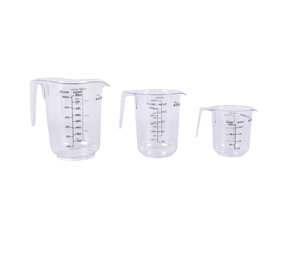
Experience the versatile 3-piece m...
Experience the versatil...
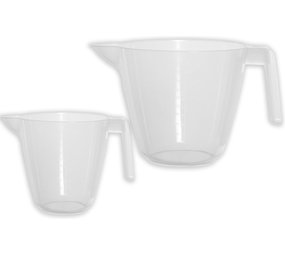
Measuring cup 2 pieces 1000 ml and...
Measuring cup 2 pieces ...
Overige categorieën in Household, Living & Cooking
Measuring Jugs for Cooking, Baking and Measuring Liquids
Measuring Jugs for Cooking, Baking and Accurate Measuring
A measuring jug helps you follow recipes that use millilitres, centilitres or litres. You can see how much liquid you add while pouring and measure water, milk, oil, stock and other ingredients directly. At Discountershop, you can compare measuring jugs for everyday cooking, baking and mixing.
Browse Measuring Jugs to compare available options. For other tools used to measure quantities and portions, visit Weighing & Measuring.
Which measuring jug suits your recipes?
The right capacity depends on what you usually prepare. A 250 ml measuring jug is useful for smaller amounts, 500 ml suits many everyday recipes, while a 1 litre jug gives you more room for larger portions, batter and liquids.
Compare these features:
- Capacity: choose a size that matches the quantities you measure most often.
- Graduations: check which measurement units are printed on the jug.
- Transparency: a clear jug makes the liquid level easier to see.
- Pouring spout: helps you transfer liquids with more control.
- Handle: gives you a firmer grip when filling, mixing and pouring.
- Material: always check the usage and cleaning instructions for the chosen model.
For more products used when preparing and serving meals, browse Cooking & Dining.
Choosing a 250 ml, 500 ml or 1 litre measuring jug
A smaller measuring cup is practical for sauce, oil, milk and other limited quantities. A 500 ml measuring jug provides more room for batter and liquid ingredients, while a 1 litre measuring jug works well when you need to measure larger quantities at once.
Some sets contain several sizes. This lets you choose a suitable jug for each recipe instead of using a large container for every small amount. Check the included capacities and measurement units before ordering.
Working with ingredients listed in grams? Browse Kitchen Scales for weighing flour, sugar, butter and other ingredients.
For bowls, plates and serving pieces, you can also browse Tableware.
Compare graduations, pouring spouts and materials
A measuring jug with clear graduations helps you use the same amount again without estimating. Before buying, check whether the markings match the units used in your recipes. A transparent measuring jug also makes the level easier to monitor while filling.
A well-shaped pouring spout is useful when transferring measured liquid directly into a bowl, pan or glass. With a plastic measuring jug, also check whether the material is suitable for the temperatures and ingredients you plan to use.
For coffee and tea prepared with set ratios, browse Coffee & Tea Accessories. For drinking water and cold drinks, see Water Filters & Drinking Bottles.
Measuring jugs for cooking, baking and drinks
When baking, a measuring jug can be used for milk, water, oil and other liquid ingredients. During cooking, it helps with stock, sauces and soups. For drinks, you can measure a specific amount before pouring or mixing.
For serving beverages, browse Glasses. If you prepare cocktails or mixed drinks, see Drinks & Bar Accessories.
For spoons and other utensils used during preparation or serving, browse Cutlery.
Buying a measuring jug: check capacity and measurement units
Before you buy a measuring jug, look beyond capacity alone. Compare graduations, material, handle, pouring spout and storage space. A set with several sizes can be useful if you regularly work with different quantities.
Shop kitchen and household products
Watch Discountershop on YouTube
Visit the YouTube channel for product videos and examples covering kitchen and household items. These videos can provide extra product information before you choose a measuring jug or another measuring tool.
Frequently Asked Questions About Measuring Jugs
Is 100 ml of water the same as 100 grams?
For everyday kitchen use, 100 millilitres of water weighs approximately 100 grams. Other liquids such as oil, milk or syrup can weigh differently per millilitre because each ingredient has a different density.
Can you measure flour with a measuring jug?
You can when a recipe uses volume, but millilitres of flour are not the same as grams of flour. If the recipe specifies weight, a kitchen scale gives a more direct and reliable measurement.
How do you measure oil in a measuring jug?
Pour the oil slowly until it reaches the required graduation and keep the jug on a stable surface. Because oil can cling to the sides, allow it to settle briefly before checking the final level.
What size measuring jug is useful for pancake batter?
For batter, extra capacity is useful because ingredients take up more space once mixed. Choose a jug larger than the liquid amount alone, especially when combining milk, eggs and other ingredients in the same container.
What do oz and fl oz mean on a measuring jug?
Oz can refer to ounces, while fl oz means fluid ounces and measures volume. Use these markings only when your recipe uses the same unit, because ounces and fluid ounces do not measure the same thing.
Can you pour hot liquid into a plastic measuring jug?
That depends on the type of plastic and its permitted temperature range. Always check the product specifications before adding hot liquids, as not every plastic measuring jug is suitable for boiling water or very hot ingredients.
Why do measuring jugs have different graduation scales?
Recipes do not always use the same units, so measuring jugs may show millilitres, litres or other measurements. Check which scale your recipes require so you do not need to convert quantities while cooking.
Is a larger measuring jug always easier to use?
Not necessarily. A larger jug offers more capacity, but small quantities can be harder to read if the graduation steps are wide. Choose a size that matches the amounts you measure most frequently.
Can you mix batter directly in a measuring jug?
Yes, provided the jug has enough capacity and its material is suitable for mixing. Leave space above the mixture to reduce spills and use utensils that will not damage the inside surface.
How can you prevent spills when pouring from a measuring jug?
Avoid filling the jug more than necessary, hold the handle firmly and pour slowly through the spout. A steady movement gives you more control, especially with thicker liquids, batter or a nearly full jug.
