
 Household, Living & Cooking
 Outdoor, Travel & Sports
 DIY, Garden & Animals
 Fashion accessories & Shoes
 Car & Motor
 Computer & Electronics
 Office & School
 Beautiful & Healthy
 Toys
Toys Eat Drink
 Baby
Baby Christmas
 King's Day


 8
8Coffee Cups To Go for Travel, Work and Everyday Use
Coffee cups to go for travel and work
A coffee cup to go allows you to take coffee, tea, lungo or another drink to work, university, on a walk or during a journey. Reusable coffee cups can be refilled many times and are available with different lids, materials and insulating constructions.
At Discountershop, you can compare travel coffee cups by capacity, dimensions, material, lid type and intended use. A compact travel mug may be suitable for a short car journey, while a larger insulated coffee cup provides more capacity for a working day, lecture or longer trip.
Before ordering, check:
- capacity in millilitres;
- height and diameter;
- size of the drinking opening;
- lid and closure type;
- single- or double-wall construction;
- suitability for hot and cold drinks;
- leakproof or splash-resistant design;
- materials used for the cup, lid and seal;
- compatibility with vehicle cup holders;
- cleaning and maintenance instructions.
Which coffee cup to go suits your routine?
The best coffee cup to go is the one that matches your drink, transport method and expected usage time. A cup that remains upright on a desk does not necessarily need the same sealing system as a travel mug carried inside a bag.
Common options include:
- Travel mug with drinking lid: for coffee or tea during commuting.
- Insulated coffee cup: designed to reduce heat loss.
- Coffee cup for the car: shaped to fit the intended cup holder.
- Refillable coffee cup: intended for repeated filling and cleaning.
- Tea cup to go: provides room for tea and, where suitable, a tea bag or infuser.
- Travel mug with handle: gives a fixed gripping point.
- Handleless travel mug: usually takes up less width and may fit more easily inside cup holders.
- Double-wall drink cup: reduces direct contact between the hand and the hot inner wall.
- Cup with closable drinking opening: helps reduce spills during transport.
Always check whether the product is genuinely described as leakproof. A splash-resistant cup may reduce drips while drinking but may still leak when tipped over or placed on its side inside a bag.
Reusable coffee cups for commuting and work
Reusable coffee cups are suitable for travel, office use, study, walks and other daily routines. They can be filled at home, at a coffee machine or at another location where refilling is allowed.
A refillable travel mug can be practical for:
- home and commuting;
- offices;
- universities and schools;
- warehouses and workshops;
- canteens;
- cafés and catering locations;
- hotels, hostels and B&Bs;
- reception and meeting areas;
- home coffee bars.
For professional use, confirm that the cup can withstand the expected frequency of use and cleaning. Not every reusable cup is designed for intensive use in hospitality, catering or workplace canteens.
Leakproof or splash-resistant coffee cups
The terms leakproof and splash-resistant do not mean the same thing.
A leakproof coffee cup is designed to prevent liquid from escaping when closed and used according to the manufacturer’s instructions. A splash-resistant lid mainly reduces spilling caused by movement or drinking, but the cup may still leak if it tips over or is carried horizontally.
When comparing cup closures, check:
- the connection between the cup and lid;
- rubber or silicone sealing rings;
- sliders, flaps or buttons covering the drinking opening;
- screw-top or snap-on lid construction;
- whether the cup must remain upright;
- maximum filling level;
- permitted drink temperature;
- seal-replacement guidance.
Test a new cup with cold water over a sink before using it with hot coffee. Do not fill above the marked line, and ensure every lid component has been reassembled correctly after cleaning.
Insulated coffee cups and thermos travel mugs
An insulated coffee cup commonly uses double-wall or vacuum-insulated construction. This design can reduce heat loss and keep the outside surface from becoming hot too quickly.
How long a drink remains warm depends on:
- the insulation type;
- cup material;
- amount of liquid;
- initial drink temperature;
- how often the lid is opened;
- outside temperature;
- size of the drinking opening;
- whether the cup was preheated.
A standard ceramic or plastic cup is not automatically designed to keep hot drinks warm for a long period. Only make claims such as keeps coffee hot for hours when the manufacturer provides a confirmed duration or test result.
Where permitted, an insulated travel mug can be preheated with warm water before adding coffee or tea. Follow the product-specific care and safety instructions.
Coffee cups for the car
A coffee cup for the car should fit the cup holder securely and remain stable while driving. Cup-holder dimensions differ between vehicles, so a universal fit cannot be assumed.
Measure:
- diameter of the cup base;
- maximum internal width of the holder;
- available height;
- position relative to controls and the gear selector;
- space needed to lift the cup vertically;
- the point at which the cup becomes wider.
A tapered base usually fits a wider range of cup holders than a broad, straight base. Check that the upper section does not come into contact with the dashboard or armrest.
Do not operate a complicated lid while driving. Leave enough empty space in the cup to reduce hot liquid moving through the opening during braking or turning.
Coffee cups for lungo and cappuccino
Travel-cup capacity should match the drink you usually prepare. A lungo requires more space than espresso, while cappuccino also needs room for milk and foam.
Check:
- how many millilitres the machine dispenses;
- whether the cup fits beneath the coffee outlet;
- how much space milk or foam requires;
- whether headroom is needed below the lid;
- whether the drinking opening is suitable for milk-based drinks;
- how easily milk residue can be removed.
A cup may have sufficient capacity but still be too tall for a coffee machine or vending machine. Compare both the volume and total height.
Thorough cleaning is especially important after milk-based drinks. Milk residue can collect inside drinking openings, seals and screw threads.
Tea cups to go
A tea cup to go can be used for black tea, green tea, herbal tea and other hot drinks. Tea drinkers may prefer a larger capacity than people drinking short coffees.
Consider:
- available capacity;
- room for a tea bag;
- whether an infuser can be removed easily;
- a wide opening for filling and cleaning;
- closure of the drinking opening;
- permitted water temperature;
- resistance to odours and staining.
Do not trap a tea-bag string or label between the lid and sealing ring. This can prevent the lid from closing correctly. Remove tea residue after every use to limit staining and flavour transfer.
Travel mugs with or without handles
A travel mug with a handle can be easy to lift from a desk or table. The handle adds width, however, and may prevent the cup from fitting inside certain car or bicycle holders.
A handleless travel mug:
- has a more compact exterior;
- may fit more easily inside a cup holder;
- is held around the outer wall;
- needs sufficient grip when hands are wet;
- should remain comfortable to hold with hot contents.
Check whether the outside surface becomes too warm. Double-wall construction or an insulating grip section can improve handling.
Plastic, metal, glass or ceramic travel cups
Material affects cup weight, heat retention, cleaning and portability.
Plastic coffee cups
Plastic cups are often lightweight. Check whether the material is approved for the intended drink temperature, microwave use and dishwasher cleaning. Some plastics may absorb odours or become stained.
Metal travel mugs
Metal is frequently used for insulated and thermos cups. The cup may include vacuum insulation, but metal products should generally not be placed in a microwave. Check whether the outer coating and lid are dishwasher-safe.
Glass travel cups
Glass keeps the contents visible and usually absorbs fewer odours. Not every glass is suitable for boiling water or sudden temperature changes. A silicone sleeve can provide additional grip and reduce direct heat contact.
Ceramic travel cups
Ceramic travel cups can offer a familiar drinking surface but are usually heavier and more vulnerable to impact. Check whether the lid fits securely and whether the product is actually intended for transport.
Coffee cups for offices and workplaces
A work coffee cup should fit the coffee machine, desk and available cleaning facilities. In an office, a lid can reduce the risk of spills near keyboards, documents and other equipment.
Useful features for offices and warehouses include:
- capacity for one coffee break or a longer period;
- stable base;
- closable drinking opening;
- compatibility with vending or coffee machines;
- clear name marking for shared workplaces;
- a lid that can be disassembled;
- material suitable for frequent cleaning;
- a shape that resists tipping.
In warehouses or workshops, keep drinkware away from dust, chemicals and tools. Use a closed drinking opening where required and follow workplace rules for food and drinks.
Travel cups for cafés, hotels and catering
Reusable coffee cups can be used in cafés, hotels, hostels, B&Bs, canteens and catering businesses. Hygiene, capacity and fast handling are particularly important in professional settings.
For business use, check:
- food-contact suitability;
- compatibility with professional cleaning;
- whether the lids can be disassembled;
- availability of replacement seals;
- stackability;
- compatibility with standard drink sizes;
- fit beneath coffee equipment;
- suitability for branding;
- expected usage intensity.
Do not describe a cup as suitable for hospitality or commercial service when the manufacturer only states household use.
Coffee cups for walking and travel
Coffee cups to go can be useful during a walk, train journey, commute or day trip. Choose a capacity that meets your needs without making the filled cup unnecessarily heavy.
For travel, consider:
- total filled weight;
- grip with cold or wet hands;
- lid closure;
- ease of one-handed drinking;
- dimensions for bags and cup holders;
- protection of the drinking opening from dirt;
- ability to rinse the cup during the day.
A large insulated mug offers more capacity but requires additional carrying space. A compact refillable coffee cup may be more practical for shorter trips.
How to clean a reusable coffee cup
A reusable cup should be cleaned after every use. Rinsing the main cup alone may not be sufficient because residue often collects inside the lid.
Where possible, remove:
- the lid;
- drinking slider or flap;
- silicone seal;
- straw or drinking spout;
- removable sleeve;
- internal stopper.
Clean every component according to the manufacturer’s instructions and allow the parts to dry separately before reassembling the cup. Closing a damp cup can lead to unpleasant odours.
Inspect regularly for:
- staining;
- persistent smells;
- cracked seals;
- damaged screw threads;
- warped lids;
- mould in hard-to-reach areas.
Replace damaged seals or the entire lid when a secure closure is no longer possible.
Ordering coffee cups to go online
When ordering online, you cannot test the lid, weight or fit beforehand. Review the full product specifications carefully.
Check at least:
- capacity;
- height and diameter;
- base dimensions;
- material;
- total product weight;
- lid type;
- leakproof or splash-resistant classification;
- single- or double-wall construction;
- dishwasher suitability;
- microwave suitability;
- use with hot and cold drinks.
Compare coffee cups to go at Discountershop by capacity, insulation, lid, material and transport method. Choose a travel mug for home, work, university, hospitality or daily travel that suits your routine.
Frequently Asked Questions About Coffee Cups To Go
How can I test whether a travel mug closes properly?
Fill it with cold water first, close every component according to the instructions and hold it over a sink. Tilt it only if the manufacturer says horizontal transport is permitted. Check the drinking opening, lid thread and sealing ring. Do not perform the first test with hot coffee because a leak could cause burns.
Why can a travel mug start leaking after cleaning?
The sealing ring may have been reinstalled incorrectly, twisted or left out. Coffee residue around the thread can also stop the lid from closing completely. Disassemble and clean the lid, then rebuild it according to the instructions. Stop using it when the lid or cup rim is damaged.
Should space be left below the lid?
Yes. An overfilled cup can push liquid through the drinking opening or seal. Hot drinks also move and expand slightly during transport. Follow the maximum fill line. When there is no marked line, leave enough space to fit the lid without pressure or overflow.
Can an insulated travel mug be filled with boiling water?
Only when the cup, lid and seals are approved for that temperature. Not every material is suitable for boiling liquid. Open the cup carefully because steam or pressure may be released. Test the drink temperature before taking the first sip.
Why can a reusable coffee cup develop a permanent smell?
Coffee, tea and milk can remain inside seals, threads and narrow openings. Closing the cup while damp can make the smell stronger. Disassemble the lid completely, clean each component and let everything dry separately. Replace a porous or damaged seal when the odour remains.
Does every travel mug fit a vehicle cup holder?
No. Cup holders differ in width, depth and shape. Compare the holder’s measurements with the mug’s base diameter. Handles and wider upper sections can also affect the fit. A cup may fit at the base but still touch the dashboard or armrest.
Can milk-based drinks remain in a travel mug all day?
That depends on the temperature, storage time and insulating performance. A travel mug is not automatically a safe long-term storage container for milk. Drink milk-based coffee within an appropriate time and clean the cup immediately afterward. Follow current food-safety guidance for the milk product used.
Why can a hot drink spray when a travel mug is opened?
Pressure can build because of heat, steam, shaking or a tightly closed opening. Open the lid carefully and keep it away from the face. Never shake a closed cup containing a hot drink. Follow the manufacturer’s guidance for venting and opening.
Is every double-wall cup a thermos cup?
No. Double-wall construction only means that the cup has two layers. It does not confirm vacuum insulation or a specific heat-retention time. Review the specifications for the insulation method and any tested performance claims.
Can a coffee cup to go be microwaved with the lid closed?
Only when both the cup and closed-lid use are specifically approved. A sealed lid may allow pressure to build. Metal insulated mugs must not be microwaved. Remove the lid when instructed and follow the manufacturer’s heating directions.
When should a sealing ring be replaced?
Replace it when it becomes cracked, stretched, hardened, sticky or permanently deformed. Repeated leaking or persistent odour can also indicate wear. Use a replacement designed for the same cup model so the lid continues to close correctly.
How can I prevent coffee from leaking inside my bag?
Use a cup that the manufacturer approves for closed transport. Check the seal before leaving, keep the cup upright where possible and place it in a separate compartment. Protect documents and electronics with an additional sleeve or waterproof pouch. A splash-resistant cup should not be carried loosely on its side.

Travel mug, coffee cup - coffee to...
Travel mug, coffee cup ...
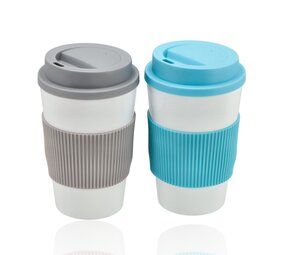
Coffee to go cup 450ml leakproof a...
Coffee to go cup 450ml ...
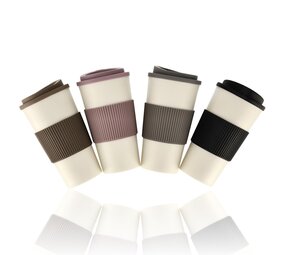
This 500ml Coffee To Go Mug is reu...
This 500ml Coffee To Go...
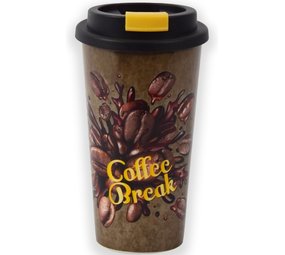
Travel mug, coffee cup - coffee to...
Travel mug, coffee cup ...
Overige categorieën in Household, Living & Cooking
Coffee Cups To Go for Travel, Work and Everyday Use
Coffee cups to go for travel and work
A coffee cup to go allows you to take coffee, tea, lungo or another drink to work, university, on a walk or during a journey. Reusable coffee cups can be refilled many times and are available with different lids, materials and insulating constructions.
At Discountershop, you can compare travel coffee cups by capacity, dimensions, material, lid type and intended use. A compact travel mug may be suitable for a short car journey, while a larger insulated coffee cup provides more capacity for a working day, lecture or longer trip.
Before ordering, check:
- capacity in millilitres;
- height and diameter;
- size of the drinking opening;
- lid and closure type;
- single- or double-wall construction;
- suitability for hot and cold drinks;
- leakproof or splash-resistant design;
- materials used for the cup, lid and seal;
- compatibility with vehicle cup holders;
- cleaning and maintenance instructions.
Which coffee cup to go suits your routine?
The best coffee cup to go is the one that matches your drink, transport method and expected usage time. A cup that remains upright on a desk does not necessarily need the same sealing system as a travel mug carried inside a bag.
Common options include:
- Travel mug with drinking lid: for coffee or tea during commuting.
- Insulated coffee cup: designed to reduce heat loss.
- Coffee cup for the car: shaped to fit the intended cup holder.
- Refillable coffee cup: intended for repeated filling and cleaning.
- Tea cup to go: provides room for tea and, where suitable, a tea bag or infuser.
- Travel mug with handle: gives a fixed gripping point.
- Handleless travel mug: usually takes up less width and may fit more easily inside cup holders.
- Double-wall drink cup: reduces direct contact between the hand and the hot inner wall.
- Cup with closable drinking opening: helps reduce spills during transport.
Always check whether the product is genuinely described as leakproof. A splash-resistant cup may reduce drips while drinking but may still leak when tipped over or placed on its side inside a bag.
Reusable coffee cups for commuting and work
Reusable coffee cups are suitable for travel, office use, study, walks and other daily routines. They can be filled at home, at a coffee machine or at another location where refilling is allowed.
A refillable travel mug can be practical for:
- home and commuting;
- offices;
- universities and schools;
- warehouses and workshops;
- canteens;
- cafés and catering locations;
- hotels, hostels and B&Bs;
- reception and meeting areas;
- home coffee bars.
For professional use, confirm that the cup can withstand the expected frequency of use and cleaning. Not every reusable cup is designed for intensive use in hospitality, catering or workplace canteens.
Leakproof or splash-resistant coffee cups
The terms leakproof and splash-resistant do not mean the same thing.
A leakproof coffee cup is designed to prevent liquid from escaping when closed and used according to the manufacturer’s instructions. A splash-resistant lid mainly reduces spilling caused by movement or drinking, but the cup may still leak if it tips over or is carried horizontally.
When comparing cup closures, check:
- the connection between the cup and lid;
- rubber or silicone sealing rings;
- sliders, flaps or buttons covering the drinking opening;
- screw-top or snap-on lid construction;
- whether the cup must remain upright;
- maximum filling level;
- permitted drink temperature;
- seal-replacement guidance.
Test a new cup with cold water over a sink before using it with hot coffee. Do not fill above the marked line, and ensure every lid component has been reassembled correctly after cleaning.
Insulated coffee cups and thermos travel mugs
An insulated coffee cup commonly uses double-wall or vacuum-insulated construction. This design can reduce heat loss and keep the outside surface from becoming hot too quickly.
How long a drink remains warm depends on:
- the insulation type;
- cup material;
- amount of liquid;
- initial drink temperature;
- how often the lid is opened;
- outside temperature;
- size of the drinking opening;
- whether the cup was preheated.
A standard ceramic or plastic cup is not automatically designed to keep hot drinks warm for a long period. Only make claims such as keeps coffee hot for hours when the manufacturer provides a confirmed duration or test result.
Where permitted, an insulated travel mug can be preheated with warm water before adding coffee or tea. Follow the product-specific care and safety instructions.
Coffee cups for the car
A coffee cup for the car should fit the cup holder securely and remain stable while driving. Cup-holder dimensions differ between vehicles, so a universal fit cannot be assumed.
Measure:
- diameter of the cup base;
- maximum internal width of the holder;
- available height;
- position relative to controls and the gear selector;
- space needed to lift the cup vertically;
- the point at which the cup becomes wider.
A tapered base usually fits a wider range of cup holders than a broad, straight base. Check that the upper section does not come into contact with the dashboard or armrest.
Do not operate a complicated lid while driving. Leave enough empty space in the cup to reduce hot liquid moving through the opening during braking or turning.
Coffee cups for lungo and cappuccino
Travel-cup capacity should match the drink you usually prepare. A lungo requires more space than espresso, while cappuccino also needs room for milk and foam.
Check:
- how many millilitres the machine dispenses;
- whether the cup fits beneath the coffee outlet;
- how much space milk or foam requires;
- whether headroom is needed below the lid;
- whether the drinking opening is suitable for milk-based drinks;
- how easily milk residue can be removed.
A cup may have sufficient capacity but still be too tall for a coffee machine or vending machine. Compare both the volume and total height.
Thorough cleaning is especially important after milk-based drinks. Milk residue can collect inside drinking openings, seals and screw threads.
Tea cups to go
A tea cup to go can be used for black tea, green tea, herbal tea and other hot drinks. Tea drinkers may prefer a larger capacity than people drinking short coffees.
Consider:
- available capacity;
- room for a tea bag;
- whether an infuser can be removed easily;
- a wide opening for filling and cleaning;
- closure of the drinking opening;
- permitted water temperature;
- resistance to odours and staining.
Do not trap a tea-bag string or label between the lid and sealing ring. This can prevent the lid from closing correctly. Remove tea residue after every use to limit staining and flavour transfer.
Travel mugs with or without handles
A travel mug with a handle can be easy to lift from a desk or table. The handle adds width, however, and may prevent the cup from fitting inside certain car or bicycle holders.
A handleless travel mug:
- has a more compact exterior;
- may fit more easily inside a cup holder;
- is held around the outer wall;
- needs sufficient grip when hands are wet;
- should remain comfortable to hold with hot contents.
Check whether the outside surface becomes too warm. Double-wall construction or an insulating grip section can improve handling.
Plastic, metal, glass or ceramic travel cups
Material affects cup weight, heat retention, cleaning and portability.
Plastic coffee cups
Plastic cups are often lightweight. Check whether the material is approved for the intended drink temperature, microwave use and dishwasher cleaning. Some plastics may absorb odours or become stained.
Metal travel mugs
Metal is frequently used for insulated and thermos cups. The cup may include vacuum insulation, but metal products should generally not be placed in a microwave. Check whether the outer coating and lid are dishwasher-safe.
Glass travel cups
Glass keeps the contents visible and usually absorbs fewer odours. Not every glass is suitable for boiling water or sudden temperature changes. A silicone sleeve can provide additional grip and reduce direct heat contact.
Ceramic travel cups
Ceramic travel cups can offer a familiar drinking surface but are usually heavier and more vulnerable to impact. Check whether the lid fits securely and whether the product is actually intended for transport.
Coffee cups for offices and workplaces
A work coffee cup should fit the coffee machine, desk and available cleaning facilities. In an office, a lid can reduce the risk of spills near keyboards, documents and other equipment.
Useful features for offices and warehouses include:
- capacity for one coffee break or a longer period;
- stable base;
- closable drinking opening;
- compatibility with vending or coffee machines;
- clear name marking for shared workplaces;
- a lid that can be disassembled;
- material suitable for frequent cleaning;
- a shape that resists tipping.
In warehouses or workshops, keep drinkware away from dust, chemicals and tools. Use a closed drinking opening where required and follow workplace rules for food and drinks.
Travel cups for cafés, hotels and catering
Reusable coffee cups can be used in cafés, hotels, hostels, B&Bs, canteens and catering businesses. Hygiene, capacity and fast handling are particularly important in professional settings.
For business use, check:
- food-contact suitability;
- compatibility with professional cleaning;
- whether the lids can be disassembled;
- availability of replacement seals;
- stackability;
- compatibility with standard drink sizes;
- fit beneath coffee equipment;
- suitability for branding;
- expected usage intensity.
Do not describe a cup as suitable for hospitality or commercial service when the manufacturer only states household use.
Coffee cups for walking and travel
Coffee cups to go can be useful during a walk, train journey, commute or day trip. Choose a capacity that meets your needs without making the filled cup unnecessarily heavy.
For travel, consider:
- total filled weight;
- grip with cold or wet hands;
- lid closure;
- ease of one-handed drinking;
- dimensions for bags and cup holders;
- protection of the drinking opening from dirt;
- ability to rinse the cup during the day.
A large insulated mug offers more capacity but requires additional carrying space. A compact refillable coffee cup may be more practical for shorter trips.
How to clean a reusable coffee cup
A reusable cup should be cleaned after every use. Rinsing the main cup alone may not be sufficient because residue often collects inside the lid.
Where possible, remove:
- the lid;
- drinking slider or flap;
- silicone seal;
- straw or drinking spout;
- removable sleeve;
- internal stopper.
Clean every component according to the manufacturer’s instructions and allow the parts to dry separately before reassembling the cup. Closing a damp cup can lead to unpleasant odours.
Inspect regularly for:
- staining;
- persistent smells;
- cracked seals;
- damaged screw threads;
- warped lids;
- mould in hard-to-reach areas.
Replace damaged seals or the entire lid when a secure closure is no longer possible.
Ordering coffee cups to go online
When ordering online, you cannot test the lid, weight or fit beforehand. Review the full product specifications carefully.
Check at least:
- capacity;
- height and diameter;
- base dimensions;
- material;
- total product weight;
- lid type;
- leakproof or splash-resistant classification;
- single- or double-wall construction;
- dishwasher suitability;
- microwave suitability;
- use with hot and cold drinks.
Compare coffee cups to go at Discountershop by capacity, insulation, lid, material and transport method. Choose a travel mug for home, work, university, hospitality or daily travel that suits your routine.
Frequently Asked Questions About Coffee Cups To Go
How can I test whether a travel mug closes properly?
Fill it with cold water first, close every component according to the instructions and hold it over a sink. Tilt it only if the manufacturer says horizontal transport is permitted. Check the drinking opening, lid thread and sealing ring. Do not perform the first test with hot coffee because a leak could cause burns.
Why can a travel mug start leaking after cleaning?
The sealing ring may have been reinstalled incorrectly, twisted or left out. Coffee residue around the thread can also stop the lid from closing completely. Disassemble and clean the lid, then rebuild it according to the instructions. Stop using it when the lid or cup rim is damaged.
Should space be left below the lid?
Yes. An overfilled cup can push liquid through the drinking opening or seal. Hot drinks also move and expand slightly during transport. Follow the maximum fill line. When there is no marked line, leave enough space to fit the lid without pressure or overflow.
Can an insulated travel mug be filled with boiling water?
Only when the cup, lid and seals are approved for that temperature. Not every material is suitable for boiling liquid. Open the cup carefully because steam or pressure may be released. Test the drink temperature before taking the first sip.
Why can a reusable coffee cup develop a permanent smell?
Coffee, tea and milk can remain inside seals, threads and narrow openings. Closing the cup while damp can make the smell stronger. Disassemble the lid completely, clean each component and let everything dry separately. Replace a porous or damaged seal when the odour remains.
Does every travel mug fit a vehicle cup holder?
No. Cup holders differ in width, depth and shape. Compare the holder’s measurements with the mug’s base diameter. Handles and wider upper sections can also affect the fit. A cup may fit at the base but still touch the dashboard or armrest.
Can milk-based drinks remain in a travel mug all day?
That depends on the temperature, storage time and insulating performance. A travel mug is not automatically a safe long-term storage container for milk. Drink milk-based coffee within an appropriate time and clean the cup immediately afterward. Follow current food-safety guidance for the milk product used.
Why can a hot drink spray when a travel mug is opened?
Pressure can build because of heat, steam, shaking or a tightly closed opening. Open the lid carefully and keep it away from the face. Never shake a closed cup containing a hot drink. Follow the manufacturer’s guidance for venting and opening.
Is every double-wall cup a thermos cup?
No. Double-wall construction only means that the cup has two layers. It does not confirm vacuum insulation or a specific heat-retention time. Review the specifications for the insulation method and any tested performance claims.
Can a coffee cup to go be microwaved with the lid closed?
Only when both the cup and closed-lid use are specifically approved. A sealed lid may allow pressure to build. Metal insulated mugs must not be microwaved. Remove the lid when instructed and follow the manufacturer’s heating directions.
When should a sealing ring be replaced?
Replace it when it becomes cracked, stretched, hardened, sticky or permanently deformed. Repeated leaking or persistent odour can also indicate wear. Use a replacement designed for the same cup model so the lid continues to close correctly.
How can I prevent coffee from leaking inside my bag?
Use a cup that the manufacturer approves for closed transport. Check the seal before leaving, keep the cup upright where possible and place it in a separate compartment. Protect documents and electronics with an additional sleeve or waterproof pouch. A splash-resistant cup should not be carried loosely on its side.
