
 Household, Living & Cooking
 Outdoor, Travel & Sports
 DIY, Garden & Animals
 Fashion accessories & Shoes
 Car & Motor
 Computer & Electronics
 Office & School
 Beautiful & Healthy
 Toys
Toys Eat Drink
 Baby
Baby Christmas
 King's Day


 8
8Kitchen organisers for cabinets, drawers, worktops, sinks and pantries
Kitchen organisers for cabinets, drawers, worktops, sinks and pantries
Kitchen organisers give tableware, cutlery, herbs, pantry products, fruit, vegetables and cleaning supplies a fixed place. They help you use the space inside kitchen cabinets and drawers more efficiently while keeping frequently used items accessible. At Discountershop, you can compare solutions for different kitchen zones, from sink organisers and cutlery trays to fruit baskets, vegetable baskets and pantry organisers.
The right kitchen organiser should match its location, available dimensions and intended contents. An open basket suits produce that requires air circulation, while a drawer divider separates small utensils. Around the sink, water-resistant materials and effective drainage are particularly important.
View all kitchen organisers
Which kitchen organiser do you need?
Begin by dividing your kitchen into functional zones. Items that are used together should ideally be stored near one another.
Possible solutions include:
a kitchen cabinet organiser for tableware, pans or pantry goods;
a kitchen drawer organiser for cutlery and cooking utensils;
a sink organiser for sponges, brushes and washing-up liquid;
a worktop organiser for frequently used products;
a spice organiser for jars, packets and small bottles;
a fruit basket for produce stored outside the refrigerator;
a vegetable basket for suitable vegetables and packaged products;
a pantry organiser for tins, jars and dry ingredients;
a refrigerator organiser for chilled products;
a pan organiser for frying pans and pan lids;
a rotating turntable for bottles and jars;
a hanging kitchen organiser for unused wall or cabinet space.
Measure each storage zone separately. Hinges, pipes, drawer runners and door fittings can make the usable interior smaller than the external dimensions suggest.
Multifunctional kitchen organisers
A multifunctional kitchen organiser can serve several purposes when its dimensions, material and construction suit the contents. A basket used for fruit today may later hold packaged pantry products, tea towels or cleaning cloths. A rack with baskets can store fruit and vegetables on a worktop or snacks, bottles and ingredients inside a pantry.
Possible combinations include:
fruit, vegetables and sealed pantry products;
herbs, sauces and small bottles;
cutlery, spatulas and cooking utensils;
tea towels, cleaning cloths and oven gloves;
foil, baking paper and resealable bags;
coffee capsules, tea bags and sugar sachets;
baking equipment and cake-decorating supplies;
washing-up brushes, sponges and dishwasher tablets;
breakfast products and spreads;
small kitchen appliances and their accessories.
Check the suitability of the material whenever you change the organiser’s purpose. An organiser previously used for cleaning chemicals should not be used for unpackaged food without thorough cleaning—and only if the material is approved for food contact.
Kitchen cabinet organisers for more usable space
A kitchen cabinet organiser divides a tall, deep or wide cupboard into accessible storage zones. Common options include shelf risers, pull-out baskets, stackable racks and rotating turntables.
A cabinet organiser can help you:
use the vertical space between shelves;
separate plates from bowls;
group pantry jars by product type;
store pans and lids separately;
keep small packets together;
reach products at the back;
organise cleaning supplies under the sink.
Shelf risers for tableware and pantry goods
A shelf riser creates another level inside a tall cabinet. You can place plates beneath it and bowls above it. In a pantry, tins can go below while lighter packets sit on top.
Check the maximum load and place heavy products at the lowest practical level. Make sure the riser stands securely and does not prevent the cabinet door from closing.
Pull-out kitchen cabinet organisers
A pull-out cabinet organiser brings products at the back of a deep cupboard forwards. It can be used for spice jars, sauces, bottles, pantry products or cleaning supplies.
Check:
the cabinet’s internal width and depth;
the position of hinges;
pipes and the trap beneath the sink;
the organiser’s maximum load;
the space required to pull it out;
whether it is screwed, adhesive-mounted or freestanding.
Before installation, confirm that its baskets and runners can move past hinges, pipes and door fittings.
Rotating turntables for jars and bottles
A rotating turntable, kitchen carousel or lazy Susan brings products at the back of a cupboard within reach. It can hold spice jars, cooking oils, sauces, breakfast spreads and small pantry containers.
Choose a turntable with a raised edge when storing bottles. Distribute tall or heavy bottles evenly to reduce the risk of tipping.
Kitchen drawer organisers and cutlery trays
A kitchen drawer organiser separates cutlery, utensils and small kitchen tools. Knives, forks, spoons, openers and spatulas can each have their own section.
A drawer organiser can hold:
everyday cutlery;
serving utensils;
kitchen knives;
spatulas and wooden spoons;
measuring spoons;
bottle and tin openers;
foil and baking paper;
food clips and bag sealers;
coffee capsules;
small baking accessories.
Measure the usable internal width, depth and height of the drawer. An expandable cutlery tray can adjust to the width, but the drawer sides and runners must still leave enough clearance.
Fixed or adjustable cutlery compartments?
A tray with fixed compartments gives each type of cutlery a consistent place. An adjustable drawer organiser can accommodate longer utensils or a changing layout.
Choose fixed compartments when the contents remain largely the same. Choose adjustable dividers if spatulas, knives or rolls of kitchen foil will share the drawer.
Sink organisers for washing-up supplies
Sponges, brushes, cloths, hand soap and washing-up liquid often collect around the sink. A sink organiser keeps these supplies together and can reduce the amount of water spreading across the worktop.
Available options may include:
sponge and brush holders;
washing-up liquid organisers;
sink caddies with drainage holes;
holders that hang inside or over the sink;
organisers with removable drip trays;
rails for dishcloths;
soap-dispenser holders;
containers for dishwasher tablets and cleaning cloths.
Choose a material suitable for frequent exposure to water. Drainage holes and a removable drip tray make cleaning and drying easier.
See sink organisers for products specifically intended for sponges, brushes, washing-up liquid and other supplies around the sink.
Organisers for the cabinet beneath the sink
The cabinet under a sink often has limited usable space because of pipework, the waste trap and rubbish bins. A narrow, pull-out or two-part organiser can use the free space around these obstructions.
Suitable contents include:
washing-up liquid;
dishwasher tablets;
bin bags;
cleaning cloths;
brushes and sponges;
household gloves;
closed cleaning-product bottles;
spare soap.
Keep cleaning products in their original containers and outside the reach of children and pets. Never combine cleaning chemicals. Isolate leaking packaging immediately and follow its safety instructions.
Worktop organisers for everyday items
A worktop organiser keeps frequently used products close to the relevant preparation area. Limit its contents to items genuinely used in that zone. An overloaded organiser takes up working space and makes the surface more difficult to clean.
It can function as:
a spice rack beside the cooking area;
a utensil holder;
a coffee station beside the coffee machine;
a tea organiser;
a fruit holder;
a tray for oil and vinegar;
a breakfast organiser;
a washing-up caddy beside the sink.
Keep organisers and their contents at a safe distance from the hob and other heat sources. Check whether oils, herbs and packaged foods should be protected from direct sunlight.
Fruit baskets for the kitchen worktop
A fruit basket keeps suitable fruit visible and accessible. An open basket or fruit rack allows air to circulate around the contents. This can reduce trapped moisture, but it does not replace the correct storage temperature.
Fruit commonly ripened or stored outside the refrigerator may include:
bananas;
apples;
pears;
citrus fruit;
mangoes;
unripe avocados.
Storage requirements depend on the type and ripeness of the fruit. Inspect the contents regularly and remove damaged pieces. Unless different guidance applies, wash fruit shortly before eating rather than before storage.
Tiered fruit baskets and fruit racks
A tiered fruit basket uses vertical space on a worktop or inside a pantry. Separate levels can divide different fruit varieties while keeping lower baskets accessible.
Compare:
total height and width;
load capacity per basket;
stability on the worktop;
space between the tiers;
removable or tilting baskets;
airflow around the contents;
ease of cleaning.
Do not place soft or ripe fruit beneath heavy produce. Where necessary, separate ethylene-producing fruit from produce that is sensitive to it.
Vegetable baskets for worktops and pantries
A vegetable basket keeps suitable produce together in a clean, organised manner. However, not every vegetable should be stored on a worktop or in an open basket. Different products require different temperatures, light levels and humidity.
Depending on the relevant storage guidance, a kitchen basket or vegetable rack may hold:
onions;
garlic;
potatoes;
pumpkins and squash;
sealed food packages;
pantry supplies;
kitchen linen.
Potatoes are generally best kept in a cool, dark location. Onions and potatoes should not be stored closely together for long periods because this can affect their storage life. Use separate baskets or tiers where appropriate.
When comparing stackable vegetable baskets or tiered produce racks, check the airflow, load capacity, access to each tier and distance between baskets.
Choose an organiser for your kitchen zone
Pantry organisers for tins, jars and packets
A pantry organiser groups food by type and use-by date. This makes it easier to see what you already have and which products should be used first.
Create separate zones for:
pasta, rice and grains;
tins and preserves;
baking supplies;
breakfast products;
snacks;
sauces and flavourings;
coffee and tea;
reserve stock;
pet food;
cleaning supplies in a separate area.
Place newly purchased products behind older stock when their date is later. This is the FIFO principle: first in, first out. Check packages regularly for leaks, damage and expiry dates.
Stackable pantry baskets
Stackable baskets use vertical space without placing every product directly on top of another. Choose a design that keeps the contents accessible after several baskets have been stacked.
Check:
the maximum stacking height;
load capacity per basket;
stability of the stacked connection;
the size of the front opening;
usable internal measurements;
whether the supporting surface is level.
Place heavy tins at the bottom and lighter bags or packets above them.
Spice organisers and spice racks
Spice jars quickly disappear from view when they stand in several rows. A spice organiser makes labels easier to read and may help prevent duplicate purchases.
Options include:
tiered spice racks;
rotating turntables;
spice-drawer inserts;
wall-mounted racks;
magnetic spice holders;
cabinet-door organisers;
baskets organised by cuisine or recipe type.
Store herbs and spices according to their packaging. Heat, moisture and direct sunlight can affect their flavour, colour and aroma. Do not automatically position a spice rack directly above the hob.
Organising pans, lids and chopping boards
Pans and loose lids consume considerable cabinet space. A pan rack, lid holder or adjustable divider allows components to be stored horizontally or vertically.
A suitable kitchen rack may hold:
frying pans;
saucepans;
pan lids;
chopping boards;
baking trays;
oven dishes;
serving trays.
Check the compartment width and maximum load. Do not place heavy pans on a lightweight cabinet-door organiser unless both the organiser and the door hinges are approved for that weight.
Refrigerator organisers for chilled food
Refrigerator bins group products and help prevent small packages from disappearing behind larger items. Separate containers can be used for sandwich fillings, dairy products, snacks or small bottles.
Consider:
material approved for refrigerator use;
the space between shelves;
airflow around the products;
condensation and leaking packaging;
handles for pulling a container forwards;
cleaning after spills;
recommended refrigerator zones for different foods.
Organisers do not change the refrigerator temperature. Do not obstruct air vents or pack the refrigerator so tightly that cold air cannot circulate.
Hanging kitchen organisers and vertical storage
Hanging organisers use walls, rails, cabinet doors or the underside of shelves. They can free worktop space for food preparation and cooking.
Examples include:
hooks for kitchen utensils;
kitchen-roll holders;
tea-towel hooks;
mug holders;
hanging baskets;
foil and cling-film holders;
magnetic holders;
cabinet-door racks.
Check the mounting surface and attachment method. An adhesive hook usually supports a different load from a screwed rail. Do not hang knives, heavy pans or breakable objects from a fitting that is not approved for them.
Kitchen organisers for small kitchens
In a small kitchen, you can create additional capacity without covering the entire worktop. Use vertical spaces and difficult-to-reach cabinet areas first.
Consider:
shelf risers in tall cabinets;
hooks inside cabinet doors;
narrow pull-out organisers;
a turntable inside a corner cupboard;
stackable fruit or pantry baskets;
a hanging rack beneath a shelf;
drawer dividers;
a compact sink caddy;
magnetic storage on an appropriate metal surface.
Keep frequently used articles between knee and eye level. Place heavy products low down and less frequently used items on higher shelves or towards the back.
Choosing the material of a kitchen organiser
The material determines where an organiser can be used and what it can hold.
Plastic kitchen organisers
Plastic containers and inserts are easy to wipe clean. They can be used in drawers, refrigerators, pantries and beneath sinks. If unpackaged food will touch the organiser, confirm that its material is approved for direct food contact.
Metal kitchen racks
Metal racks and baskets provide structural support and airflow. In damp zones, check the coating and level of corrosion protection. Dry any water that remains on the material.
Wooden and bamboo organisers
Wood and bamboo are frequently used for cutlery trays, drawer dividers and worktop storage. Do not leave these materials standing in water, and follow the relevant cleaning instructions.
Fabric baskets
Fabric baskets can hold lightweight, dry articles such as tea towels or sealed packets. They are less appropriate for wet areas, leaking food packages or unpackaged ingredients.
Measuring before ordering a kitchen organiser
Measure the usable area—not only the outside of the kitchen cabinet or drawer.
Measure:
for a drawer organiser: internal width, depth and height;
for a cabinet organiser: internal dimensions and hinge positions;
for a sink organiser: the available space around the tap and basin;
for an under-sink organiser: pipes, waste trap and door opening;
for an over-door organiser: door thickness and internal shelf clearance;
for a turntable: its diameter and full rotation area;
for a fruit rack: worktop space and clearance beneath wall cabinets;
for stackable baskets: the total assembled height;
for a refrigerator bin: shelf spacing and refrigerator depth.
Allow enough clearance for drawers, cabinet doors and pull-out components to move without resistance.
Open or closed kitchen storage?
Open kitchen organisers provide fast access and often allow better airflow. Closed storage provides more protection against dust, grease and pests.
Choose open storage for:
frequently used cooking utensils;
fruit suitable for storage outside the refrigerator;
vegetables that require air circulation;
tea towels and cleaning cloths;
commonly used spices stored in an appropriate location.
Choose closed storage for:
dry ingredients;
opened packages;
products requiring protection from grease and dust;
dishwasher tablets and cleaning supplies;
less frequently used kitchen accessories.
Use suitable sealed food containers when food requires protection against moisture or pests.
Kitchen organiser, storage basket or storage box?
| Product | Best application | Main characteristic |
|---|---|---|
| Kitchen organiser | Dividing a cabinet, drawer, worktop or pantry | Designed for a specific kitchen zone |
| Sink organiser | Holding sponges, brushes and washing-up liquid | Moisture-resistant and often drainable |
| Kitchen basket | Storing fruit, vegetables or packaged pantry goods | Open and quickly accessible |
| Fruit basket | Holding suitable fruit on a worktop | Airflow and visible contents |
| Vegetable basket | Separating suitable vegetables | Open construction and often stackable |
| Cutlery tray | Dividing cutlery and small utensils | Fixed or adjustable compartments |
| Storage box | Closed storage for larger pantry supplies | Rigid and sometimes stackable |
| Turntable | Reaching bottles and jars at the back of a cabinet | Rotating base |
| Hanging organiser | Using a wall, rail or cabinet door | Creates vertical storage |
See storage baskets for separate kitchen baskets, fruit baskets, vegetable baskets and tiered racks. Browse storage and organisation to compare kitchen storage with other household storage systems.
Cleaning and maintaining kitchen organisers
Kitchen organisers may come into contact with crumbs, moisture, grease and leaking packages. Regular cleaning prevents residue from building up.
Useful maintenance steps include:
remove crumbs and loose food particles;
clean plastic according to its care instructions;
dry metal racks and joints;
do not soak wooden organisers;
empty sink-organiser drip trays regularly;
inspect fruit and vegetable baskets for damaged produce;
clean refrigerator containers immediately after spills;
inspect screws, hooks and adhesive fixings;
let every component dry before replacing it.
Confirm that a product is dishwasher-safe before putting it in the dishwasher. High temperatures can deform some plastics or damage certain finishes.
Watch kitchen-storage guidance on YouTube
Visit the Discountershop YouTube channel for product videos, applications and practical guidance. A video can help you assess dimensions, compartment layouts, mounting methods and how an organiser works inside a cabinet, drawer or around the sink.
Frequently asked questions about kitchen organisers
How can I stop a worktop organiser from sliding?
Choose a model with non-slip feet or place an appropriate non-slip mat beneath it. Clean away grease and moisture regularly because these can reduce grip.
Can a pull-out organiser be installed in every kitchen cabinet?
No. Check the internal measurements, hinge positions, door direction and available fixing points. Pipes and the waste trap can restrict installation beneath a sink.
Which organiser is suitable for a corner cupboard?
A rotating turntable or separate containers with handles can make items at the back more accessible. Measure the full rotation area and confirm that the cabinet door can close.
How can I prevent a sink organiser from rusting?
Choose a material made for damp conditions, remove standing water and dry metal components regularly. Damage to a protective coating can increase the risk of corrosion.
Can fruit and vegetables be stored in the same basket?
Not always. Some fruits release ethylene, which can accelerate the ripening or deterioration of certain vegetables. Use separate baskets when products require different storage conditions.
Why should potatoes and onions not be stored closely together?
Storing them together can adversely affect their storage life. Keep potatoes in a cool, dark location and place onions in a ventilated basket some distance away.
How much weight can a hanging cabinet organiser hold?
The capacity varies by product and attachment method. Check the stated load of the organiser and of the shelf, door or rail supporting it.
Are all kitchen organisers approved for direct food contact?
No. Use an organiser for unpackaged food only if the manufacturer identifies its material as food-safe. Otherwise, keep food packaged or inside approved food containers.
How can I stop spice jars from disappearing at the back?
Use a tiered spice rack, turntable or drawer insert that keeps labels visible. Arrange spices alphabetically, by cuisine or by frequency of use.
Can a cutlery tray go in the dishwasher?
Only when the product information says it is dishwasher-safe. Some plastics can deform, while wood and bamboo may be damaged by prolonged heat and moisture.
How can I organise a pantry without forgetting products?
Create sections by product type, place newer stock behind older packages and keep labels visible. Check best-before and use-by dates whenever you refill the pantry.
Which organiser is best for pan lids?
A vertical lid holder keeps individual lids accessible without moving an entire stack. Check that the sections fit around each lid’s handle or knob.
Can a suction-cup sink organiser attach to every surface?
No. Suction cups work best on smooth, clean and non-porous surfaces. Grout, textured tiles, porous materials and curved surfaces can reduce adhesion.
How should cleaning products be organised beneath the sink?
Keep them upright in their original packaging, use a leak tray and store them away from children and pets. Never mix cleaning products, and follow all safety information on their labels.
Give every kitchen zone a fixed layout
Suitable kitchen organisers divide tableware, cutlery, pans, herbs, pantry goods, fruit, vegetables and cleaning supplies into logical zones. Measure the cabinet, drawer, sink or available worktop space first. Then compare dimensions, load capacity, mounting method, ventilation and material.
Shop kitchen organisers

Organize your kitchen with this storage jar set of 3 glass jars with lids (1050ML each). These glass airtight food stora...
Organize your kitchen wit...
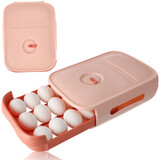
Egg Tray Holder for Fridge holds 18 eggs with a rolling system for easy access. This Stackable Egg Tray with Lid is a st...
Egg Tray Holder for Fridg...
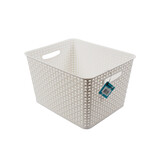
Transform your space with our 17L versatile storage containers. From plastic bins to stackable bins, find the perfect so...
Transform your space with...
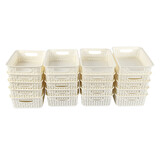
Keep your home organized with 18 white plastic storage baskets. Perfect for toys and craft supplies. Size: 20x15x6cm.
Keep your home organized ...
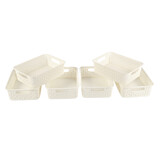
6 Modern white storage baskets (20cm x 15cm x 6cm) to keep your house tidy. Great for toys, crafts and more!
6 Modern white storage ba...
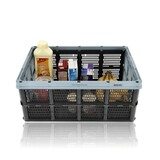
Trust our fantastic blue foldable crate, 1 piece of 32 liters. Store everything here and worry no more. Convenience with...
Trust our fantastic blue ...
- Ordered on working days before 12:00, delivered the next day!
- Buy now, pay later
- Fast delivery in the Netherlands & Belgium
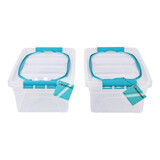
Convenient storage boxes in transparent and sky blue. Dimensions: 30cm x 20.5cm x 12.5cm, 5L. Made of plastic. Set of 2 ...
Convenient storage boxes ...
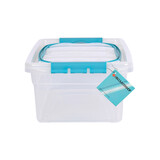
Looking for a storage solution? Discover our stackable storage box with lid in transparent and sky blue. Perfect for Chr...
Looking for a storage sol...
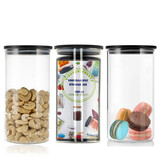
Organize your pantry with this kitchen storage containers set of 3 glass jars with lids (800ml). BPA-free glass storage ...
Organize your pantry with...
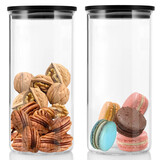
Organize your pantry with this kitchen storage containers set of 2 glass jars with lids (800ml). Perfect for pasta, rice...
Organize your pantry with...
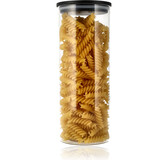
Organize your kitchen with this Glass Jar with Lid 1050ML, part of premium storage jar sets. Perfect as kitchen storage ...
Organize your kitchen wit...
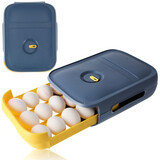
This Egg Tray Holder for Fridge stores up to 18 eggs safely with a rolling system for easy access. Stackable Egg Tray wi...
This Egg Tray Holder for ...
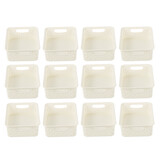
Efficient solution for organizing toys and craft supplies. Includes 12 lightweight and stackable white storage baskets m...
Efficient solution for or...
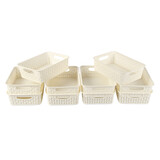
10 stylish white storage baskets (20x15x6cm): great for toys & crafts. Organize now!
10 stylish white storage ...
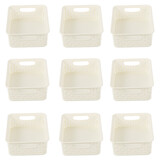
Create order in your home with this set of 9 stylish white storage baskets (20cm x 15cm x 6cm). Ideal for storing toys, ...
Create order in your home...
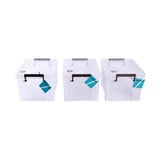
Meet our versatile white plastic storage boxes. Set of 3 large storage containers with click lid.
Meet our versatile white ...
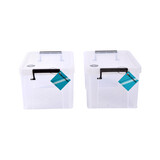
Experience our functional plastic storage containers. Set of 2 large storage boxes with a click lid in white.
Experience our functional...
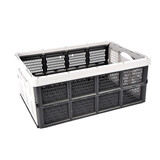
32 liter folding crate for grocery shopping, DIY, camping and storage. Made from recycled plastic, portable with side ha...
32 liter folding crate fo...
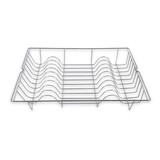
Discover our handy dish drainer for a tidy kitchen after cleaning. Ideal for drying and keeping kitchen utensils organis...
Discover our handy dish d...
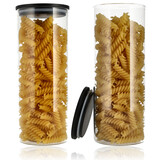
Upgrade your kitchen with this set of 2 glass jars with lids 1050 ml. Perfect as kitchen storage containers for pasta, r...
Upgrade your kitchen with...
Overige categorieën in Household, Living & Cooking
Kitchen organisers for cabinets, drawers, worktops, sinks and pantries
Kitchen organisers for cabinets, drawers, worktops, sinks and pantries
Kitchen organisers give tableware, cutlery, herbs, pantry products, fruit, vegetables and cleaning supplies a fixed place. They help you use the space inside kitchen cabinets and drawers more efficiently while keeping frequently used items accessible. At Discountershop, you can compare solutions for different kitchen zones, from sink organisers and cutlery trays to fruit baskets, vegetable baskets and pantry organisers.
The right kitchen organiser should match its location, available dimensions and intended contents. An open basket suits produce that requires air circulation, while a drawer divider separates small utensils. Around the sink, water-resistant materials and effective drainage are particularly important.
View all kitchen organisers
Which kitchen organiser do you need?
Begin by dividing your kitchen into functional zones. Items that are used together should ideally be stored near one another.
Possible solutions include:
a kitchen cabinet organiser for tableware, pans or pantry goods;
a kitchen drawer organiser for cutlery and cooking utensils;
a sink organiser for sponges, brushes and washing-up liquid;
a worktop organiser for frequently used products;
a spice organiser for jars, packets and small bottles;
a fruit basket for produce stored outside the refrigerator;
a vegetable basket for suitable vegetables and packaged products;
a pantry organiser for tins, jars and dry ingredients;
a refrigerator organiser for chilled products;
a pan organiser for frying pans and pan lids;
a rotating turntable for bottles and jars;
a hanging kitchen organiser for unused wall or cabinet space.
Measure each storage zone separately. Hinges, pipes, drawer runners and door fittings can make the usable interior smaller than the external dimensions suggest.
Multifunctional kitchen organisers
A multifunctional kitchen organiser can serve several purposes when its dimensions, material and construction suit the contents. A basket used for fruit today may later hold packaged pantry products, tea towels or cleaning cloths. A rack with baskets can store fruit and vegetables on a worktop or snacks, bottles and ingredients inside a pantry.
Possible combinations include:
fruit, vegetables and sealed pantry products;
herbs, sauces and small bottles;
cutlery, spatulas and cooking utensils;
tea towels, cleaning cloths and oven gloves;
foil, baking paper and resealable bags;
coffee capsules, tea bags and sugar sachets;
baking equipment and cake-decorating supplies;
washing-up brushes, sponges and dishwasher tablets;
breakfast products and spreads;
small kitchen appliances and their accessories.
Check the suitability of the material whenever you change the organiser’s purpose. An organiser previously used for cleaning chemicals should not be used for unpackaged food without thorough cleaning—and only if the material is approved for food contact.
Kitchen cabinet organisers for more usable space
A kitchen cabinet organiser divides a tall, deep or wide cupboard into accessible storage zones. Common options include shelf risers, pull-out baskets, stackable racks and rotating turntables.
A cabinet organiser can help you:
use the vertical space between shelves;
separate plates from bowls;
group pantry jars by product type;
store pans and lids separately;
keep small packets together;
reach products at the back;
organise cleaning supplies under the sink.
Shelf risers for tableware and pantry goods
A shelf riser creates another level inside a tall cabinet. You can place plates beneath it and bowls above it. In a pantry, tins can go below while lighter packets sit on top.
Check the maximum load and place heavy products at the lowest practical level. Make sure the riser stands securely and does not prevent the cabinet door from closing.
Pull-out kitchen cabinet organisers
A pull-out cabinet organiser brings products at the back of a deep cupboard forwards. It can be used for spice jars, sauces, bottles, pantry products or cleaning supplies.
Check:
the cabinet’s internal width and depth;
the position of hinges;
pipes and the trap beneath the sink;
the organiser’s maximum load;
the space required to pull it out;
whether it is screwed, adhesive-mounted or freestanding.
Before installation, confirm that its baskets and runners can move past hinges, pipes and door fittings.
Rotating turntables for jars and bottles
A rotating turntable, kitchen carousel or lazy Susan brings products at the back of a cupboard within reach. It can hold spice jars, cooking oils, sauces, breakfast spreads and small pantry containers.
Choose a turntable with a raised edge when storing bottles. Distribute tall or heavy bottles evenly to reduce the risk of tipping.
Kitchen drawer organisers and cutlery trays
A kitchen drawer organiser separates cutlery, utensils and small kitchen tools. Knives, forks, spoons, openers and spatulas can each have their own section.
A drawer organiser can hold:
everyday cutlery;
serving utensils;
kitchen knives;
spatulas and wooden spoons;
measuring spoons;
bottle and tin openers;
foil and baking paper;
food clips and bag sealers;
coffee capsules;
small baking accessories.
Measure the usable internal width, depth and height of the drawer. An expandable cutlery tray can adjust to the width, but the drawer sides and runners must still leave enough clearance.
Fixed or adjustable cutlery compartments?
A tray with fixed compartments gives each type of cutlery a consistent place. An adjustable drawer organiser can accommodate longer utensils or a changing layout.
Choose fixed compartments when the contents remain largely the same. Choose adjustable dividers if spatulas, knives or rolls of kitchen foil will share the drawer.
Sink organisers for washing-up supplies
Sponges, brushes, cloths, hand soap and washing-up liquid often collect around the sink. A sink organiser keeps these supplies together and can reduce the amount of water spreading across the worktop.
Available options may include:
sponge and brush holders;
washing-up liquid organisers;
sink caddies with drainage holes;
holders that hang inside or over the sink;
organisers with removable drip trays;
rails for dishcloths;
soap-dispenser holders;
containers for dishwasher tablets and cleaning cloths.
Choose a material suitable for frequent exposure to water. Drainage holes and a removable drip tray make cleaning and drying easier.
See sink organisers for products specifically intended for sponges, brushes, washing-up liquid and other supplies around the sink.
Organisers for the cabinet beneath the sink
The cabinet under a sink often has limited usable space because of pipework, the waste trap and rubbish bins. A narrow, pull-out or two-part organiser can use the free space around these obstructions.
Suitable contents include:
washing-up liquid;
dishwasher tablets;
bin bags;
cleaning cloths;
brushes and sponges;
household gloves;
closed cleaning-product bottles;
spare soap.
Keep cleaning products in their original containers and outside the reach of children and pets. Never combine cleaning chemicals. Isolate leaking packaging immediately and follow its safety instructions.
Worktop organisers for everyday items
A worktop organiser keeps frequently used products close to the relevant preparation area. Limit its contents to items genuinely used in that zone. An overloaded organiser takes up working space and makes the surface more difficult to clean.
It can function as:
a spice rack beside the cooking area;
a utensil holder;
a coffee station beside the coffee machine;
a tea organiser;
a fruit holder;
a tray for oil and vinegar;
a breakfast organiser;
a washing-up caddy beside the sink.
Keep organisers and their contents at a safe distance from the hob and other heat sources. Check whether oils, herbs and packaged foods should be protected from direct sunlight.
Fruit baskets for the kitchen worktop
A fruit basket keeps suitable fruit visible and accessible. An open basket or fruit rack allows air to circulate around the contents. This can reduce trapped moisture, but it does not replace the correct storage temperature.
Fruit commonly ripened or stored outside the refrigerator may include:
bananas;
apples;
pears;
citrus fruit;
mangoes;
unripe avocados.
Storage requirements depend on the type and ripeness of the fruit. Inspect the contents regularly and remove damaged pieces. Unless different guidance applies, wash fruit shortly before eating rather than before storage.
Tiered fruit baskets and fruit racks
A tiered fruit basket uses vertical space on a worktop or inside a pantry. Separate levels can divide different fruit varieties while keeping lower baskets accessible.
Compare:
total height and width;
load capacity per basket;
stability on the worktop;
space between the tiers;
removable or tilting baskets;
airflow around the contents;
ease of cleaning.
Do not place soft or ripe fruit beneath heavy produce. Where necessary, separate ethylene-producing fruit from produce that is sensitive to it.
Vegetable baskets for worktops and pantries
A vegetable basket keeps suitable produce together in a clean, organised manner. However, not every vegetable should be stored on a worktop or in an open basket. Different products require different temperatures, light levels and humidity.
Depending on the relevant storage guidance, a kitchen basket or vegetable rack may hold:
onions;
garlic;
potatoes;
pumpkins and squash;
sealed food packages;
pantry supplies;
kitchen linen.
Potatoes are generally best kept in a cool, dark location. Onions and potatoes should not be stored closely together for long periods because this can affect their storage life. Use separate baskets or tiers where appropriate.
When comparing stackable vegetable baskets or tiered produce racks, check the airflow, load capacity, access to each tier and distance between baskets.
Choose an organiser for your kitchen zone
Pantry organisers for tins, jars and packets
A pantry organiser groups food by type and use-by date. This makes it easier to see what you already have and which products should be used first.
Create separate zones for:
pasta, rice and grains;
tins and preserves;
baking supplies;
breakfast products;
snacks;
sauces and flavourings;
coffee and tea;
reserve stock;
pet food;
cleaning supplies in a separate area.
Place newly purchased products behind older stock when their date is later. This is the FIFO principle: first in, first out. Check packages regularly for leaks, damage and expiry dates.
Stackable pantry baskets
Stackable baskets use vertical space without placing every product directly on top of another. Choose a design that keeps the contents accessible after several baskets have been stacked.
Check:
the maximum stacking height;
load capacity per basket;
stability of the stacked connection;
the size of the front opening;
usable internal measurements;
whether the supporting surface is level.
Place heavy tins at the bottom and lighter bags or packets above them.
Spice organisers and spice racks
Spice jars quickly disappear from view when they stand in several rows. A spice organiser makes labels easier to read and may help prevent duplicate purchases.
Options include:
tiered spice racks;
rotating turntables;
spice-drawer inserts;
wall-mounted racks;
magnetic spice holders;
cabinet-door organisers;
baskets organised by cuisine or recipe type.
Store herbs and spices according to their packaging. Heat, moisture and direct sunlight can affect their flavour, colour and aroma. Do not automatically position a spice rack directly above the hob.
Organising pans, lids and chopping boards
Pans and loose lids consume considerable cabinet space. A pan rack, lid holder or adjustable divider allows components to be stored horizontally or vertically.
A suitable kitchen rack may hold:
frying pans;
saucepans;
pan lids;
chopping boards;
baking trays;
oven dishes;
serving trays.
Check the compartment width and maximum load. Do not place heavy pans on a lightweight cabinet-door organiser unless both the organiser and the door hinges are approved for that weight.
Refrigerator organisers for chilled food
Refrigerator bins group products and help prevent small packages from disappearing behind larger items. Separate containers can be used for sandwich fillings, dairy products, snacks or small bottles.
Consider:
material approved for refrigerator use;
the space between shelves;
airflow around the products;
condensation and leaking packaging;
handles for pulling a container forwards;
cleaning after spills;
recommended refrigerator zones for different foods.
Organisers do not change the refrigerator temperature. Do not obstruct air vents or pack the refrigerator so tightly that cold air cannot circulate.
Hanging kitchen organisers and vertical storage
Hanging organisers use walls, rails, cabinet doors or the underside of shelves. They can free worktop space for food preparation and cooking.
Examples include:
hooks for kitchen utensils;
kitchen-roll holders;
tea-towel hooks;
mug holders;
hanging baskets;
foil and cling-film holders;
magnetic holders;
cabinet-door racks.
Check the mounting surface and attachment method. An adhesive hook usually supports a different load from a screwed rail. Do not hang knives, heavy pans or breakable objects from a fitting that is not approved for them.
Kitchen organisers for small kitchens
In a small kitchen, you can create additional capacity without covering the entire worktop. Use vertical spaces and difficult-to-reach cabinet areas first.
Consider:
shelf risers in tall cabinets;
hooks inside cabinet doors;
narrow pull-out organisers;
a turntable inside a corner cupboard;
stackable fruit or pantry baskets;
a hanging rack beneath a shelf;
drawer dividers;
a compact sink caddy;
magnetic storage on an appropriate metal surface.
Keep frequently used articles between knee and eye level. Place heavy products low down and less frequently used items on higher shelves or towards the back.
Choosing the material of a kitchen organiser
The material determines where an organiser can be used and what it can hold.
Plastic kitchen organisers
Plastic containers and inserts are easy to wipe clean. They can be used in drawers, refrigerators, pantries and beneath sinks. If unpackaged food will touch the organiser, confirm that its material is approved for direct food contact.
Metal kitchen racks
Metal racks and baskets provide structural support and airflow. In damp zones, check the coating and level of corrosion protection. Dry any water that remains on the material.
Wooden and bamboo organisers
Wood and bamboo are frequently used for cutlery trays, drawer dividers and worktop storage. Do not leave these materials standing in water, and follow the relevant cleaning instructions.
Fabric baskets
Fabric baskets can hold lightweight, dry articles such as tea towels or sealed packets. They are less appropriate for wet areas, leaking food packages or unpackaged ingredients.
Measuring before ordering a kitchen organiser
Measure the usable area—not only the outside of the kitchen cabinet or drawer.
Measure:
for a drawer organiser: internal width, depth and height;
for a cabinet organiser: internal dimensions and hinge positions;
for a sink organiser: the available space around the tap and basin;
for an under-sink organiser: pipes, waste trap and door opening;
for an over-door organiser: door thickness and internal shelf clearance;
for a turntable: its diameter and full rotation area;
for a fruit rack: worktop space and clearance beneath wall cabinets;
for stackable baskets: the total assembled height;
for a refrigerator bin: shelf spacing and refrigerator depth.
Allow enough clearance for drawers, cabinet doors and pull-out components to move without resistance.
Open or closed kitchen storage?
Open kitchen organisers provide fast access and often allow better airflow. Closed storage provides more protection against dust, grease and pests.
Choose open storage for:
frequently used cooking utensils;
fruit suitable for storage outside the refrigerator;
vegetables that require air circulation;
tea towels and cleaning cloths;
commonly used spices stored in an appropriate location.
Choose closed storage for:
dry ingredients;
opened packages;
products requiring protection from grease and dust;
dishwasher tablets and cleaning supplies;
less frequently used kitchen accessories.
Use suitable sealed food containers when food requires protection against moisture or pests.
Kitchen organiser, storage basket or storage box?
| Product | Best application | Main characteristic |
|---|---|---|
| Kitchen organiser | Dividing a cabinet, drawer, worktop or pantry | Designed for a specific kitchen zone |
| Sink organiser | Holding sponges, brushes and washing-up liquid | Moisture-resistant and often drainable |
| Kitchen basket | Storing fruit, vegetables or packaged pantry goods | Open and quickly accessible |
| Fruit basket | Holding suitable fruit on a worktop | Airflow and visible contents |
| Vegetable basket | Separating suitable vegetables | Open construction and often stackable |
| Cutlery tray | Dividing cutlery and small utensils | Fixed or adjustable compartments |
| Storage box | Closed storage for larger pantry supplies | Rigid and sometimes stackable |
| Turntable | Reaching bottles and jars at the back of a cabinet | Rotating base |
| Hanging organiser | Using a wall, rail or cabinet door | Creates vertical storage |
See storage baskets for separate kitchen baskets, fruit baskets, vegetable baskets and tiered racks. Browse storage and organisation to compare kitchen storage with other household storage systems.
Cleaning and maintaining kitchen organisers
Kitchen organisers may come into contact with crumbs, moisture, grease and leaking packages. Regular cleaning prevents residue from building up.
Useful maintenance steps include:
remove crumbs and loose food particles;
clean plastic according to its care instructions;
dry metal racks and joints;
do not soak wooden organisers;
empty sink-organiser drip trays regularly;
inspect fruit and vegetable baskets for damaged produce;
clean refrigerator containers immediately after spills;
inspect screws, hooks and adhesive fixings;
let every component dry before replacing it.
Confirm that a product is dishwasher-safe before putting it in the dishwasher. High temperatures can deform some plastics or damage certain finishes.
Watch kitchen-storage guidance on YouTube
Visit the Discountershop YouTube channel for product videos, applications and practical guidance. A video can help you assess dimensions, compartment layouts, mounting methods and how an organiser works inside a cabinet, drawer or around the sink.
Frequently asked questions about kitchen organisers
How can I stop a worktop organiser from sliding?
Choose a model with non-slip feet or place an appropriate non-slip mat beneath it. Clean away grease and moisture regularly because these can reduce grip.
Can a pull-out organiser be installed in every kitchen cabinet?
No. Check the internal measurements, hinge positions, door direction and available fixing points. Pipes and the waste trap can restrict installation beneath a sink.
Which organiser is suitable for a corner cupboard?
A rotating turntable or separate containers with handles can make items at the back more accessible. Measure the full rotation area and confirm that the cabinet door can close.
How can I prevent a sink organiser from rusting?
Choose a material made for damp conditions, remove standing water and dry metal components regularly. Damage to a protective coating can increase the risk of corrosion.
Can fruit and vegetables be stored in the same basket?
Not always. Some fruits release ethylene, which can accelerate the ripening or deterioration of certain vegetables. Use separate baskets when products require different storage conditions.
Why should potatoes and onions not be stored closely together?
Storing them together can adversely affect their storage life. Keep potatoes in a cool, dark location and place onions in a ventilated basket some distance away.
How much weight can a hanging cabinet organiser hold?
The capacity varies by product and attachment method. Check the stated load of the organiser and of the shelf, door or rail supporting it.
Are all kitchen organisers approved for direct food contact?
No. Use an organiser for unpackaged food only if the manufacturer identifies its material as food-safe. Otherwise, keep food packaged or inside approved food containers.
How can I stop spice jars from disappearing at the back?
Use a tiered spice rack, turntable or drawer insert that keeps labels visible. Arrange spices alphabetically, by cuisine or by frequency of use.
Can a cutlery tray go in the dishwasher?
Only when the product information says it is dishwasher-safe. Some plastics can deform, while wood and bamboo may be damaged by prolonged heat and moisture.
How can I organise a pantry without forgetting products?
Create sections by product type, place newer stock behind older packages and keep labels visible. Check best-before and use-by dates whenever you refill the pantry.
Which organiser is best for pan lids?
A vertical lid holder keeps individual lids accessible without moving an entire stack. Check that the sections fit around each lid’s handle or knob.
Can a suction-cup sink organiser attach to every surface?
No. Suction cups work best on smooth, clean and non-porous surfaces. Grout, textured tiles, porous materials and curved surfaces can reduce adhesion.
How should cleaning products be organised beneath the sink?
Keep them upright in their original packaging, use a leak tray and store them away from children and pets. Never mix cleaning products, and follow all safety information on their labels.
Give every kitchen zone a fixed layout
Suitable kitchen organisers divide tableware, cutlery, pans, herbs, pantry goods, fruit, vegetables and cleaning supplies into logical zones. Measure the cabinet, drawer, sink or available worktop space first. Then compare dimensions, load capacity, mounting method, ventilation and material.
