
 Household, Living & Cooking
 Outdoor, Travel & Sports
 DIY, Garden & Animals
 Fashion accessories & Shoes
 Car & Motor
 Computer & Electronics
 Office & School
 Beautiful & Healthy
 Toys
Toys Eat Drink
 Baby
Baby Christmas
 King's Day


 8
8Kitchen Textiles for Cooking, Baking and Barbecuing
Kitchen Textiles for Cooking, Baking and Barbecuing
You notice the value of kitchen textiles most when heat, weight and movement come together. Lifting a hot baking dish, moving a heavy pan or working over a barbecue all require more than a decorative cloth nearby. An oven mitt needs to give you enough grip on hot cookware, barbecue gloves need to allow controlled hand movement, and an apron needs to cover the parts of your clothing most exposed to grease, flour, sauces and splashes.
At Discountershop, kitchen textiles can be divided into three practical roles: protecting hands from heat, maintaining grip during hot tasks and shielding clothing during food preparation. The right choice depends on the heat source, the item being handled and how long you need to hold it.
Oven mitt, barbecue glove or apron: choose by function
An oven mitt is mainly designed for brief handling of hot baking trays, oven dishes and pan handles. Its enclosed shape limits independent finger movement, but it usually offers broad coverage around the hand and wrist.
Barbecue gloves are generally more focused on dexterity. Separate fingers make it easier to grip tongs, spatulas and grill lids. When comparing them, pay attention to grip areas, cuff length and the specific heat-resistance rating stated for the product.
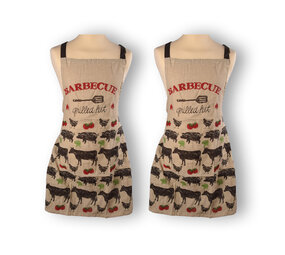
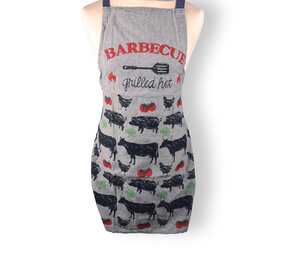
A kitchen or barbecue apron has a different purpose. It helps protect clothing from grease, sauce, flour, batter and food splashes, but it is not a substitute for heat-resistant gloves.
Browse Barbecue & Kitchen Aprons
Heat protection starts with the way you cook
The same oven mitt does not feel equally practical with every type of cookware. Within Pans, weight, handle design and material all affect how you need to grip.
A hot Frying Pan is usually lifted by one long handle. Grip around the palm and fingers is therefore especially important when oil, sauce or food is still inside.
With Woks, the weight can sit further away from your body. A glove that is too loose may shift, while an extremely thick mitt can reduce control.
A large Cooking Pot often needs both hands. Use two dry, suitable mitts or gloves so both handles are supported evenly.
Why dry oven mitts matter
Do not use an oven mitt or heat glove when it is wet or damp. Moisture can transfer heat towards the skin much faster than dry insulating material.
That means a mitt left beside the sink is not automatically ready for use. Check it briefly before lifting a hot dish.
Look for:
- thinning areas in the palm;
- loose seams;
- holes or tears;
- damaged grip sections;
- scorched spots;
- lining that has shifted or clumped.
Kitchen textiles that have lost their structure should not be kept in service simply because the outside still looks acceptable.
Kitchen textiles for baking: from batter to hot bakeware
Baking moves from cool preparation to very hot cookware. Within Baking Supplies, you therefore need different tools before an oven mitt becomes relevant.
Batters and doughs are first prepared in Mixing Bowls. Keep oven mitts away from water and batter during this stage so they remain dry for handling hot bakeware later.
When using Rolling Pins, an apron is much more useful than thick gloves. It protects clothing from flour and dough without restricting hand movement.
Once Bakeware comes out of a hot oven, prepare the landing area first. Moving a hot tin while trying to clear counter space at the same time is an unnecessary risk.
Barbecue gloves need to match the grill task
Around a barbecue, you are dealing not only with a hot cooking surface but also with grill grates, metal tools, pans and radiant heat. Start by considering which Barbecue Cooking Equipment you actually use.
Well-fitting gloves should allow enough finger movement to control a tool. With Barbecue Tool Sets, dexterity matters because you may be moving between tongs, spatulas and other utensils.
A longer cuff can be useful when you work beneath a hot grill lid because the wrist and lower forearm are then closer to the heat source.
Heat-resistant does not automatically mean flameproof. Do not use ordinary barbecue gloves to pick up burning charcoal, open flames or glowing briquettes directly.
Keep kitchen textiles away from the barbecue lighting zone
Lighting a charcoal barbecue creates different risks from cooking over an established fire. Keep aprons, mitts and other fabric items away from the active ignition area.
Use Firelighters according to the product instructions, and make sure loose apron straps do not hang over the barbecue.
A Chimney Starter becomes extremely hot in use. Treat its handle and metal body as hot equipment even when they are not visibly glowing.
When cooking with Charcoal, keep protective textiles away from flying sparks.
The same applies to Briquettes: gloves help with suitable hot-handling tasks, but they are not intended for direct manual handling of burning fuel.
How should a kitchen apron fit?
An apron only works well if it covers the areas where splashes actually land. Look beyond colour and consider length, width and adjustability.
A bib apron provides more coverage for baking, frying, sauces and barbecuing than a short waist apron. An adjustable neck strap can help position the upper edge higher or lower.
The waist ties should keep the apron secure without restricting movement.
Pockets can be useful for a cloth or a small lightweight item, but they are not suitable for sharp objects or hot metal barbecue tools.
Cleaning kitchen textiles without reducing their usefulness
Always check the care label or product instructions. Different fabrics, coatings and insulated linings may require different wash temperatures and cleaning methods.
Treat food and grease stains on aprons reasonably soon before they become deeply embedded in the fibres. If a textile is heavily contaminated with barbecue grease or smoke, wash it separately from more delicate household fabrics where appropriate.
Oven mitts and barbecue gloves must be completely dry before they are used again.
Do not store clean kitchen textiles tightly packed beside damp dishcloths. Thick mitts dry much more slowly in a full drawer than when air can circulate around them.
Store kitchen textiles where they are easy to reach
A fixed storage place prevents you from having to search for an oven mitt after the oven door is already open.
Hang an apron by its loop or strap when the design allows it. Oven mitts can be stored by a hanging loop near the working area, but not so close to a hob, oven vent or flame that they are exposed to heat.
Barbecue gloves should only be put away after they are cool, clean and dry. Avoid leaving them permanently outdoors near the barbecue, where moisture and weather can degrade the material over time.
From cooking to serving
Once cooking is finished, the focus shifts from protection to presentation. Hot dishes can then be transferred to suitable Tableware.
Use Serving Bowls for shared dishes, but check whether the serving piece itself is hot before touching it without protection.
When portioning onto Plates, the oven mitts can usually be put away once all hot pans and dishes are safely positioned.
After dinner or a barbecue, Cups & Mugs can be used for coffee or tea. Related serving items can be found under Coffee & Tea Accessories.
If breakfast or brunch includes boiled eggs, Egg Cups give that part of the table its own place without leaving baking or barbecue equipment in the serving area.
Watch Discountershop on YouTube
Visit the Discountershop YouTube channel for product videos and practical examples covering cooking, baking, barbecuing and other kitchen and household products.
Frequently Asked Questions About Kitchen Textiles
Why should you never use a damp oven mitt?
Moisture can transfer heat through the material much faster than dry insulation. Use an oven mitt only when it is fully dry, especially when the inner padding may still contain moisture.
What is the practical difference between an oven mitt and barbecue gloves?
An oven mitt provides broad coverage but less individual finger movement. Barbecue gloves often give more dexterity for tongs and grill tools. The actual heat resistance still depends on the specific product.
How long should the cuff of a barbecue glove be?
That depends on the task. When working close to a hot grill or under a barbecue lid, a longer cuff provides additional coverage around the wrist and lower forearm.
Does a kitchen apron protect against burns?
A normal kitchen apron is mainly intended to protect clothing from food, grease and dirt. Do not treat it as heat or flame protection unless the product is specifically certified for that purpose.
When should old oven mitts be replaced?
Replace them when insulation becomes thin, seams open, holes appear or grip material is damaged. Scorched areas or a distorted inner lining can also indicate reduced protection.
How do you choose the right size barbecue gloves?
Your fingers should reach comfortably into the glove without being tightly compressed. At the same time, there should not be so much extra space that the glove shifts when gripping tongs or cookware.
Why is a pair of oven mitts more practical than a single mitt?
Large baking trays, roasting dishes and heavy pots are safer to support with both hands. One mitt can encourage you to improvise with a towel or unprotected hand on the other side.
How do you remove grease stains from a kitchen apron?
Treat fresh stains according to the care label before they fully dry. Check the fabric and colourfastness first and avoid aggressive treatments that could damage coatings, prints or special finishes.
Can barbecue gloves be used to move hot charcoal?
Not automatically. Heat-resistant gloves are not necessarily rated for direct contact with burning charcoal, glowing briquettes or open flame. Use proper barbecue tools and follow the glove’s stated temperature limits.
Where should oven mitts and barbecue gloves be stored?
Store them fully dry in a fixed, easily accessible place away from open flames and hot cooking zones. Outdoor-use gloves are better stored indoors once they have cooled and dried.
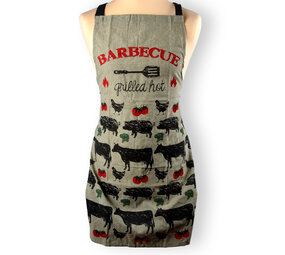
Discover our high-quality kitchen ...
Discover our high-quali...
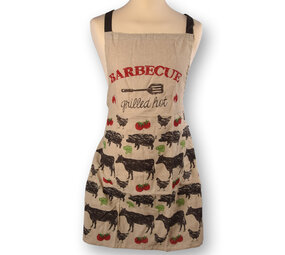
Discover our high-quality kitchen ...
Discover our high-quali...
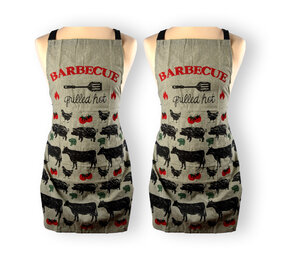
Discover our high-quality kitchen ...
Discover our high-quali...
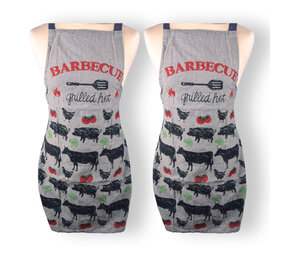
Discover our high-quality kitchen ...
Discover our high-quali...
Discover our high-quality kitchen ...
Discover our high-quali...
Discover our high-quality kitchen ...
Discover our high-quali...
- Ordered on working days before 12:00, delivered the next day!
- Buy now, pay later
- Fast delivery in the Netherlands & Belgium
Overige categorieën in Household, Living & Cooking
Kitchen Textiles for Cooking, Baking and Barbecuing
Kitchen Textiles for Cooking, Baking and Barbecuing
You notice the value of kitchen textiles most when heat, weight and movement come together. Lifting a hot baking dish, moving a heavy pan or working over a barbecue all require more than a decorative cloth nearby. An oven mitt needs to give you enough grip on hot cookware, barbecue gloves need to allow controlled hand movement, and an apron needs to cover the parts of your clothing most exposed to grease, flour, sauces and splashes.
At Discountershop, kitchen textiles can be divided into three practical roles: protecting hands from heat, maintaining grip during hot tasks and shielding clothing during food preparation. The right choice depends on the heat source, the item being handled and how long you need to hold it.
Oven mitt, barbecue glove or apron: choose by function
An oven mitt is mainly designed for brief handling of hot baking trays, oven dishes and pan handles. Its enclosed shape limits independent finger movement, but it usually offers broad coverage around the hand and wrist.
Barbecue gloves are generally more focused on dexterity. Separate fingers make it easier to grip tongs, spatulas and grill lids. When comparing them, pay attention to grip areas, cuff length and the specific heat-resistance rating stated for the product.
A kitchen or barbecue apron has a different purpose. It helps protect clothing from grease, sauce, flour, batter and food splashes, but it is not a substitute for heat-resistant gloves.
Browse Barbecue & Kitchen Aprons
Heat protection starts with the way you cook
The same oven mitt does not feel equally practical with every type of cookware. Within Pans, weight, handle design and material all affect how you need to grip.
A hot Frying Pan is usually lifted by one long handle. Grip around the palm and fingers is therefore especially important when oil, sauce or food is still inside.
With Woks, the weight can sit further away from your body. A glove that is too loose may shift, while an extremely thick mitt can reduce control.
A large Cooking Pot often needs both hands. Use two dry, suitable mitts or gloves so both handles are supported evenly.
Why dry oven mitts matter
Do not use an oven mitt or heat glove when it is wet or damp. Moisture can transfer heat towards the skin much faster than dry insulating material.
That means a mitt left beside the sink is not automatically ready for use. Check it briefly before lifting a hot dish.
Look for:
- thinning areas in the palm;
- loose seams;
- holes or tears;
- damaged grip sections;
- scorched spots;
- lining that has shifted or clumped.
Kitchen textiles that have lost their structure should not be kept in service simply because the outside still looks acceptable.
Kitchen textiles for baking: from batter to hot bakeware
Baking moves from cool preparation to very hot cookware. Within Baking Supplies, you therefore need different tools before an oven mitt becomes relevant.
Batters and doughs are first prepared in Mixing Bowls. Keep oven mitts away from water and batter during this stage so they remain dry for handling hot bakeware later.
When using Rolling Pins, an apron is much more useful than thick gloves. It protects clothing from flour and dough without restricting hand movement.
Once Bakeware comes out of a hot oven, prepare the landing area first. Moving a hot tin while trying to clear counter space at the same time is an unnecessary risk.
Barbecue gloves need to match the grill task
Around a barbecue, you are dealing not only with a hot cooking surface but also with grill grates, metal tools, pans and radiant heat. Start by considering which Barbecue Cooking Equipment you actually use.
Well-fitting gloves should allow enough finger movement to control a tool. With Barbecue Tool Sets, dexterity matters because you may be moving between tongs, spatulas and other utensils.
A longer cuff can be useful when you work beneath a hot grill lid because the wrist and lower forearm are then closer to the heat source.
Heat-resistant does not automatically mean flameproof. Do not use ordinary barbecue gloves to pick up burning charcoal, open flames or glowing briquettes directly.
Keep kitchen textiles away from the barbecue lighting zone
Lighting a charcoal barbecue creates different risks from cooking over an established fire. Keep aprons, mitts and other fabric items away from the active ignition area.
Use Firelighters according to the product instructions, and make sure loose apron straps do not hang over the barbecue.
A Chimney Starter becomes extremely hot in use. Treat its handle and metal body as hot equipment even when they are not visibly glowing.
When cooking with Charcoal, keep protective textiles away from flying sparks.
The same applies to Briquettes: gloves help with suitable hot-handling tasks, but they are not intended for direct manual handling of burning fuel.
How should a kitchen apron fit?
An apron only works well if it covers the areas where splashes actually land. Look beyond colour and consider length, width and adjustability.
A bib apron provides more coverage for baking, frying, sauces and barbecuing than a short waist apron. An adjustable neck strap can help position the upper edge higher or lower.
The waist ties should keep the apron secure without restricting movement.
Pockets can be useful for a cloth or a small lightweight item, but they are not suitable for sharp objects or hot metal barbecue tools.
Cleaning kitchen textiles without reducing their usefulness
Always check the care label or product instructions. Different fabrics, coatings and insulated linings may require different wash temperatures and cleaning methods.
Treat food and grease stains on aprons reasonably soon before they become deeply embedded in the fibres. If a textile is heavily contaminated with barbecue grease or smoke, wash it separately from more delicate household fabrics where appropriate.
Oven mitts and barbecue gloves must be completely dry before they are used again.
Do not store clean kitchen textiles tightly packed beside damp dishcloths. Thick mitts dry much more slowly in a full drawer than when air can circulate around them.
Store kitchen textiles where they are easy to reach
A fixed storage place prevents you from having to search for an oven mitt after the oven door is already open.
Hang an apron by its loop or strap when the design allows it. Oven mitts can be stored by a hanging loop near the working area, but not so close to a hob, oven vent or flame that they are exposed to heat.
Barbecue gloves should only be put away after they are cool, clean and dry. Avoid leaving them permanently outdoors near the barbecue, where moisture and weather can degrade the material over time.
From cooking to serving
Once cooking is finished, the focus shifts from protection to presentation. Hot dishes can then be transferred to suitable Tableware.
Use Serving Bowls for shared dishes, but check whether the serving piece itself is hot before touching it without protection.
When portioning onto Plates, the oven mitts can usually be put away once all hot pans and dishes are safely positioned.
After dinner or a barbecue, Cups & Mugs can be used for coffee or tea. Related serving items can be found under Coffee & Tea Accessories.
If breakfast or brunch includes boiled eggs, Egg Cups give that part of the table its own place without leaving baking or barbecue equipment in the serving area.
Watch Discountershop on YouTube
Visit the Discountershop YouTube channel for product videos and practical examples covering cooking, baking, barbecuing and other kitchen and household products.
Frequently Asked Questions About Kitchen Textiles
Why should you never use a damp oven mitt?
Moisture can transfer heat through the material much faster than dry insulation. Use an oven mitt only when it is fully dry, especially when the inner padding may still contain moisture.
What is the practical difference between an oven mitt and barbecue gloves?
An oven mitt provides broad coverage but less individual finger movement. Barbecue gloves often give more dexterity for tongs and grill tools. The actual heat resistance still depends on the specific product.
How long should the cuff of a barbecue glove be?
That depends on the task. When working close to a hot grill or under a barbecue lid, a longer cuff provides additional coverage around the wrist and lower forearm.
Does a kitchen apron protect against burns?
A normal kitchen apron is mainly intended to protect clothing from food, grease and dirt. Do not treat it as heat or flame protection unless the product is specifically certified for that purpose.
When should old oven mitts be replaced?
Replace them when insulation becomes thin, seams open, holes appear or grip material is damaged. Scorched areas or a distorted inner lining can also indicate reduced protection.
How do you choose the right size barbecue gloves?
Your fingers should reach comfortably into the glove without being tightly compressed. At the same time, there should not be so much extra space that the glove shifts when gripping tongs or cookware.
Why is a pair of oven mitts more practical than a single mitt?
Large baking trays, roasting dishes and heavy pots are safer to support with both hands. One mitt can encourage you to improvise with a towel or unprotected hand on the other side.
How do you remove grease stains from a kitchen apron?
Treat fresh stains according to the care label before they fully dry. Check the fabric and colourfastness first and avoid aggressive treatments that could damage coatings, prints or special finishes.
Can barbecue gloves be used to move hot charcoal?
Not automatically. Heat-resistant gloves are not necessarily rated for direct contact with burning charcoal, glowing briquettes or open flame. Use proper barbecue tools and follow the glove’s stated temperature limits.
Where should oven mitts and barbecue gloves be stored?
Store them fully dry in a fixed, easily accessible place away from open flames and hot cooking zones. Outdoor-use gloves are better stored indoors once they have cooled and dried.
