
 Household, Living & Cooking
 Outdoor, Travel & Sports
 DIY, Garden & Animals
 Fashion accessories & Shoes
 Car & Motor
 Computer & Electronics
 Office & School
 Beautiful & Healthy
 Toys
Toys Eat Drink
 Baby
Baby Christmas
 King's Day


 8
8Milk Frothers for Cappuccino, Latte, Matcha and Coffee Bars
Milk Frothers for Cappuccino, Latte and a Complete Coffee Station
A cappuccino, latte macchiato or flat white is not simply coffee with some milk added on top. The amount of air, liquid milk and foam changes the way the drink feels and tastes. That makes a milk frother more than just an extra tool beside the coffee machine.
At Discountershop, you can compare Milk Frothers for a home coffee bar, office, café, coworking space, hostel, B&B or Airbnb. Within Coffee & Tea Accessories, the milk area becomes its own stage between brewing coffee and finishing the drink.
Handheld milk frother or model with a jug?
The first choice is not about wattage or appearance, but about what the appliance actually does.
A handheld milk frother usually consists of a small motorised whisk. You heat or cool the milk separately and use the whisk only to introduce air. This type takes up very little space and works well in a small office kitchen, pantry or compact coffee corner.
A frother with a jug gives more control over milk quantity. Some models also combine frothing with heating. Always check the specifications, because not every electric milk frother heats milk automatically.
Within Barista Accessories, you can build out the rest of the coffee station with tools for grinding, preparation and presentation.
Why does one type of milk foam better than another?
Milk foam is made up of air bubbles that are stabilised by components in the milk. Proteins play an important role in holding those bubbles, while fat affects mouthfeel and the characteristics of the foam.
That is why whole milk, semi-skimmed milk and skimmed milk do not necessarily produce the same texture, even with the same frother.
The difference can be even larger with plant-based alternatives. Oat, soy, almond and coconut drinks vary in protein, fat and added stabilisers. Products sold as barista versions are often formulated to behave more predictably when heated and frothed and when mixed with coffee.
So a frother that performs well with dairy milk may not create exactly the same volume or structure with every plant-based drink.
Do not automatically fill a milk frother to the top
Milk expands when air is incorporated. That means the maximum amount you can heat may be higher than the maximum amount you can froth.
For a model with a jug, always follow the minimum and maximum fill markings when provided.
Without enough free space, foam can rise over the edge during operation. Too little milk may also fail to make proper contact with the whisking mechanism in some appliances.
Only then should you think about cup size. Within Cups & Mugs, choose a cup with enough usable capacity for coffee, milk and foam together.
Match foam quantity to the coffee drink
Not every milk-based drink needs the same ratio. Cappuccino generally has a more visible foam layer, while latte contains more liquid milk. A flat white focuses more on fine, integrated milk texture than on a tall layer of dry foam.
Do not therefore use a full jug of foam for every coffee.
In a shared coffee station, it helps to define the recipes you actually serve. Measure the amount of espresso or coffee first, then work out how much room remains for milk.
For additional coffee-serving products, you can also browse Coffee & Tea Accessories within Tableware.
How do you get finer foam instead of large bubbles?
With a handheld whisk, position matters. Holding the whisk too close to the surface can introduce too much air at once and create larger bubbles.
Start with the whisk inside the milk and work in a controlled way. Once enough air has been incorporated, gentler movement can help distribute the foam more evenly through the liquid.
If you use a separate jug, a light tap on a stable surface and a gentle swirl can help reduce larger surface bubbles, provided the jug material and product instructions allow it.
Do not expect identical results from every milk type. Composition and temperature remain part of the outcome.
Plant-based milk in an office or B&B: think about cross-contact
If you offer dairy milk alongside oat, soy or almond drinks, milk choice is only one part of the setup when allergies matter.
A whisk used first with dairy milk and then immediately with a plant-based alternative can transfer milk residue. Clean all milk-contact parts carefully between uses when cross-contact needs to be limited.
In professional or shared environments, separate tools for different milk types may be easier to manage.
Keep the milk area separate from the breakfast area as well. Plates and food can stay in another zone so someone making a cappuccino does not have to move through the entire breakfast setup.
Clean milk frothers immediately after use
Milk residue is much easier to remove before it dries. Rinse or clean the whisk shortly after use according to the instructions for the specific model.
With electric models, make a clear distinction between removable milk-contact parts and the electrical components. A motor housing, battery compartment or powered base should not automatically go under running water or into the dishwasher.
Check for each model:
- which parts are removable;
- whether any parts are dishwasher-safe;
- whether hand washing is required;
- whether the electrical housing must stay dry;
- how the whisk is removed;
- whether seams can collect milk residue.
Avoid aggressive scouring pads on glass, coatings or stainless steel if the manufacturer advises against them.
How to store a milk frother properly
A compact battery-powered whisk fits easily into a drawer, but its thin wire head can bend if heavy kitchen utensils are placed on top of it. Give it a separate compartment or store it upright if the design allows.
A model with a glass jug needs more shelf space. Measure both the jug diameter and the total height with lid before deciding where it will be stored.
Allow all cleaned parts to dry completely before enclosing them in a cupboard. For battery-powered devices, follow the product guidance for long periods of storage.
If Serving Bowls are used for breakfast or coffee service, store them separately from delicate frother whisks so heavy crockery cannot damage smaller parts.
Milk frothers for iced coffee, matcha and hot chocolate
A milk frother does not have to be limited to hot cappuccino. Some compact whisks can also be useful for matcha, cocoa or other drinks where powder needs to be mixed into liquid, if the product specifications allow it.
Do not use a small frother automatically for thick mixtures or ingredients the motor was not designed to handle.
For an iced latte or other cold coffee drink, Glasses are often more suitable than a small cappuccino cup.
A Long Drink Glass provides room for ice, coffee, cold milk and optional cold foam. Keep Water Glasses available separately for guests or employees who do not drink coffee.
Setting up a milk station for multiple users
In an office or breakfast room, a milk frother should not sit in the middle of cups, sugar containers and used spoons.
Create a small dedicated area with the frother, milk and a place for used parts. Keep spare cups and other Tableware outside the immediate preparation zone.
If Tealight Holders are used to create atmosphere in a café or lounge, keep open flames away from milk packaging, electrical equipment and the active coffee area.
That keeps one part of the space functional while another is used for presentation and seating.
From coffee corner to wider drinks service
In a B&B, café or small hospitality space, the coffee area may later be used for other drinks. Keep Drinks & Bar Accessories separate from milk and coffee tools.
For wine, use dedicated Wine Glasses and keep related tools with Wine Accessories.
If whiskey is served later, Whiskey Glasses have a different role from coffee cups, while related products can stay organised with Whiskey Accessories.
For mixed drinks, give Cocktail Accessories their own preparation area. Bottle Openers can also stay outside the drawer where delicate milk-frother whisks are stored.
At breakfast, Egg Cups can remain in the food zone, keeping the coffee corner focused only on products needed for drinks preparation.
Watch Discountershop on YouTube
Visit the Discountershop YouTube channel for product videos and practical examples covering kitchen, dining and household products that can help when organising a coffee or hospitality station.
Frequently Asked Questions About Milk Frothers
Why does milk increase so much in volume when frothed?
The whisk introduces air into the milk and breaks it into small bubbles. Milk proteins help stabilise those bubbles temporarily, increasing the overall volume even though no extra liquid has been added.
Why can cold milk create different foam from warm milk?
Temperature affects how proteins, fats and air behave during frothing. Results therefore vary by milk type and appliance. Follow the product's recommended temperature rather than heating milk to an arbitrary high temperature.
Does milk fat percentage affect milk foam?
Yes. Fat influences mouthfeel and foam characteristics, while proteins are important for bubble stability. Skimmed and whole milk can therefore produce noticeably different textures with the same milk frother.
Why can plant-based milk split after frothing and adding it to coffee?
Plant-based drinks react differently to heat and coffee acidity. Some barista versions include stabilising ingredients to improve performance, while temperature differences between coffee and milk can also affect the final result.
How full should you fill a milk frother?
Always follow the maximum frothing mark. Foam occupies more space than liquid milk, so filling the container to the rim can cause it to overflow once air is incorporated.
Can a handheld milk frother heat the milk as well?
A basic battery-powered or electric handheld whisk normally does not heat milk; it only rotates the whisk. If you want automatic heating and frothing, choose a model that specifically lists both functions.
Why do I get large bubbles instead of fine milk foam?
Holding the whisk too close to the surface can introduce large amounts of air quickly. Whisk depth, movement, milk type and temperature all matter. Work more gradually and avoid frothing only at the surface.
How do you clean a small frother whisk without bending it?
Rinse it shortly after use according to the product instructions. Avoid pulling on the thin wire loops and make sure heavy dishes or utensils do not press against the whisk while drying or in storage.
Can a milk frother also be used for matcha or hot chocolate?
Some handheld frothers can mix suitable powders into liquid, but this varies by product. Check the specifications and do not use a small whisk for thick mixtures that could overload the motor.
Which milk frother is practical for an office with several coffee drinkers?
Focus on speed, capacity, cleaning and power source. A compact model works for occasional use, while frequent back-to-back cappuccinos may benefit from larger capacity and a design that is quick to clean.
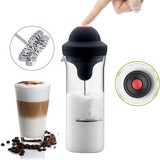
Tired of your daily cup of black coffee? Do you want the same delicious cappuccino that they serve at the coffee shop ar...
Tired of your daily cup o...
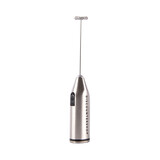
Craft barista-style coffee drinks at home with this handheld milk frother (21cm)! This powerful frother (115g) whips up ...
Craft barista-style coffe...

With this milk frother you can make the tastiest cappuccino yourself in no time!
With this milk frother yo...

Achieve café-style foam at home with this Electric Milk Frother. Perfect for cappuccinos, lattes, and iced coffee. Cord...
Achieve café-style foam ...
Overige categorieën in Household, Living & Cooking
Milk Frothers for Cappuccino, Latte, Matcha and Coffee Bars
Milk Frothers for Cappuccino, Latte and a Complete Coffee Station
A cappuccino, latte macchiato or flat white is not simply coffee with some milk added on top. The amount of air, liquid milk and foam changes the way the drink feels and tastes. That makes a milk frother more than just an extra tool beside the coffee machine.
At Discountershop, you can compare Milk Frothers for a home coffee bar, office, café, coworking space, hostel, B&B or Airbnb. Within Coffee & Tea Accessories, the milk area becomes its own stage between brewing coffee and finishing the drink.
Handheld milk frother or model with a jug?
The first choice is not about wattage or appearance, but about what the appliance actually does.
A handheld milk frother usually consists of a small motorised whisk. You heat or cool the milk separately and use the whisk only to introduce air. This type takes up very little space and works well in a small office kitchen, pantry or compact coffee corner.
A frother with a jug gives more control over milk quantity. Some models also combine frothing with heating. Always check the specifications, because not every electric milk frother heats milk automatically.
Within Barista Accessories, you can build out the rest of the coffee station with tools for grinding, preparation and presentation.
Why does one type of milk foam better than another?
Milk foam is made up of air bubbles that are stabilised by components in the milk. Proteins play an important role in holding those bubbles, while fat affects mouthfeel and the characteristics of the foam.
That is why whole milk, semi-skimmed milk and skimmed milk do not necessarily produce the same texture, even with the same frother.
The difference can be even larger with plant-based alternatives. Oat, soy, almond and coconut drinks vary in protein, fat and added stabilisers. Products sold as barista versions are often formulated to behave more predictably when heated and frothed and when mixed with coffee.
So a frother that performs well with dairy milk may not create exactly the same volume or structure with every plant-based drink.
Do not automatically fill a milk frother to the top
Milk expands when air is incorporated. That means the maximum amount you can heat may be higher than the maximum amount you can froth.
For a model with a jug, always follow the minimum and maximum fill markings when provided.
Without enough free space, foam can rise over the edge during operation. Too little milk may also fail to make proper contact with the whisking mechanism in some appliances.
Only then should you think about cup size. Within Cups & Mugs, choose a cup with enough usable capacity for coffee, milk and foam together.
Match foam quantity to the coffee drink
Not every milk-based drink needs the same ratio. Cappuccino generally has a more visible foam layer, while latte contains more liquid milk. A flat white focuses more on fine, integrated milk texture than on a tall layer of dry foam.
Do not therefore use a full jug of foam for every coffee.
In a shared coffee station, it helps to define the recipes you actually serve. Measure the amount of espresso or coffee first, then work out how much room remains for milk.
For additional coffee-serving products, you can also browse Coffee & Tea Accessories within Tableware.
How do you get finer foam instead of large bubbles?
With a handheld whisk, position matters. Holding the whisk too close to the surface can introduce too much air at once and create larger bubbles.
Start with the whisk inside the milk and work in a controlled way. Once enough air has been incorporated, gentler movement can help distribute the foam more evenly through the liquid.
If you use a separate jug, a light tap on a stable surface and a gentle swirl can help reduce larger surface bubbles, provided the jug material and product instructions allow it.
Do not expect identical results from every milk type. Composition and temperature remain part of the outcome.
Plant-based milk in an office or B&B: think about cross-contact
If you offer dairy milk alongside oat, soy or almond drinks, milk choice is only one part of the setup when allergies matter.
A whisk used first with dairy milk and then immediately with a plant-based alternative can transfer milk residue. Clean all milk-contact parts carefully between uses when cross-contact needs to be limited.
In professional or shared environments, separate tools for different milk types may be easier to manage.
Keep the milk area separate from the breakfast area as well. Plates and food can stay in another zone so someone making a cappuccino does not have to move through the entire breakfast setup.
Clean milk frothers immediately after use
Milk residue is much easier to remove before it dries. Rinse or clean the whisk shortly after use according to the instructions for the specific model.
With electric models, make a clear distinction between removable milk-contact parts and the electrical components. A motor housing, battery compartment or powered base should not automatically go under running water or into the dishwasher.
Check for each model:
- which parts are removable;
- whether any parts are dishwasher-safe;
- whether hand washing is required;
- whether the electrical housing must stay dry;
- how the whisk is removed;
- whether seams can collect milk residue.
Avoid aggressive scouring pads on glass, coatings or stainless steel if the manufacturer advises against them.
How to store a milk frother properly
A compact battery-powered whisk fits easily into a drawer, but its thin wire head can bend if heavy kitchen utensils are placed on top of it. Give it a separate compartment or store it upright if the design allows.
A model with a glass jug needs more shelf space. Measure both the jug diameter and the total height with lid before deciding where it will be stored.
Allow all cleaned parts to dry completely before enclosing them in a cupboard. For battery-powered devices, follow the product guidance for long periods of storage.
If Serving Bowls are used for breakfast or coffee service, store them separately from delicate frother whisks so heavy crockery cannot damage smaller parts.
Milk frothers for iced coffee, matcha and hot chocolate
A milk frother does not have to be limited to hot cappuccino. Some compact whisks can also be useful for matcha, cocoa or other drinks where powder needs to be mixed into liquid, if the product specifications allow it.
Do not use a small frother automatically for thick mixtures or ingredients the motor was not designed to handle.
For an iced latte or other cold coffee drink, Glasses are often more suitable than a small cappuccino cup.
A Long Drink Glass provides room for ice, coffee, cold milk and optional cold foam. Keep Water Glasses available separately for guests or employees who do not drink coffee.
Setting up a milk station for multiple users
In an office or breakfast room, a milk frother should not sit in the middle of cups, sugar containers and used spoons.
Create a small dedicated area with the frother, milk and a place for used parts. Keep spare cups and other Tableware outside the immediate preparation zone.
If Tealight Holders are used to create atmosphere in a café or lounge, keep open flames away from milk packaging, electrical equipment and the active coffee area.
That keeps one part of the space functional while another is used for presentation and seating.
From coffee corner to wider drinks service
In a B&B, café or small hospitality space, the coffee area may later be used for other drinks. Keep Drinks & Bar Accessories separate from milk and coffee tools.
For wine, use dedicated Wine Glasses and keep related tools with Wine Accessories.
If whiskey is served later, Whiskey Glasses have a different role from coffee cups, while related products can stay organised with Whiskey Accessories.
For mixed drinks, give Cocktail Accessories their own preparation area. Bottle Openers can also stay outside the drawer where delicate milk-frother whisks are stored.
At breakfast, Egg Cups can remain in the food zone, keeping the coffee corner focused only on products needed for drinks preparation.
Watch Discountershop on YouTube
Visit the Discountershop YouTube channel for product videos and practical examples covering kitchen, dining and household products that can help when organising a coffee or hospitality station.
Frequently Asked Questions About Milk Frothers
Why does milk increase so much in volume when frothed?
The whisk introduces air into the milk and breaks it into small bubbles. Milk proteins help stabilise those bubbles temporarily, increasing the overall volume even though no extra liquid has been added.
Why can cold milk create different foam from warm milk?
Temperature affects how proteins, fats and air behave during frothing. Results therefore vary by milk type and appliance. Follow the product's recommended temperature rather than heating milk to an arbitrary high temperature.
Does milk fat percentage affect milk foam?
Yes. Fat influences mouthfeel and foam characteristics, while proteins are important for bubble stability. Skimmed and whole milk can therefore produce noticeably different textures with the same milk frother.
Why can plant-based milk split after frothing and adding it to coffee?
Plant-based drinks react differently to heat and coffee acidity. Some barista versions include stabilising ingredients to improve performance, while temperature differences between coffee and milk can also affect the final result.
How full should you fill a milk frother?
Always follow the maximum frothing mark. Foam occupies more space than liquid milk, so filling the container to the rim can cause it to overflow once air is incorporated.
Can a handheld milk frother heat the milk as well?
A basic battery-powered or electric handheld whisk normally does not heat milk; it only rotates the whisk. If you want automatic heating and frothing, choose a model that specifically lists both functions.
Why do I get large bubbles instead of fine milk foam?
Holding the whisk too close to the surface can introduce large amounts of air quickly. Whisk depth, movement, milk type and temperature all matter. Work more gradually and avoid frothing only at the surface.
How do you clean a small frother whisk without bending it?
Rinse it shortly after use according to the product instructions. Avoid pulling on the thin wire loops and make sure heavy dishes or utensils do not press against the whisk while drying or in storage.
Can a milk frother also be used for matcha or hot chocolate?
Some handheld frothers can mix suitable powders into liquid, but this varies by product. Check the specifications and do not use a small whisk for thick mixtures that could overload the motor.
Which milk frother is practical for an office with several coffee drinkers?
Focus on speed, capacity, cleaning and power source. A compact model works for occasional use, while frequent back-to-back cappuccinos may benefit from larger capacity and a design that is quick to clean.
