
 Household, Living & Cooking
 Outdoor, Travel & Sports
 DIY, Garden & Animals
 Fashion accessories & Shoes
 Car & Motor
 Computer & Electronics
 Office & School
 Beautiful & Healthy
 Toys
Toys Eat Drink
 Baby
Baby Christmas
 King's Day


 8
8Soup Ladles for Broth, Hearty Soups and Serving
Soup Ladles for Broth, Hearty Soups and Serving
A pot of soup rarely stays in the pot. Eventually, broth, tomato soup, pea soup, bisque or a chunky vegetable soup has to reach a bowl without splashing over the rim or leaving all the heavier ingredients behind at the bottom. That is where the shape and size of a soup ladle start to matter.
At Discountershop, you can compare different spoons and serving utensils within Cutlery. Before choosing a soup ladle, first decide whether you need a spoon for eating soup or a ladle for serving it, because these are two very different utensils despite the similar terminology.
Soup spoon or soup ladle: what is the difference?
A soup spoon is part of table cutlery. It has a relatively short handle and a rounded or deeper bowl designed for eating soup directly from a bowl.
A soup ladle is a kitchen and serving utensil. It normally has a much longer handle, often around 30 cm or more, so you can reach into a deep stockpot while keeping your hand away from hot liquid and steam.
The Tableware you use can help determine which type you need. A dining spoon should suit the size of your soup bowl, while a serving ladle needs to match the depth of your saucepan or stockpot.
Match the ladle bowl to the type of soup
Different soups behave differently when you serve them. Clear broth moves quickly and can spill easily from a shallow bowl. Creamy tomato or pumpkin soup flows more slowly, while minestrone, pea soup and stews contain solid ingredients that naturally settle towards the bottom.
That makes the shape of the ladle bowl important:
- Deep, rounded bowl: useful for clear broth and thinner soups.
- Wider bowl: practical for thick or chunky meal soups.
- Generous opening: helps pick up potatoes, vegetables, beans or pieces of meat.
- Defined pouring edge: can improve control with thinner liquids.
- Smooth connection between bowl and handle: easier to clean because food has fewer places to collect.
If soup is served directly at the table, make sure the ladle also suits your Plates and Bowls. An oversized ladle can make a small soup bowl harder to fill neatly rather than easier.
How much soup does one ladle actually hold?
The total length of a ladle tells you nothing about the volume of its bowl. That becomes important when you want to serve reasonably equal portions.
You can measure it at home very easily. Fill the ladle with water to the level you would normally use, then pour that water into a measuring jug. If one scoop holds 100 ml and you normally serve about 300 ml of soup, three similar scoops will produce a reasonably consistent portion.
This is useful at a buffet, but it also helps when dividing soup between several Serving Bowls or individual bowls.
For chunky soup, stir gently from the bottom before portioning. Beans, potatoes, meat and other dense ingredients tend to settle below the broth while the pot is standing.
Choose handle length according to your saucepan
A long handle is particularly useful with deep cookware. It keeps your hand further away from hot steam and means the entire utensil does not have to disappear into the soup.
With kitchen ladles around 30–35 cm long, measure both your saucepan and your storage space before ordering. A long ladle can work very well in a stockpot but feel unbalanced when used with a shallow serving dish.
Other long-handled tools can be found under Kitchen Utensils.
If you prefer several cooking tools with similar handles and proportions, Kitchen Utensil Sets can make storage and handling more consistent.
Stainless steel, nylon or wood: choose according to your cookware
A stainless steel soup ladle is rigid, strong and holds its shape well. It can work well with uncoated stainless steel cookware, but a hard metal edge may scratch a delicate non-stick surface if you scrape it across the bottom.
A nylon soup ladle may be gentler on coated cookware. Always check the heat-resistance rating of the actual product because the word “nylon” alone does not tell you the maximum safe temperature.
A wooden ladle transfers heat towards the handle more slowly and feels softer against many pan surfaces. Wood does, however, require different care: avoid prolonged soaking and allow it to dry fully before storage.
If you need liquid to drain away rather than remain in the spoon, a perforated utensil may be more appropriate. Browse Skimmers & Whisks for draining tools.
For jobs where a deep ladle bowl is not suitable at all, look at Other Kitchen Utensils.
A soup ladle comes at the end of the preparation process
Before the ladle comes into use, the ingredients have usually already been cleaned, cut and cooked. Vegetables, meat and herbs can first be prepared on suitable Cutting Boards.
For carrots, courgettes and other vegetables, Graters, Peelers & Slicers handle jobs that a serving utensil cannot perform properly.
If you are making a potato or vegetable soup where some ingredients are mashed before serving, a Potato Masher has a separate role: adjust the texture first, then use the ladle to portion the finished soup.
For soups that require a fixed simmering or resting period, a Kitchen Timer helps prevent vegetables from becoming overcooked before serving.
Serving soup without overcrowding the table
A bowl of hot soup needs more room than just a plate and cutlery. Give each guest enough space to move a spoon without hitting glasses, serving dishes or neighbouring bowls.
Placemats can define each individual place setting clearly.
If you use a full Tablecloth, avoid placing a wet soup ladle directly on the fabric. A spoon rest or small plate is more practical.
A Napkin belongs with the individual place setting, while the large serving ladle should remain beside the saucepan, tureen or serving bowl.
More items for organising the table can be found under Table Accessories.
Give soup, bread and water their own space
Water is often served alongside soup. A Carafe can sit in a central position without several individual bottles taking up space between soup bowls.
Use Coasters under suitable glasses and drink containers to keep the food-serving area clear.
Small rolls or side dishes can be arranged on a Tiered Serving Stand when you want to use vertical table space.
Bread, toast or cheese can be placed separately on Serving Boards so guests do not need to reach across the soup pan and ladle.
Soup ladles, coffee spoons and egg spoons are not interchangeable
Coffee or tea may follow a soup course, but a long or deep soup ladle is obviously impractical for that purpose. With Cups & Mugs, a smaller teaspoon or coffee spoon provides much better control.
For sugar, honey and similar additions, match the spoon size to the products used with Coffee & Tea Accessories.
The same principle applies to Egg Cups, which need a small spoon that fits comfortably inside the opening.
Soup can be seasoned at the table using Salt & Pepper Sets rather than putting the serving ladle into several seasoning containers.
Cleaning soup ladles after fat, tomato and spices
Rinse a soup ladle reasonably soon after use. Fat, tomato, curry, salt and strongly coloured foods can dry onto the surface or leave odours if they remain for too long.
For stainless steel, use a dishwasher only when the product is dishwasher-safe and position the ladle so water can reach the entire bowl.
For wood, hand washing is usually the safer approach. Avoid prolonged soaking, towel-dry first and then allow the utensil to air-dry completely before putting it away.
Check nylon for rough edges, deep cuts or warping. Discolouration is not automatically the same as damage, but changes to shape or surface condition deserve closer inspection.
Storing a long soup ladle without blocking the drawer
Measure the internal length of your kitchen drawer before buying a ladle longer than 30 cm. A handle forced diagonally across the drawer can interfere with other compartments.
If the ladle has a hanging hole, a wall rail or hook can be a more practical storage solution. If you use a countertop utensil holder, make sure the ladle is completely dry first.
A Funnel is better stored separately so its narrow spout does not become trapped between long handles.
A Cheese Slicer also deserves its own space because of its cutting edge. That way, you can reach for a soup ladle without brushing past sharp kitchen tools.
If you maintain a separate outdoor smoking area, keep it away from food, soup bowls and serving utensils. Cigarette Accessories can be viewed separately for that area.
Watch Discountershop on YouTube
Visit the Discountershop YouTube channel for product videos and practical examples covering kitchen, dining and household products.
Frequently Asked Questions About Soup Ladles
How can you measure the capacity of a soup ladle without product specifications?
Fill the ladle to the level you would normally serve from, then pour the contents into a measuring jug. Repeat the test a few times to estimate how many millilitres one normal scoop contains.
Which ladle works better for creamy soup than for clear broth?
A broad, reasonably deep bowl works well for thicker soup because it flows more slowly. For clear broth, a deeper rounded ladle can provide better control and reduce liquid sloshing over the rim.
How do you divide vegetables and meat evenly between several soup bowls?
Stir gently from the bottom immediately before serving, then scoop both liquid and solid ingredients together. Repeat this during serving because heavier potatoes, beans, vegetables and meat naturally begin settling again.
Why do some soup ladles have a pouring lip?
A shaped pouring edge helps thin broth or sauce leave the bowl in a more controlled stream. This can be useful with narrow soup bowls or when you want to keep the rim cleaner.
Why does a long soup ladle sometimes slide off the edge of a saucepan?
A long handle can move the centre of gravity outside the pan, particularly when the ladle bowl is empty. Place it on a spoon rest instead of trying to balance it on a narrow rim.
How do you stop broth dripping down the outside of a ladle?
Lift the filled ladle slowly, pause briefly above the pan and pour close to the bowl. Rapid turning allows liquid to run around the outer surface and can send droplets towards the handle.
Do you need a separate soup ladle for an allergen-free soup?
Use a dedicated ladle and keep it away from other pots and serving utensils. Even small food residues on a shared ladle can cause cross-contact with ingredients that a guest needs to avoid.
Can a soup ladle also be used to portion pancake batter?
Yes, especially if the bowl has a consistent capacity. Measure how much batter it holds once, then fill it to the same level each time to produce pancakes of a more similar size.
Is discolouration on a nylon soup ladle the same as damage?
Not necessarily. Strongly coloured foods can stain some plastics without changing their function. Check instead for melting, deep cuts, cracking, rough areas or permanent warping and follow the product's care guidance.
When should an old soup ladle be replaced?
Replace it when wood starts splitting, nylon becomes badly warped or deeply scored, or metal components loosen. Damaged surfaces are harder to clean properly and may also scratch cookware or create splinters.
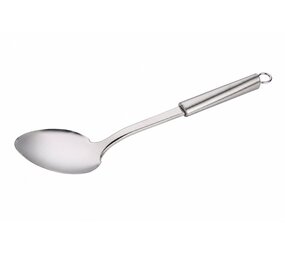
Stainless steel serving spoon 34 c...
Stainless steel serving...
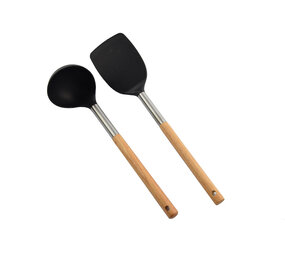
Looking for a soup spoon / pile? Y...
Looking for a soup spoo...
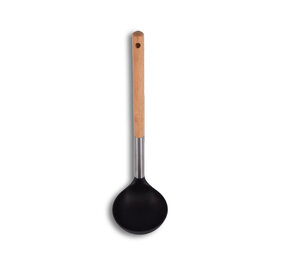
Discover our high-quality stainles...
Discover our high-quali...
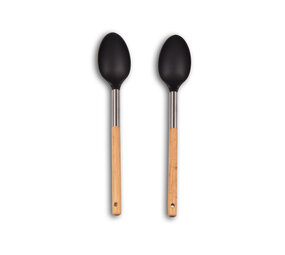
Discover our range of soup spoons ...
Discover our range of s...
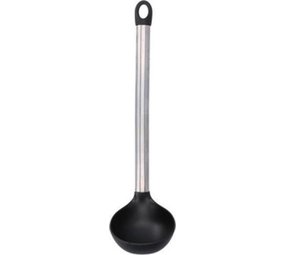
Indispensable for your kitchen, th...
Indispensable for your ...
Overige categorieën in Household, Living & Cooking
Soup Ladles for Broth, Hearty Soups and Serving
Soup Ladles for Broth, Hearty Soups and Serving
A pot of soup rarely stays in the pot. Eventually, broth, tomato soup, pea soup, bisque or a chunky vegetable soup has to reach a bowl without splashing over the rim or leaving all the heavier ingredients behind at the bottom. That is where the shape and size of a soup ladle start to matter.
At Discountershop, you can compare different spoons and serving utensils within Cutlery. Before choosing a soup ladle, first decide whether you need a spoon for eating soup or a ladle for serving it, because these are two very different utensils despite the similar terminology.
Soup spoon or soup ladle: what is the difference?
A soup spoon is part of table cutlery. It has a relatively short handle and a rounded or deeper bowl designed for eating soup directly from a bowl.
A soup ladle is a kitchen and serving utensil. It normally has a much longer handle, often around 30 cm or more, so you can reach into a deep stockpot while keeping your hand away from hot liquid and steam.
The Tableware you use can help determine which type you need. A dining spoon should suit the size of your soup bowl, while a serving ladle needs to match the depth of your saucepan or stockpot.
Match the ladle bowl to the type of soup
Different soups behave differently when you serve them. Clear broth moves quickly and can spill easily from a shallow bowl. Creamy tomato or pumpkin soup flows more slowly, while minestrone, pea soup and stews contain solid ingredients that naturally settle towards the bottom.
That makes the shape of the ladle bowl important:
- Deep, rounded bowl: useful for clear broth and thinner soups.
- Wider bowl: practical for thick or chunky meal soups.
- Generous opening: helps pick up potatoes, vegetables, beans or pieces of meat.
- Defined pouring edge: can improve control with thinner liquids.
- Smooth connection between bowl and handle: easier to clean because food has fewer places to collect.
If soup is served directly at the table, make sure the ladle also suits your Plates and Bowls. An oversized ladle can make a small soup bowl harder to fill neatly rather than easier.
How much soup does one ladle actually hold?
The total length of a ladle tells you nothing about the volume of its bowl. That becomes important when you want to serve reasonably equal portions.
You can measure it at home very easily. Fill the ladle with water to the level you would normally use, then pour that water into a measuring jug. If one scoop holds 100 ml and you normally serve about 300 ml of soup, three similar scoops will produce a reasonably consistent portion.
This is useful at a buffet, but it also helps when dividing soup between several Serving Bowls or individual bowls.
For chunky soup, stir gently from the bottom before portioning. Beans, potatoes, meat and other dense ingredients tend to settle below the broth while the pot is standing.
Choose handle length according to your saucepan
A long handle is particularly useful with deep cookware. It keeps your hand further away from hot steam and means the entire utensil does not have to disappear into the soup.
With kitchen ladles around 30–35 cm long, measure both your saucepan and your storage space before ordering. A long ladle can work very well in a stockpot but feel unbalanced when used with a shallow serving dish.
Other long-handled tools can be found under Kitchen Utensils.
If you prefer several cooking tools with similar handles and proportions, Kitchen Utensil Sets can make storage and handling more consistent.
Stainless steel, nylon or wood: choose according to your cookware
A stainless steel soup ladle is rigid, strong and holds its shape well. It can work well with uncoated stainless steel cookware, but a hard metal edge may scratch a delicate non-stick surface if you scrape it across the bottom.
A nylon soup ladle may be gentler on coated cookware. Always check the heat-resistance rating of the actual product because the word “nylon” alone does not tell you the maximum safe temperature.
A wooden ladle transfers heat towards the handle more slowly and feels softer against many pan surfaces. Wood does, however, require different care: avoid prolonged soaking and allow it to dry fully before storage.
If you need liquid to drain away rather than remain in the spoon, a perforated utensil may be more appropriate. Browse Skimmers & Whisks for draining tools.
For jobs where a deep ladle bowl is not suitable at all, look at Other Kitchen Utensils.
A soup ladle comes at the end of the preparation process
Before the ladle comes into use, the ingredients have usually already been cleaned, cut and cooked. Vegetables, meat and herbs can first be prepared on suitable Cutting Boards.
For carrots, courgettes and other vegetables, Graters, Peelers & Slicers handle jobs that a serving utensil cannot perform properly.
If you are making a potato or vegetable soup where some ingredients are mashed before serving, a Potato Masher has a separate role: adjust the texture first, then use the ladle to portion the finished soup.
For soups that require a fixed simmering or resting period, a Kitchen Timer helps prevent vegetables from becoming overcooked before serving.
Serving soup without overcrowding the table
A bowl of hot soup needs more room than just a plate and cutlery. Give each guest enough space to move a spoon without hitting glasses, serving dishes or neighbouring bowls.
Placemats can define each individual place setting clearly.
If you use a full Tablecloth, avoid placing a wet soup ladle directly on the fabric. A spoon rest or small plate is more practical.
A Napkin belongs with the individual place setting, while the large serving ladle should remain beside the saucepan, tureen or serving bowl.
More items for organising the table can be found under Table Accessories.
Give soup, bread and water their own space
Water is often served alongside soup. A Carafe can sit in a central position without several individual bottles taking up space between soup bowls.
Use Coasters under suitable glasses and drink containers to keep the food-serving area clear.
Small rolls or side dishes can be arranged on a Tiered Serving Stand when you want to use vertical table space.
Bread, toast or cheese can be placed separately on Serving Boards so guests do not need to reach across the soup pan and ladle.
Soup ladles, coffee spoons and egg spoons are not interchangeable
Coffee or tea may follow a soup course, but a long or deep soup ladle is obviously impractical for that purpose. With Cups & Mugs, a smaller teaspoon or coffee spoon provides much better control.
For sugar, honey and similar additions, match the spoon size to the products used with Coffee & Tea Accessories.
The same principle applies to Egg Cups, which need a small spoon that fits comfortably inside the opening.
Soup can be seasoned at the table using Salt & Pepper Sets rather than putting the serving ladle into several seasoning containers.
Cleaning soup ladles after fat, tomato and spices
Rinse a soup ladle reasonably soon after use. Fat, tomato, curry, salt and strongly coloured foods can dry onto the surface or leave odours if they remain for too long.
For stainless steel, use a dishwasher only when the product is dishwasher-safe and position the ladle so water can reach the entire bowl.
For wood, hand washing is usually the safer approach. Avoid prolonged soaking, towel-dry first and then allow the utensil to air-dry completely before putting it away.
Check nylon for rough edges, deep cuts or warping. Discolouration is not automatically the same as damage, but changes to shape or surface condition deserve closer inspection.
Storing a long soup ladle without blocking the drawer
Measure the internal length of your kitchen drawer before buying a ladle longer than 30 cm. A handle forced diagonally across the drawer can interfere with other compartments.
If the ladle has a hanging hole, a wall rail or hook can be a more practical storage solution. If you use a countertop utensil holder, make sure the ladle is completely dry first.
A Funnel is better stored separately so its narrow spout does not become trapped between long handles.
A Cheese Slicer also deserves its own space because of its cutting edge. That way, you can reach for a soup ladle without brushing past sharp kitchen tools.
If you maintain a separate outdoor smoking area, keep it away from food, soup bowls and serving utensils. Cigarette Accessories can be viewed separately for that area.
Watch Discountershop on YouTube
Visit the Discountershop YouTube channel for product videos and practical examples covering kitchen, dining and household products.
Frequently Asked Questions About Soup Ladles
How can you measure the capacity of a soup ladle without product specifications?
Fill the ladle to the level you would normally serve from, then pour the contents into a measuring jug. Repeat the test a few times to estimate how many millilitres one normal scoop contains.
Which ladle works better for creamy soup than for clear broth?
A broad, reasonably deep bowl works well for thicker soup because it flows more slowly. For clear broth, a deeper rounded ladle can provide better control and reduce liquid sloshing over the rim.
How do you divide vegetables and meat evenly between several soup bowls?
Stir gently from the bottom immediately before serving, then scoop both liquid and solid ingredients together. Repeat this during serving because heavier potatoes, beans, vegetables and meat naturally begin settling again.
Why do some soup ladles have a pouring lip?
A shaped pouring edge helps thin broth or sauce leave the bowl in a more controlled stream. This can be useful with narrow soup bowls or when you want to keep the rim cleaner.
Why does a long soup ladle sometimes slide off the edge of a saucepan?
A long handle can move the centre of gravity outside the pan, particularly when the ladle bowl is empty. Place it on a spoon rest instead of trying to balance it on a narrow rim.
How do you stop broth dripping down the outside of a ladle?
Lift the filled ladle slowly, pause briefly above the pan and pour close to the bowl. Rapid turning allows liquid to run around the outer surface and can send droplets towards the handle.
Do you need a separate soup ladle for an allergen-free soup?
Use a dedicated ladle and keep it away from other pots and serving utensils. Even small food residues on a shared ladle can cause cross-contact with ingredients that a guest needs to avoid.
Can a soup ladle also be used to portion pancake batter?
Yes, especially if the bowl has a consistent capacity. Measure how much batter it holds once, then fill it to the same level each time to produce pancakes of a more similar size.
Is discolouration on a nylon soup ladle the same as damage?
Not necessarily. Strongly coloured foods can stain some plastics without changing their function. Check instead for melting, deep cuts, cracking, rough areas or permanent warping and follow the product's care guidance.
When should an old soup ladle be replaced?
Replace it when wood starts splitting, nylon becomes badly warped or deeply scored, or metal components loosen. Damaged surfaces are harder to clean properly and may also scratch cookware or create splinters.
