
 Household, Living & Cooking
 Outdoor, Travel & Sports
 DIY, Garden & Animals
 Fashion accessories & Shoes
 Car & Motor
 Computer & Electronics
 Office & School
 Beautiful & Healthy
 Toys
Toys Eat Drink
 Baby
Baby Christmas
 King's Day


 8
8Serving Spoons for Soup, Sauces, Vegetables and Family Meals
Serving Spoons for Portioning, Cooking and Serving
The final stage of cooking changes what you need from a spoon. While preparing a meal, you may use a utensil to stir, taste or turn ingredients. Once the pan reaches the table, the priority becomes different: you need to lift a portion cleanly, reach into a deep pan and serve without sending sauce over the edge.
That is where a good serving spoon or ladle becomes useful. Within Spoons, you can choose utensils for eating as well as serving. Larger serving spoons sit somewhere between personal Cutlery and everyday kitchen utensils, so bowl size, handle length and material matter much more than appearance alone.
Which serving spoon works for which food?
Not every serving spoon needs the same shape. A deep bowl carries more liquid, while a broader, shallower spoon gives better control when portioning rice, vegetables, potatoes or thicker dishes.
For soup and casseroles, a deeper ladle-shaped bowl makes sense because it holds both liquid and solid ingredients. For thicker sauces, a slightly smaller bowl can give more control over how much reaches the plate.
When serving from Serving Bowls, consider the size of the bowl itself. An extra-long utensil can feel awkward in a shallow dish, while a standard tablespoon may not provide enough reach inside a deep serving bowl.
The portion size should also suit your Plates. A smaller serving bowl is useful for side dishes, while soup, stew or family-style pasta may require a larger capacity.
How long should a serving spoon be?
Handle length is not only about comfort. A longer handle keeps your hand further away from steam, hot liquid and the edge of a deep saucepan.
For many cooking and serving tasks, a length of around 30 to 35 cm is useful. A shorter model may be easier to control with low serving dishes, while deep stockpots require more reach.
Before buying, measure:
- the depth of your most frequently used pans;
- how far above the pan rim you want to hold the handle;
- the internal length of your utensil drawer;
- the diameter of the serving bowl or spoon head.
A serving spoon should not be so short that your hand sits directly above rising steam. At the same time, an excessively long handle can make a lightweight serving bowl unstable.
Browse Kitchen Utensils if you need other long-handled cooking tools. If you prefer several utensils with matching handles and dimensions, Kitchen Utensil Sets may be more practical than buying every item separately.
Stainless steel, nylon or wood: match the material to the cookware
A stainless steel serving spoon is strong, rigid and useful for many table and kitchen tasks. When it is used inside cookware, however, the pan surface also matters. A hard metal edge can damage a delicate non-stick coating if you scrape it across the bottom.
Nylon or suitable heat-resistant plastic utensils can be gentler on coated pans. Always check the stated maximum operating temperature because not every plastic serving spoon is designed for contact with very hot cookware.
Wood transfers heat more slowly to the hand and feels softer against many pan surfaces. It does require different care, especially when it comes to soaking and drying.
If you need a tool that allows liquid to drain rather than remain in the spoon, look at Skimmers & Whisks. Other less conventional shapes can be found under Other Kitchen Utensils.
From food preparation to serving
A serving spoon generally becomes important near the end of the cooking process. Before that, other tools are more appropriate.
Vegetables and other ingredients can first be prepared on Cutting Boards. For peeling, grating or slicing, Graters, Peelers & Slicers are designed for the task rather than trying to make one utensil do everything.
If mashed potatoes are on the menu, a Potato Masher does the preparation first. A serving spoon can then divide the finished mash between plates.
For pasta, sauces and dishes where timing matters, a Kitchen Timer helps you reach the serving stage at the right moment.
Using serving spoons at the table or buffet
A serving spoon belongs with the shared dish rather than with an individual place setting. Position it next to the pan or serving bowl it is intended for.
For a buffet, using one serving spoon per dish is a practical approach. It reduces the need to move the same utensil between sauces, vegetables, rice and other foods, while also making the serving line easier for guests to follow.
Your choice of Tableware affects available table space. Keep large serving bowls far enough from glassware that a long handle does not repeatedly knock against drinks.
A Placemat defines an individual place setting, leaving the centre of the table free for shared dishes.
When using a Tablecloth, place a used serving spoon on a spoon rest, small plate or suitable dish edge instead of allowing a sauce-covered bowl to sit directly on the fabric.
Napkins can then remain part of each individual place setting rather than becoming a makeshift resting place for serving utensils.
Organising food, drinks and serving utensils
The centre of a dining table can become crowded quickly. Giving each type of product its own area makes serving easier.
Use Coasters where appropriate beneath glasses, jugs or other table items. This keeps the food-serving area separate from condensation and drink containers.
Water can be placed in Carafes so guests do not need to reach across serving utensils for individual bottles.
Small appetisers can be arranged on Tiered Serving Stands, while bread, cheese and dry snacks fit naturally on Serving Boards.
For the wider table arrangement, browse Table Accessories.
Cleaning serving spoons after sauces, soups and strongly coloured foods
Rinse a used serving spoon reasonably soon after contact with tomato sauce, salty dishes, acidic ingredients or strongly coloured foods. Once residue dries onto the bowl and handle, cleaning becomes more difficult.
For a dishwasher-safe stainless steel serving spoon:
- position it so water can reach the whole bowl;
- avoid leaving it pressed tightly against other utensils;
- keep it away from visibly rusting metal items;
- remove it after the programme if the dishwasher remains very damp;
- wipe remaining water marks with a soft cloth when required.
Avoid aggressive scouring pads on polished stainless steel if you want to minimise visible scratches.
Wooden serving spoons should not remain soaking in water for long periods. Plastic or nylon versions should be checked occasionally for melted areas, deep cuts or permanently distorted edges.
How should long serving spoons be stored?
A serving spoon measuring around 30 cm may not fit into a standard cutlery organiser. Measure the inside length of your kitchen drawer before ordering several long utensils.
If the handle includes a hanging hole, a suitable rail or hook system can save drawer space. In a drawer, store long serving spoons alongside other long utensils rather than diagonally over knives and forks.
A Funnel has a very different shape and is better kept separately so its narrow tip does not become trapped between handles.
A Cheese Slicer also has a cutting edge, so it is safer and more practical not to leave it loose among large serving spoons.
One large spoon is not suitable for every table task
Large serving utensils are useful for transferring food, but they should not replace smaller spoons where precision is needed.
With Cups & Mugs, a coffee spoon or teaspoon is more practical than a serving spoon.
The same applies to Coffee & Tea Accessories, where a compact spoon gives better control over sugar, honey or small quantities of other ingredients.
For Egg Cups, use a smaller spoon that fits comfortably into the opening rather than trying to manage with a large table or serving spoon.
Seasonings can be kept organised in Salt & Pepper Sets instead of using one large spoon between several condiment containers.
If you maintain a separate outdoor smoking area, keep it away from food and serving utensils. Cigarette Accessories can be viewed separately for that area.
Watch Discountershop on YouTube
Visit the Discountershop YouTube channel for product videos and practical examples covering kitchen, dining and household products.
Frequently Asked Questions About Serving Spoons
How large should the bowl of a serving spoon be?
That depends on the food. A deeper bowl works well for soup and casseroles, while vegetables or rice may require more control. Compare both bowl width and depth rather than looking only at total spoon length.
Why are many serving spoons around 30 to 35 cm long?
A longer handle provides better reach inside deep pans while keeping your hand further away from hot liquid and steam. With shallow serving bowls, a shorter utensil may feel more balanced and easier to control.
What is the difference between a serving spoon and a sauce ladle?
A general serving spoon usually has a larger bowl for full portions. A sauce ladle is designed for smaller quantities of liquid and may have a deeper bowl or pouring edge for more controlled serving.
How many serving spoons do you need for a buffet?
Ideally, provide one separate serving spoon for each dish. This keeps the serving process organised and reduces movement of the same utensil between rice, vegetables, sauces and other foods.
Which serving spoon should you use with non-stick cookware?
Choose a material approved by the cookware manufacturer, such as suitable nylon, plastic or wood. A hard stainless steel edge can scratch a delicate non-stick coating when it is dragged across the surface.
Where should you place a used serving spoon during a meal?
Place it on a clean spoon rest, small plate or a suitable edge of the serving dish when designed for that purpose. Avoid putting a wet or sauce-covered spoon directly on a tablecloth or placemat.
Why does thick sauce sometimes cling to a large serving spoon?
Thicker sauces have greater viscosity and can stick to a broad or deep spoon bowl. Temperature and bowl shape also affect flow, so a smaller pouring area may offer better portion control.
Can the same serving spoon be used for raw and cooked food?
Not without cleaning it thoroughly in between. A spoon that has touched raw meat, fish or other contamination-sensitive ingredients should be washed before it is used for cooked food or table service.
Can a stainless steel serving spoon stay inside a hot pan while cooking?
It is better not to leave it there. Metal conducts heat, so the handle can become hot, and a long protruding utensil can easily be knocked. Place it on a safe spoon rest between uses.
How do you stop long serving spoons from tangling in a kitchen drawer?
Store them parallel inside a separate long compartment or hang them by their handle holes. Keeping broad spoon heads away from perforated or sharp utensils makes it easier to remove one tool without pulling out several others.
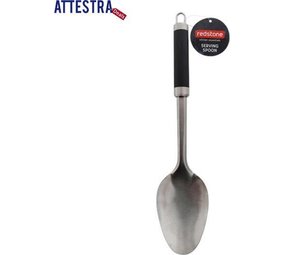
The serving spoon is a practical a...
The serving spoon is a ...
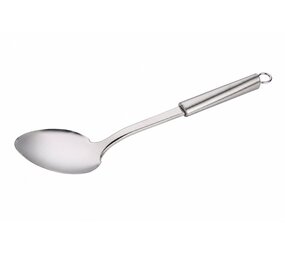
Stainless steel serving spoon 34 c...
Stainless steel serving...
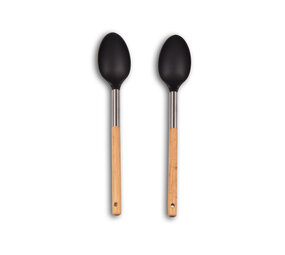
Discover our range of soup spoons ...
Discover our range of s...
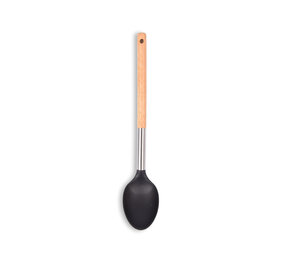
Explore our durable serving spoon ...
Explore our durable ser...
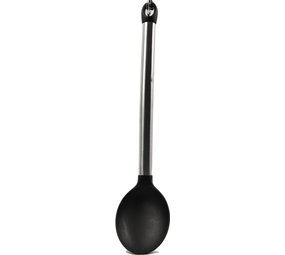
Kitchenware serving spoon 35 stain...
Kitchenware serving spo...
Overige categorieën in Household, Living & Cooking
Serving Spoons for Soup, Sauces, Vegetables and Family Meals
Serving Spoons for Portioning, Cooking and Serving
The final stage of cooking changes what you need from a spoon. While preparing a meal, you may use a utensil to stir, taste or turn ingredients. Once the pan reaches the table, the priority becomes different: you need to lift a portion cleanly, reach into a deep pan and serve without sending sauce over the edge.
That is where a good serving spoon or ladle becomes useful. Within Spoons, you can choose utensils for eating as well as serving. Larger serving spoons sit somewhere between personal Cutlery and everyday kitchen utensils, so bowl size, handle length and material matter much more than appearance alone.
Which serving spoon works for which food?
Not every serving spoon needs the same shape. A deep bowl carries more liquid, while a broader, shallower spoon gives better control when portioning rice, vegetables, potatoes or thicker dishes.
For soup and casseroles, a deeper ladle-shaped bowl makes sense because it holds both liquid and solid ingredients. For thicker sauces, a slightly smaller bowl can give more control over how much reaches the plate.
When serving from Serving Bowls, consider the size of the bowl itself. An extra-long utensil can feel awkward in a shallow dish, while a standard tablespoon may not provide enough reach inside a deep serving bowl.
The portion size should also suit your Plates. A smaller serving bowl is useful for side dishes, while soup, stew or family-style pasta may require a larger capacity.
How long should a serving spoon be?
Handle length is not only about comfort. A longer handle keeps your hand further away from steam, hot liquid and the edge of a deep saucepan.
For many cooking and serving tasks, a length of around 30 to 35 cm is useful. A shorter model may be easier to control with low serving dishes, while deep stockpots require more reach.
Before buying, measure:
- the depth of your most frequently used pans;
- how far above the pan rim you want to hold the handle;
- the internal length of your utensil drawer;
- the diameter of the serving bowl or spoon head.
A serving spoon should not be so short that your hand sits directly above rising steam. At the same time, an excessively long handle can make a lightweight serving bowl unstable.
Browse Kitchen Utensils if you need other long-handled cooking tools. If you prefer several utensils with matching handles and dimensions, Kitchen Utensil Sets may be more practical than buying every item separately.
Stainless steel, nylon or wood: match the material to the cookware
A stainless steel serving spoon is strong, rigid and useful for many table and kitchen tasks. When it is used inside cookware, however, the pan surface also matters. A hard metal edge can damage a delicate non-stick coating if you scrape it across the bottom.
Nylon or suitable heat-resistant plastic utensils can be gentler on coated pans. Always check the stated maximum operating temperature because not every plastic serving spoon is designed for contact with very hot cookware.
Wood transfers heat more slowly to the hand and feels softer against many pan surfaces. It does require different care, especially when it comes to soaking and drying.
If you need a tool that allows liquid to drain rather than remain in the spoon, look at Skimmers & Whisks. Other less conventional shapes can be found under Other Kitchen Utensils.
From food preparation to serving
A serving spoon generally becomes important near the end of the cooking process. Before that, other tools are more appropriate.
Vegetables and other ingredients can first be prepared on Cutting Boards. For peeling, grating or slicing, Graters, Peelers & Slicers are designed for the task rather than trying to make one utensil do everything.
If mashed potatoes are on the menu, a Potato Masher does the preparation first. A serving spoon can then divide the finished mash between plates.
For pasta, sauces and dishes where timing matters, a Kitchen Timer helps you reach the serving stage at the right moment.
Using serving spoons at the table or buffet
A serving spoon belongs with the shared dish rather than with an individual place setting. Position it next to the pan or serving bowl it is intended for.
For a buffet, using one serving spoon per dish is a practical approach. It reduces the need to move the same utensil between sauces, vegetables, rice and other foods, while also making the serving line easier for guests to follow.
Your choice of Tableware affects available table space. Keep large serving bowls far enough from glassware that a long handle does not repeatedly knock against drinks.
A Placemat defines an individual place setting, leaving the centre of the table free for shared dishes.
When using a Tablecloth, place a used serving spoon on a spoon rest, small plate or suitable dish edge instead of allowing a sauce-covered bowl to sit directly on the fabric.
Napkins can then remain part of each individual place setting rather than becoming a makeshift resting place for serving utensils.
Organising food, drinks and serving utensils
The centre of a dining table can become crowded quickly. Giving each type of product its own area makes serving easier.
Use Coasters where appropriate beneath glasses, jugs or other table items. This keeps the food-serving area separate from condensation and drink containers.
Water can be placed in Carafes so guests do not need to reach across serving utensils for individual bottles.
Small appetisers can be arranged on Tiered Serving Stands, while bread, cheese and dry snacks fit naturally on Serving Boards.
For the wider table arrangement, browse Table Accessories.
Cleaning serving spoons after sauces, soups and strongly coloured foods
Rinse a used serving spoon reasonably soon after contact with tomato sauce, salty dishes, acidic ingredients or strongly coloured foods. Once residue dries onto the bowl and handle, cleaning becomes more difficult.
For a dishwasher-safe stainless steel serving spoon:
- position it so water can reach the whole bowl;
- avoid leaving it pressed tightly against other utensils;
- keep it away from visibly rusting metal items;
- remove it after the programme if the dishwasher remains very damp;
- wipe remaining water marks with a soft cloth when required.
Avoid aggressive scouring pads on polished stainless steel if you want to minimise visible scratches.
Wooden serving spoons should not remain soaking in water for long periods. Plastic or nylon versions should be checked occasionally for melted areas, deep cuts or permanently distorted edges.
How should long serving spoons be stored?
A serving spoon measuring around 30 cm may not fit into a standard cutlery organiser. Measure the inside length of your kitchen drawer before ordering several long utensils.
If the handle includes a hanging hole, a suitable rail or hook system can save drawer space. In a drawer, store long serving spoons alongside other long utensils rather than diagonally over knives and forks.
A Funnel has a very different shape and is better kept separately so its narrow tip does not become trapped between handles.
A Cheese Slicer also has a cutting edge, so it is safer and more practical not to leave it loose among large serving spoons.
One large spoon is not suitable for every table task
Large serving utensils are useful for transferring food, but they should not replace smaller spoons where precision is needed.
With Cups & Mugs, a coffee spoon or teaspoon is more practical than a serving spoon.
The same applies to Coffee & Tea Accessories, where a compact spoon gives better control over sugar, honey or small quantities of other ingredients.
For Egg Cups, use a smaller spoon that fits comfortably into the opening rather than trying to manage with a large table or serving spoon.
Seasonings can be kept organised in Salt & Pepper Sets instead of using one large spoon between several condiment containers.
If you maintain a separate outdoor smoking area, keep it away from food and serving utensils. Cigarette Accessories can be viewed separately for that area.
Watch Discountershop on YouTube
Visit the Discountershop YouTube channel for product videos and practical examples covering kitchen, dining and household products.
Frequently Asked Questions About Serving Spoons
How large should the bowl of a serving spoon be?
That depends on the food. A deeper bowl works well for soup and casseroles, while vegetables or rice may require more control. Compare both bowl width and depth rather than looking only at total spoon length.
Why are many serving spoons around 30 to 35 cm long?
A longer handle provides better reach inside deep pans while keeping your hand further away from hot liquid and steam. With shallow serving bowls, a shorter utensil may feel more balanced and easier to control.
What is the difference between a serving spoon and a sauce ladle?
A general serving spoon usually has a larger bowl for full portions. A sauce ladle is designed for smaller quantities of liquid and may have a deeper bowl or pouring edge for more controlled serving.
How many serving spoons do you need for a buffet?
Ideally, provide one separate serving spoon for each dish. This keeps the serving process organised and reduces movement of the same utensil between rice, vegetables, sauces and other foods.
Which serving spoon should you use with non-stick cookware?
Choose a material approved by the cookware manufacturer, such as suitable nylon, plastic or wood. A hard stainless steel edge can scratch a delicate non-stick coating when it is dragged across the surface.
Where should you place a used serving spoon during a meal?
Place it on a clean spoon rest, small plate or a suitable edge of the serving dish when designed for that purpose. Avoid putting a wet or sauce-covered spoon directly on a tablecloth or placemat.
Why does thick sauce sometimes cling to a large serving spoon?
Thicker sauces have greater viscosity and can stick to a broad or deep spoon bowl. Temperature and bowl shape also affect flow, so a smaller pouring area may offer better portion control.
Can the same serving spoon be used for raw and cooked food?
Not without cleaning it thoroughly in between. A spoon that has touched raw meat, fish or other contamination-sensitive ingredients should be washed before it is used for cooked food or table service.
Can a stainless steel serving spoon stay inside a hot pan while cooking?
It is better not to leave it there. Metal conducts heat, so the handle can become hot, and a long protruding utensil can easily be knocked. Place it on a safe spoon rest between uses.
How do you stop long serving spoons from tangling in a kitchen drawer?
Store them parallel inside a separate long compartment or hang them by their handle holes. Keeping broad spoon heads away from perforated or sharp utensils makes it easier to remove one tool without pulling out several others.
